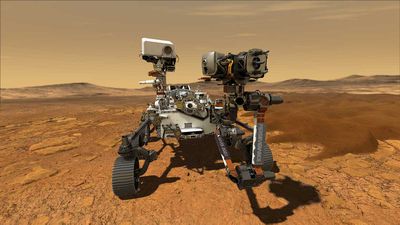
NASA's Perseverance rover, which recently made history landing on the surface of Mars, is powered by the same processor used in an iMac more than 23 years old.
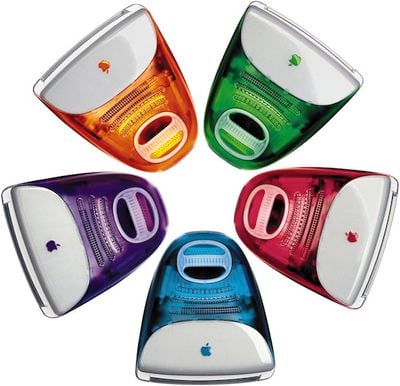
As reported by NewScientist (via Gizmodo), the rover includes the PowerPC 750 processor, the same chip used in the G3 iMac in 1998.
The main chipset is the same; however, there are differences between the version of the processor shipped in a consumer computer and the one exploring space. The processor in the rover is built to withstand temperatures between -67 and 257 degrees Fahrenheit (−55 and 125 degrees Celsius) and comes with an added $200,000 price tag.
The PowerPC 750 processor was ahead of the game for its time, featuring a single-core, 233MHz processor, 6 million transistors (compared to today's 16 billion in a single chip), and based on 32-bit architecture.
Apple used PowerPC chips in Mac computers until it transitioned to Intel in 2005. Right now, Apple's going through a similar change, moving away from Intel to deploy its own custom Apple silicon in Macs.
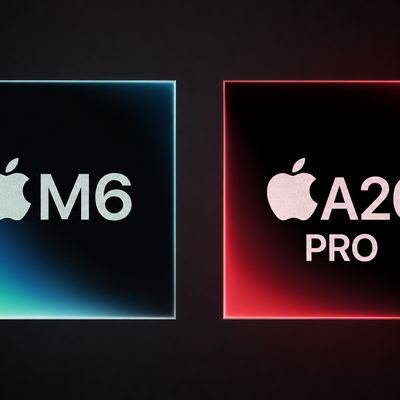
Apple announced the M6 chip last week, just ahead of its September iPhone event, providing the clearest indication yet of what the A20 will bring to the iPhone 18 lineup.
Apple silicon generations share much of their architecture across the A-series and the M-series, so a new A-series chip normally functions as a partial preview of the M-series chip that follows it. This year the order...
Apple today revealed the A20 Pro chip in the iPhone 18 Pro and iPhone 18 Pro Max, built on a brand new architecture using 2nm process technology.
Apple described the A20 Pro as "an exceptional chip that sets a new bar for mobile computing." The chip has a 6-core CPU design with two new super cores that Apple says are up to 20% faster, calling them "desktop class" and "the fastest in any...
Images claiming to show the inside of an Apple-made AI server, believed to power Private Cloud Compute, surfaced online this week, offering a first look at how the hardware is laid out.
The images were shared earlier this week by the X user @hsuchingpo, an account with a track record of Apple hardware and prototype leaks. Captioned simply "Apple M5 Server," the leaker said the hardware is "mo...
Because super-reliability is more important than compute power. The G3 is also used e.g. as mission computer in fighter jets. The feature is called fail-safe
if a more than two decade old processor is good enough to find out evidence of extraterrestrial past life, then I got no excuse to be buying anything that Tosser Prosser is predicting anytime soon
It's also radiation hardened, which is where the price tag comes from (and also the most important thing setting it aside from the actual PowerPC 750 found in the iMac G3)
Anything launched into space has typically been in a multiple years long project, sometimes decade(s) long. It also usually costs a gazillion dollars.
What matters most is reliability and predictability... especially for something going millions (or billions) of miles away and not coming back that we can’t send astronauts to physically fix.
Most of the closed loop systems aboard aircraft, spacecraft, submarines, weapons and similar applications have very old, proven, but mundane processors and operating systems aboard... the last thing you want is “the new kid on the block” when the stakes are so high. Although parts of it are modernized as needed, the ECU in a typical car has the processing power no more than a Texas Instruments calculator... some of the software in Boeing and Airbus jets is virtually unchanged since the 1980s as well.