Apple Starts Sending 'Batterygate' Settlement Payments to iPhone Users
Apple in 2020 agreed to pay up to $500 million to settle a class action lawsuit in the U.S. that accused the company of "secretly throttling" some iPhone models, and payouts finally started going out this week to individuals who submitted a claim.
The website for the so-called "batterygate" settlement said payments would likely start to be distributed this January, and payouts have began on schedule. MacRumors readers Ken Strand and Michael Burkhardt are among the individuals who have received payments of $92.17 per claim from Apple as part of the settlement.
The lawsuit was filed in December 2017, shortly after Apple revealed that it throttled the maximum performance of some iPhone models with "chemically aged" batteries when necessary to prevent the devices from unexpectedly shutting down. Apple introduced this power management system in iOS 10.2.1, but it initially failed to mention the change in that update's release notes. Apple apologized about its lack of transparency, and temporarily lowered the price of iPhone battery replacements to $29 in 2018.
Despite apologizing over the way it communicated the change, Apple repeatedly denied all allegations and never admitted to any legal wrongdoing. Apple said it agreed to the settlement only to "avoid burdensome and costly litigation."
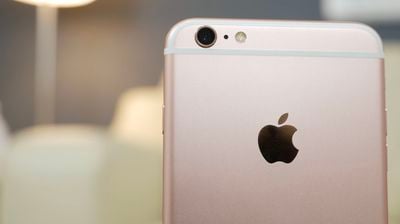
The class included any U.S. resident who owned an affected iPhone 6, iPhone 6 Plus, iPhone 6s, iPhone 6s Plus, and/or iPhone SE that ran iOS 10.2.1 or later, and/or an iPhone 7 or iPhone 7 Plus that ran iOS 11.2 or later, before December 21, 2017. The deadline to submit a claim for a payment was in October 2020.
Apple continues to have a performance management system on the iPhone 6 and newer.
Popular Stories
Bloomberg's Mark Gurman has high expectations for Apple's first foldable iPhone.
In his Power On newsletter today, he said the foldable iPhone will be "the most significant overhaul in the iPhone's history."
"iPhone 4, iPhone 6 and iPhone X were clearly a big deal, but this is a whole new design," he said.
Like Samsung's Galaxy Z Fold 7, the foldable iPhone will reportedly open up like ...
iOS 26.5 is now available for developers, and while it doesn't include any new Siri capabilities, there are some major changes for the European Union, and smaller tweaks for features available worldwide.
Suggested Places
In the Maps app, there's a new "Suggested Places" feature that recommends locations to visit based on trending places nearby and recent searches. When Apple launches ads in ...
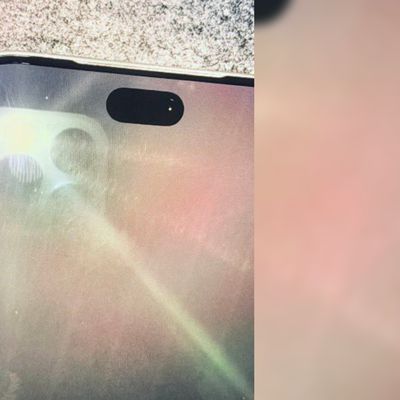
New images of an alleged iPhone 18 Pro prototype and screen protectors have emerged from multiple sources, adding weight to earlier reports that Apple plans to significantly shrink the Dynamic Island later this year.
An X user called @earlyappleleaks recently shared an image purportedly showing a prototype iPhone 18 Pro with a noticeably smaller Dynamic Island. In the picture, the flashlight ...
Popular Stories
Bloomberg's Mark Gurman has high expectations for Apple's first foldable iPhone.
In his Power On newsletter today, he said the foldable iPhone will be "the most significant overhaul in the iPhone's history."
"iPhone 4, iPhone 6 and iPhone X were clearly a big deal, but this is a whole new design," he said.
Like Samsung's Galaxy Z Fold 7, the foldable iPhone will reportedly open up like ...
iOS 26.5 is now available for developers, and while it doesn't include any new Siri capabilities, there are some major changes for the European Union, and smaller tweaks for features available worldwide.
Suggested Places
In the Maps app, there's a new "Suggested Places" feature that recommends locations to visit based on trending places nearby and recent searches. When Apple launches ads in ...
New images of an alleged iPhone 18 Pro prototype and screen protectors have emerged from multiple sources, adding weight to earlier reports that Apple plans to significantly shrink the Dynamic Island later this year.
An X user called @earlyappleleaks recently shared an image purportedly showing a prototype iPhone 18 Pro with a noticeably smaller Dynamic Island. In the picture, the flashlight ...