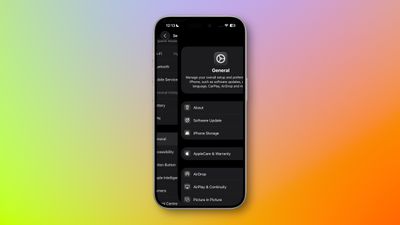
In iOS 26 beta 1, Apple has seemingly tweaked the swipe-to-go-back gesture to make it easier to navigate screens on bigger iPhones.
In iOS 18, many apps allow you to navigate back to the previous screen by swiping with your thumb from the left edge of the display. This is generally easier than tapping a back button in the top-left corner, especially if you're navigating with one hand.
However, to trigger the gesture, you need to start swiping from the very edge of the screen, which is harder if you have small hands or you're using a larger device like an iPhone 16 Pro Max.
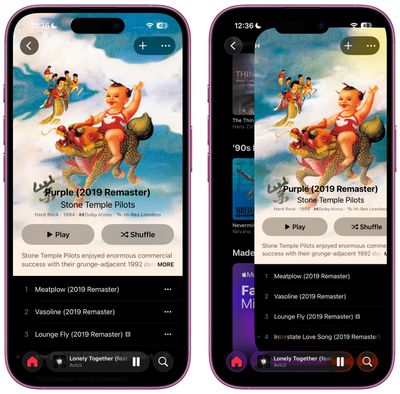
To make things easier in iOS 26, you no longer have to start the rightward swipe at the very edge of the screen. Now you can start the gesture from anywhere, like the middle of the display. Providing you're not thumbing an interactive UI element, the swipe-to-go-back gesture will still be triggered.
Currently the gesture works in many system apps including Settings, Contacts, Music, and the App Store. It also seems to work in some third-party apps, although support is likely to expand once developers update their apps in time for the release of iOS 26 in the fall.
Tuesday September 8, 2026 10:47 am PDT by Joe Rossignol
Apple today released iOS 26.6.2 with a fix for "an issue that prevents downloading a software update over a cellular connection."
The minor software update is rolling out now for the iPhone 11 series and newer. To update your iPhone, open the Settings app and tap on General → Software Update. It might take a few minutes for the update to be visible to everyone.
iOS 26.6.2 arrives...
Monday September 14, 2026 10:32 am PDT by Juli Clover
Alongside iOS 27, Apple today released iOS 26.7, an update to the existing iOS 26 software. Users who check for new software will see iOS 26.7 as the default update, with iOS 27 listed as an option at the bottom of the Software Update interface.
According to Apple's release notes, iOS 26.7 includes security fixes, but it does not have any other features.
Apple will eventually show iOS 27 ...
Monday September 14, 2026 11:36 am PDT by Juli Clover
Today's iOS 27 update addresses over 100 security vulnerabilities, which is a good reason to install the new software.
If you don't want to update to iOS 27 yet, Apple also released iOS 26.7 with over 80 security fixes. 75 of the fixes are shared across both updates, so iOS 26.7 addresses many of the same issues.
There are multiple kernel fixes, including one that could allow a malicious...
I sure hope this isn't as easy to trigger accidentally when trying to scroll and just wiggling a bit as on some apps that already implement this themselves.
Why is the back button on the top of the screen anyway? Seems like this is a solution to a problem that Apple created. Just move navigation buttons to the bottom of the screen so everything is easy to reach with your thumb.
This WWDC was the lamest, most boring one I've ever seen. And I've been watching since Jobs returned to run Apple. All I saw were tweaks to existing apps. Tweaking Back gesture? This is what's going to get people to buy a new phone? I might, but unless there's some real innovation, it might not be an Apple phone.
Apple used to lead. Now all they do is play catch up with Android.
Implementing the current swipe back API should be a specific requirement for all apps with a back button in the top left corner. Not sure if this new one will be easy to accidentally trigger though.