Wells Fargo today announced that NFC functionality is now available at more than 5,000 of its ATMs across the United States.
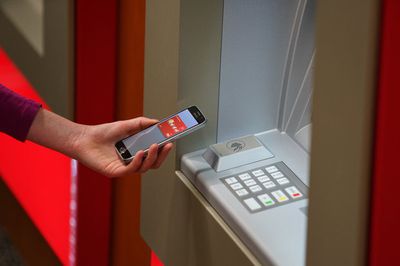
The technology enables customers to initiate an ATM transaction by holding their smartphone or wearable device with mobile payment functionality near an NFC-enabled ATM terminal and inputting their PIN.
Supported digital wallets include Apple Pay, Android Pay, Samsung Pay, and the bank's own Wells Fargo Wallet for Android.
Customers that have added their Wells Fargo debit card to Apple Pay, for example, can simply hold their iPhone near the ATM, enter their PIN, and complete a transaction, with no physical plastic card required.
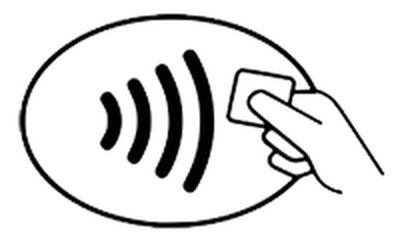
Wells Fargo said it plans to upgrade the rest of the company's more than 13,000 ATMs with NFC by 2019. NFC-enabled terminals are marked with the universal contactless card symbol.
Earlier this year, Wells Fargo launched a separate one-time access code feature that lets customers authenticate at an ATM by entering an 8-digit code generated from the Wells Fargo app, along with their PIN, for card-free access.
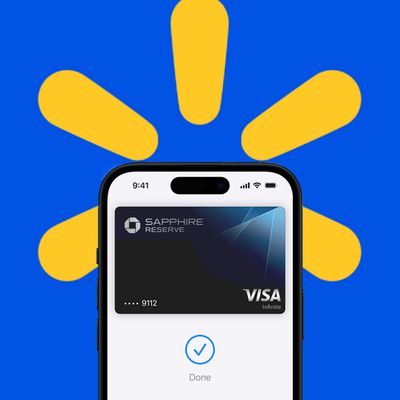
After years of holding out, Walmart today announced that it will finally begin accepting tap-to-pay options like Apple Pay in some of its Walmart and Sam's Club stores in the U.S. starting Monday, August 24. The retailer plans to roll out tap-to-pay support to all of its U.S. stores by the end of 2026 and to its gas stations by mid-2027.
"We want customers and members to have choice in how...
Now through August 28, Apple will donate $10 to the National Park Foundation for every purchase made in the U.S. using Apple Pay on Apple.com, in the Apple Store app, or at an Apple Store, up to a maximum of $1 million.
In addition, the annual U.S. national parks Apple Watch Activity Challenge returns on Sunday, August 23 this...
Sunday September 13, 2026 3:00 am PDT by Eric Slivka
Update 10:04 a.m.: iOS 27 is rolling out now, though it may take a bit for all users to see it, so keep checking!
Apple is about to release iOS 27, which will finally deliver more advanced Siri AI capabilities as well as a variety of other refinements, improvements, and new features to iPhones. It's Apple's biggest software update of the year, and Apple announced at Wednesday's iPhone event...
I know what you mean, but there will come a tipping point some time in the next year or two, I think. The "We don't take Apple Pay, but we do take Android Pay" is an irritant that I hope will soon go away. That's like saying, "We won't serve people that drive Chevrolet's through our drive through." Huh?
I had a funny thing happen to me way back when Apple Pay first hit Canada. There was a little note stuck to the terminal at a bakery I visit that said “No Apple Pay”. I had previously used my card by tapping so this was odd.
When I paid I put my iPhone on the terminal the owner (older guy) starts frantically waving his hand and saying he doesn’t accept it. Few seconds later the “Approved” message comes up on the terminal. He has this odd look on his face and I leave with my stuff. Week later I stop by again and the note saying “no Apple Pay” was gone.
I think merchant education was a big issue as lots of retailers were caught off guard by people suddenly tapping their phones.
Why do you need to enter a PIN, Is TouchID not good enough?
This most likely has nothing to do with ApplePay and is generic contactless support, not knowing if it is ApplePay or just a normal bank card it will ask for a PIN. [doublepost=1507638878][/doublepost]
It's the same for debit transactions at Point of Sale right now for Apple Pay as well. Touch ID authenticates the card, PIN still required for the transaction, just like it would be after chip insert / swipe.
Really? Any where other than the US that does that? Certainly doesn't happen in the UK, defeats part of the whole point of contactless.
Why do you need to enter a PIN, Is TouchID not good enough?
It's the same for debit transactions at Point of Sale right now for Apple Pay as well. Touch ID authenticates the card, PIN still required for the transaction, just like it would be after chip insert / swipe.


 Wells Fargo said it plans to upgrade the rest of the company's more than 13,000 ATMs with NFC by 2019. NFC-enabled terminals are marked with the universal contactless card symbol.