iPhone's Built-In Music Recognition Feature Syncs With Shazam App on iOS 16
Since the release of iOS 14.2 in 2020, the iPhone has included a built-in Music Recognition feature in Control Center powered by Shazam. And with iOS 16, and also the iOS 15.6 beta, the feature has received a small but useful upgrade.
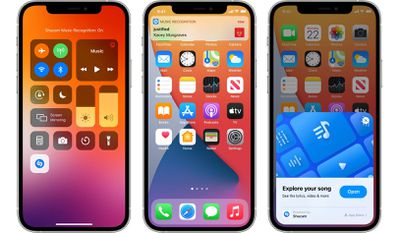
As noted by Twitter user @someone_andrew, songs identified with Music Recognition in Control Center finally sync with the Shazam app.
It also remains possible to view a list of previously identified songs by long pressing the Music Recognition control in Control Center, but syncing with the Shazam app is a useful addition for those who rely more on the app, which is free on the App Store.
Apple acquired Shazam in 2018 for a reported $400 million and has been steadily improving the service since by removing ads from the app and more. In September 2021, Apple announced that the Music Recognition feature in Control Center had surpassed one billion cumulative recognitions across the iPhone and iPad since launching.
Music Recognition can be added to Control Center in the Settings app under the Control Center menu. From there, scroll down and tap the "+" button next to the "Music Recognition" option, which is shown with a Shazam logo.
Popular Stories
When the iPhone Duo launched, we shared a list of some of the fun apps developers created for the new form factor. Two weeks out, developers are continuing to come up with fresh ideas, so we thought we'd share some of our favorites.
Games
Marbles Unhinged ($2.99) - Marbles Unhinged is a marble maze designed for the Duo. When you fold it, the floor turns into a ramp. If you stand the top...
Apple is launching five new products on Friday, November 6, following pre-orders that opened last week, including its first touchscreen MacBook Pro models.
The following new products will be available from today:
iPad mini with OLED display and A20 Pro chip
iMac with M6 chip
14-inch MacBook Pro with M6 chip
14-inch MacBook Pro with OLED touchscreen
16-inch MacBook Pro with OLED...
Apple has made a change to its development process for iOS 28, macOS 28, and corresponding software updates, according to Bloomberg's Mark Gurman.
In his Power On newsletter today, he said Apple separates development of each year's new operating systems into three major stages. Typically, he said each stage consists of four weeks of coding followed by a four-week "convergence" period where...