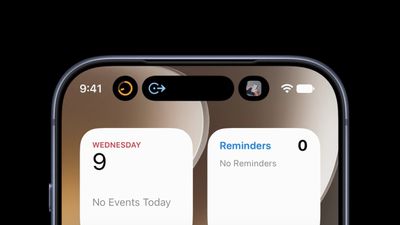
A leaker has activated Apple's upcoming three-item Dynamic Island mode inside the iOS 27 simulator, offering the first video demonstration of the new iPhone 18 Pro feature.
The leaker, known as pdfu, posted a video showing the Dynamic Island toggling between three simultaneous Live Activities, matching what Bloomberg's Mark Gurman described in his report earlier today. "The new Dynamic Island with 3 items is already supported in iOS 27," pdfu wrote.
Great reporting from @markgurman. The new Dynamic Island with 3 items is already supported in iOS 27. Here's what it looks like.
The code requires a sensor region less than 100 layout points wide, or below 16.57 mm for this new mode. iPhone 17 Pro was 20.76 mm. https://t.co/jZshu4rFXxpic.twitter.com/mL46rcEirh
— pdfu (@itspdfu) September 9, 2026
According to pdfu, the underlying code requires a sensor region less than 100 layout points wide to enable the new mode, or below 16.57mm. Layout points are Apple's device-independent unit for describing on-screen dimensions, and they scale differently depending on a display's resolution. By comparison, pdfu notes that the sensor region on the current iPhone 17 Pro measures 20.76mm, meaning Apple would need to shrink the hardware by roughly 20% to unlock the new software behavior.
The iPhone 18 Pro and iPhone 18 Pro Max have been rumored to feature a smaller Dynamic Island for months, but reports about support for a third, additional Dynamic Island Live Activity is new. Since the iPhone 14 Pro launched in 2022, the Dynamic Island has only supported two Live Activities, so adding a third seems like a worthwhile way to demonstrate the utility of shrinking the region.
Code found in iOS 27 suggests the iPhone 18 Pro and iPhone 18 Pro Max could support a 33% higher charging rate than the iPhone 17 Pro models, according to a new discovery from the leaker known as "pdfu."
The findings apparently come from Apple's charging optimizer settings buried in iOS 27, which show the iPhone 18 Pro and iPhone 18 Pro Max charging at a rate 33% higher than the iPhone 17 lineup. If Apple can maintain that higher rate throughout a charge, pdfu estimates it could cut around 25% off the time it takes to complete a typical fast-charging session.
Apple's first foldable iPhone does not appear to get the same treatment. The same code purportedly shows it charging at the same rate as the iPhone 17 and iPhone 17 Pro, rather than the faster rate expected for the new Pro models.
The research also points to further charging improvements arriving with future models. The standard iPhone 18 is said to match the iPhone 18 Pro faster charging, while the iPhone 18e is said to see an even bigger jump of around 69% over the current iPhone 17e. The iPhone Air 2 is said to charge about 27% faster than today's iPhone Air.
Actual charging speeds depend on a multitude of real-world factors, such as the phone's temperature and how full the battery already is, so the improvement buyers notice day-to-day could end up being smaller than the numbers suggest.
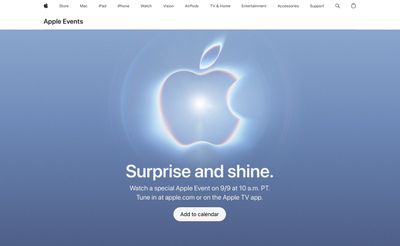
Apple is expected to unveil the iPhone 18 Pro and iPhone 18 Pro Max, along with its first foldable iPhone, at its "Surprise and shine" event today, while the iPhone 18e, iPhone 18, and iPhone Air 2 are rumored to follow in the spring of 2027.
Apple will open pre-orders for at least the iPhone 18 Pro models on Saturday, September 12 at 12 a.m. Pacific Time, claims the X account "ShrimpApplePro," which has accurately leaked some details about Apple devices in the past. Under Apple's typical launch plan, pre-orders begin the Friday immediately following the event, but this year that would be September 11, and Apple has historically avoided the date.
German outlet Macwelt previously claimed a September 12 pre-order date for the iPhone 18 Pro and iPhone 18 Pro Max. Meanwhile, the foldable iPhone Duo is unlikely to be available until October at the earliest – per Bloomberg's Mark Gurman – so pre-orders for it may come later.
Apple will today expand its trade-in program to offer better pricing for devices with minor cosmetic defects, MacRumors understands.
Under Apple's current trade-in system, cosmetic issues such as small chips in the display glass have generally been treated the same way as far more serious damage, such as a cracked or smashed screen, resulting in a similarly steep cut to a device's trade-in value. That is set to change from today, with Apple introducing more granular pricing that better reflects a device's actual condition. Customers will apparently not receive less for their device under the new system.
The update is expected to take effect today once Apple's trade-in website comes back online. The change is said to apply in the vast majority of countries where Apple's trade-in program is offered, with only a small number of markets excluded.
Apple last adjusted its trade-in values in August, when it raised pricing across the iPhone, iPad, Mac, and Apple Watch lineups. It is unclear whether today's change will coincide with a broader refresh of those values.
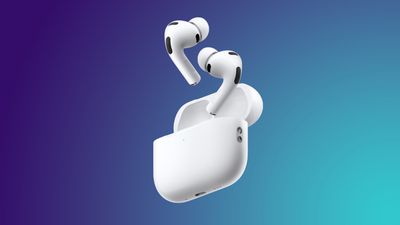
Apple planned to introduce high-end in-ear AirPods with built-in cameras for analyzing the surrounding environment at today's event, but the launch has been pushed to next year, Bloomberg's Mark Gurman reports.
In early August, Gurman said the earbuds were progressing well enough to potentially ship before the end of the year. By mid-August, though, he reported that Apple had pulled the model from its 2026 road map, pushing the camera AirPods to a 2027 launch alongside the 20th-anniversary iPhone instead. Today's event will still include new AirPods 5 models.
Apple's online storefront has gone down ahead of the "Surprise and Shine" Apple event taking place later today, where several new products are expected to be announced.
Apple is expected to announce new iPhone 18 Pro models and its all-new foldable iPhone Duo, as well as Apple Watch Series 12, Apple Watch Ultra 4, and AirPods 5. The company could also announce the release dates of its next major software updates including iOS 27 and macOS Golden Gate, and it may even preview other upcoming new products.
MacRumors will have in-depth coverage of today's Apple event, which kicks off at 10:00 a.m. Pacific Time, including a live blog on our website and posts via @MacRumorsLive on X. For a full rundown of everything we expect to see, be sure to check out our guide.
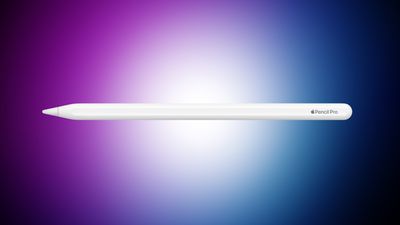
Apple's foldable iPhone Duo will come with Apple Pencil support, reports Bloomberg's Mark Gurman. Gurman previously claimed that Apple had prototyped a dedicated Apple Pencil for its foldable iPhone that was "stubbier than the versions for iPads" and "designed to magnetically attach and charge on the side of the device," but he said it was unlikely that the accessory would be released.
Gurman's latest report mentions only "support for the Apple Pencil stylus" for the iPhone Duo, so it seems that the company has settled on a different approach.
Apple will increase the price of its high-end iPhones by just $100 per model upon the announcement of the iPhone 18 Pro and iPhone 18 Pro Max, Bloomberg's Mark Gurman reports, which is a smaller bump than many had been bracing for ahead of today's event.
In June, Apple hiked the cost of all of its Macs, iPads, and home products in response to the global memory shortage, but chose to keep iPhone pricing intact at the time. That is widely expected to change today, with the iPhone 18 Pro and iPhone 18 Pro Max expected to come in at a higher price than their predecessors.
Gurman's $100 figure comes in well below some of the more dire predictions floated over the summer. Analytics firm IDC had suggested increases of up to $200 for the Pro models, while GF Securities analyst Jeff Pu warned costs for the A20 Pro chip, RAM, and storage could push prices as much as $300 higher. TrendForce, citing memory chip costs that have risen nearly 400% year-on-year, had also modeled a $150 to $200 jump. Apple appears to be absorbing more of that cost itself rather than passing all of it on to buyers.
Earlier this year, Apple took steps to soften the blow of rising prices by launching the Apple Upgrade program in the U.S. The Klarna-backed leasing plan allows customers to pay a monthly fee in perpetuity and swap their device out annually for the newest version. Wireless carriers could also help to ease iPhone "sticker shock" by offering aggressive installment plans and trade-in incentives, Gurman added.
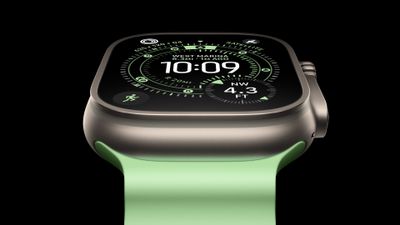
Apple has highlighted a battery boost with each new Ultra model. Last year, the Ultra 3 was rated for up to 42 hours of normal use, up from 36 hours on the Ultra 2.
Apple's upcoming iPhone 18 Pro will come with a narrower Dynamic Island that will allow it to display more Live Activities than the current iPhone 17 Pro, according to Bloomberg.
Mark Gurman reports that the new "smaller and improved" Dynamic Island on the iPhone 18 Pro and iPhone 18 Pro Max will allow users to "toggle between three live tasks" at the top of their screen.
Previously, the Dynamic Island could only display up to two Live Activities at a time. This design has been in place since the iPhone 14 Pro and iPhone 14 Pro Max, which launched in 2022.
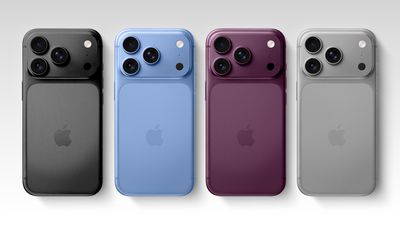
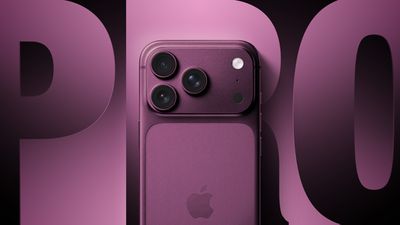
Otherwise, Gurman says the look of the iPhone 18 Pro models is similar to the iPhone 17 Pro models, save for a new "burgundy red" color option replacing the popular Cosmic Orange. Sky blue and Silver have also been reported previously as potential color options.
Internal upgrades include a new A20 Pro chip manufactured using TSMC's 2nm process, longer battery life, a revamped vapor chamber cooling system, and a mechanical aperture lens that enables more precise depth of field and better low-light performance – though this latter feature may be exclusive to the larger iPhone 18 Pro Max.
Apple's "Surprise and Shine" event kicks off at 10:00 a.m. Pacific Time later today, and we'll have full coverage right here on MacRumors.
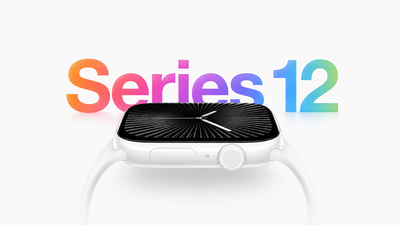
The Apple Watch Series 12 and Ultra 4 models set to be unveiled today include a new privacy-focused feature that can analyze your day and provide a summary of what took place, including conversations you've had, according to Bloomberg's Mark Gurman.
Gurman says the feature is designed to compete with the wave of recent AI wearables that promise to log and recall a user's day. Unlike some of those devices, Apple's system apparently cannot show a transcript and does not record or store audio, which is a distinction Apple is likely to promote on given the privacy concerns raised by always-listening AI hardware.
The feature will arrive alongside the new "Readiness" app, a variant of the existing Vitals app that Apple is introducing to compete more directly with wearable fitness software from Oura and Whoop. Readiness draws on the Apple Watch's sensor array, including heart rate and blood-oxygen data, and Apple is pairing the new health and fitness features with a revamped Health app for the iPhone.
The Apple Watch Series 12 and Apple Watch Ultra 4 will also receive new color options along with changes to the case and bands. The Series 12 will bring back a ceramic case option for the first time since the Apple Watch Series 5. The Ultra 4 will purportedly tout improved battery life.
Apple is set to unveil its first foldable iPhone on Wednesday, September 9, at the company's "Surprise and Shine" event beginning at 10:00 a.m. Pacific Time, and a last-minute leak from Bloomberg's Mark Gurman has revealed some key details about the foldable.
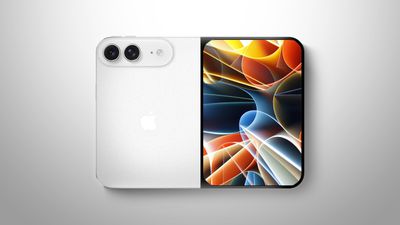
Foldable iPhone name: Previous rumors and reports have clung to the name "iPhone Ultra" for Apple's first foldable iPhone – a name that Gurman himself has used several times in the past. However, in his latest report, Gurman says Apple has settled on the name "iPhone Duo" for the device.
Base storage: A rumor from back in March suggested the foldable iPhone would have a base storage capacity of 256GB, with 512GB and 1TB options also available. Gurman's latest report corroborates the base 256GB storage option. While his report doesn't mention the other two storage options, it seems likely they will define two higher price points.
Starting price: TrendForce estimates and other reports have suggested the iPhone Duo will start at above $2,000, and perhaps go as high as $2,500. Gurman's latest report says the starting price will be $2,000 for the 256GB model, while the highest-capacity model will be around $3,000.
Color options: Previous rumors suggested Apple would "stay away from fun colors" for its first foldable iPhone, with a darker color being described as a shade of indigo rather than black. Gurman's last-minute report backs up that idea, saying the iPhone Duo will come in white and dark blue.
Gurman says the iPhone Duo will "go on sale as early as October," suggesting it will be available to buy at a later date than the iPhone 18 Pro models, which are also expected to be unveiled today at Apple's "Surprise and Shine" event.
A series of screenshots seemingly show Verizon's AI chat assistant answering detailed questions about the iPhone 18 Pro and iPhone 18 Pro Max, just hours before Apple's announcement event.
The screenshots were shared privately with MacRumors by an X user who says the responses came from the "Ask Verizon" AI assistant built into the carrier's app. The conversation is timestamped September 8 at 1:48 to 1:52 p.m., the day before Apple's "Surprise and shine" event. According to the screenshots, the assistant made the following interesting claims about the iPhone 18 Pro and iPhone 18 Pro Max:
The iPhone 18 Pro Max features the same variable aperture main camera lens as the iPhone 18 Pro.
Variable aperture lets the lens opening adjust between f/1.4 and f/4.0 for better low-light shots, natural bokeh, and sharper group photos.
The iPhone 18 Pro Max gets an "advanced" Sensor-shift OIS for improved low-light video stabilization and a larger main sensor for more detail and light.
The iPhone 18 Pro Max features a 48MP telephoto camera with up to 10x optical zoom, up from 8x on the iPhone 18 Pro.
The iPhone 18 Pro Max has 16GB of RAM, compared to 12GB on the iPhone 18 Pro.
The iPhone 18 Pro starts at $1,099.99, with the iPhone 18 Pro Max starting at $1,199.99.
The iPhone 18 Pro comes in four colors: Dark Cherry, Titanium Gray, Titanium White, and Titanium Black.
Several of these claims sit awkwardly next to what's already been reported. The pricing the chatbot gave, $1,099.99 for the iPhone 18 Pro and $1,199.99 for the Pro Max, exactly matches the iPhone 17 Pro's current starting prices, even though there is a general consensus from analysts that prices will increase this generation.
The color names are also seem to be incorrect. Recent leaks have pointed to Dark Cherry alongside Silver and Sky Blue, not the "Titanium Gray," "Titanium White," and "Titanium Black" names the assistant listed, which more closely resemble the finish names Apple used for the iPhone 15 Pro lineup back in 2023. This clearly raises the possibility that the chatbot pulled outdated or unrelated training data rather than surfacing a genuine leak. The assistant also made a series of more plausible claims:
The iPhone 18 Pro has a 6.3-inch Super Retina XDR display, while the iPhone 18 Pro Max has a 6.9-inch display.
The iPhone 18 Pro Max offers longer battery life than the Pro due to its larger size.
Both models feature a triple-lens rear camera system.
The main camera is 48MP with the f/1.4 to f/4.0 variable aperture and Sensor-shift OIS.
The ultra wide camera is 48MP, aimed at high-resolution macro and wide shots.
Both models support ProRAW and ProRes video recording.
Both models are powered by the A20 Pro chip.
We have been unable to independently verify or replicate the exchange, suggesting the chatbot may have since been patched, or that the original screenshots were altered or otherwise inaccurate. Given that, and the fact that AI chatbots are known to hallucinate plausible sounding but false information, the claims should be treated with skepticism rather than as a legitimate leak.
Update: Verizon tells MacRumors that the alleged leak from the AI chatbot is untrue.
For months now, the foldable iPhone has generally been referred to as the "iPhone Ultra," even internally, but Apple is apparently going in a different direction for the official name, emphasizing the dual-screen nature of the device.
Gurman says the iPhone Duo will start at $2,000 for 256 GB of storage and max out at around $3,000. Rumors had suggested the phone would likely start at above $2,000, perhaps as high as $2,500, so a $2,000 entry-level price could help bolster customer demand.
The entry-level version will include 256 gigabytes of storage, with Apple offering higher-capacity versions that will take the price all the way up to roughly $3,000. Apple blew through its cost goals due to the recent memory shortage, so it's eating some of the expense to keep within reach of $2,000. It's also passing the costs along to consumers who buy higher capacities.
As for availability, the device will reportedly come in white and dark blue and "go on sale as early as October." Rumors have long suggested the foldable iPhone could launch later than the iPhone 18 Pro and Pro Max due to production difficulties, although Gurman previously stressed that the gap in launch timing would be minimal.
Other iPhone Duo details in Gurman's report include the use of a new A20 Pro chip, Apple's C2 modem, dual 48-megapixel rear cameras, a 12-megapixel front camera, a magnetic hinge system and "support for the Apple Pencil stylus." Gurman said last week that Apple had tested a smaller version of the Apple Pencil for use with the foldable iPhone, but said that a launch was unlikely.
Today's last-minute report includes a few other details on the iPhone 18 Pro and Pro Max, as well as Apple Watch Series 12 and Ultra 4 models and AirPods 5 models. While most of the details on those products had previously been rumored, Gurman notably says that the iPhone 18 Pro and Pro Max will see $100 price increases compared to their current equivalents, a smaller increase than some had feared.
Apple's "Surprise and Shine" event kicks off at 10:00 a.m. Pacific Time tomorrow, and we'll have full coverage throughout our MacRumors channels.
Apple today released a firmware update (version 1.4.90) for its 140W USB-C Power Adapter.
It is unclear what is included in the latest firmware, as Apple does not publish release notes for this. The update will be installed automatically over time when the power adapter is plugged in and connected to a Mac or other device. There is no way to manually apply the update.
Apple today released a firmware update (4A203) for its upcoming Beats 360 headphones, suggesting that a launch is approaching. With the firmware now available, it seems likely that Apple will announce the Beats 360 at some point in September.
Beats 360 have already leaked across multipleregulatory databases and retail listings over the past several months, and soccer stars like Lamine Yamal and Antonee Robinson were spotted wearing them around the 2026 FIFA World Cup.
MacRumors was first to report on the Beats 360 name last month after the headphones appeared in various retail listings on Amazon and other reseller websites, some of which have since been removed. The listings revealed that the headphones will be available in Black, Cloud, Sky, and Pink, at a minimum. There will also be interchangeable Performance Knit and UltraPlush ear cushions and headbands that come in those same four colors, plus extra options like Volt and Navy, allowing you to create your own personalized look.
Beats 360 have a unique design with some similarities to the AirPods Max, including telescoping headband arms that smoothly extend and stay in place to maintain the desired fit. One of the product listings said the over-ear headphones offer up to 1.75× more noise cancellation than the Beats Studio Pro that came out in 2023.
The listing also said that the Beats 360 are Apple's first-ever sweat-resistant and water-resistant over-ear headphones, with an IPX4 rating.
Other features and specs mentioned in the listing included all-day battery life, a fold-flat design, and a high-fidelity acoustic platform. According to code uncovered by MacRumors contributor Aaron Perris, the Beats 360 will support hands-free Siri, meaning that you can say "Hey Siri" or simply "Siri" to activate the assistant.
Beats 360 will come with a set of interchangeable Performance Knit cushions and a woven ripstop fabric carrying case, but customers will need to supply their own USB-C charging cable and power adapter. One listing said the headphones will be priced at $299.99 in the U.S., but we cannot confirm if that information is accurate.
Beats Studio Pro are regularly priced at $349.99.
It is unclear exactly when Apple plans to officially unveil the Beats 360, but with all of these leaks across regulatory databases, athlete teasers, retail listings, and firmware updates, an announcement this month seems likely.
Apple is hosting an online streaming event for the public and press on Wednesday, September 9 at 10:00 a.m. Pacific Time. The company is expected to announce new iPhone 18 Pro models and a new foldable "iPhone Duo" alongside new Apple Watch models, and potentially AirPods 5 and other products during the event, dubbed "Sunshine and Shine." Here's how you can watch it and when, wherever you are in the world.
There are multiple ways to watch the September 9 event, with details listed below. We've also included a useful guide on when the event will take place in your particular time zone.
Apple Events Website
With the Apple Events website, you can watch the event live on a Mac, iPhone, iPad, PC, or any other device with a web browser. The Apple Events website works in Safari, Chrome, Firefox, and other main browsers.
Just navigate to www.apple.com/apple-events/ using a web browser at the appropriate time to watch. You can visit the site now to add an event reminder to your calendar.
YouTube
Apple also plans to stream the event live on YouTube, which is perhaps the easiest and most efficient way to watch because the YouTube live stream can be viewed on every platform where YouTube is available, which is pretty much all platforms, from smartphones and tablets to consoles and smart TVs.
Apple used to have a dedicated Apple Events app on the Apple TV, but ahead of WWDC 2020, it was folded into the Apple TV app. On event day, there will be a prominent Apple TV app section dedicated to the live stream, which can be watched on any device where the Apple TV app is available.
This includes the Apple TV, iPhones, iPads, and Macs, as well as select smart TVs, streaming devices, and gaming consoles. If you have an Apple TV, the Apple TV app is one of the best ways to watch the event live. Apple hasn't updated the Apple TV app with the new event as of yet, but it should be added soon.
Apple's event will take place at 10:00 a.m. Pacific Time, like most Apple events. Event times in other time zones are listed below.
Honolulu, Hawaii — 7:00 a.m. HST
Anchorage, Alaska — 9:00 a.m. AKDT
Cupertino, California — 10:00 a.m. PDT
Phoenix, Arizona — 10:00 a.m. MST
Vancouver, Canada — 10:00 a.m. PDT
Denver, Colorado — 11:00 a.m. MDT
Dallas, Texas — 12:00 noon CDT
New York, New York — 1:00 p.m. EDT
Toronto, Canada — 1:00 p.m. EDT
Halifax, Canada — 2:00 p.m. ADT
Rio de Janeiro, Brazil — 2:00 p.m. BRT
London, United Kingdom — 6:00 p.m. BST
Berlin, Germany — 7:00 p.m. CEST
Paris, France — 7:00 p.m. CEST
Cape Town, South Africa — 7:00 p.m. SAST
Helsinki, Finland — 8:00 p.m. EEST
Istanbul, Turkey — 8:00 p.m. TRT
Dubai, United Arab Emirates — 9:00 p.m. GST
Delhi, India — 10:30 p.m. IST
Jakarta, Indonesia — 12:00 a.m. WIB next day
Shanghai, China — 1:00 a.m. CST next day
Singapore — 1:00 a.m. SGT next day
Perth, Australia — 1:00 a.m. AWST next day
Hong Kong — 1:00 a.m. HKT next day
Seoul, South Korea — 2:00 a.m. KST next day
Tokyo, Japan — 2:00 a.m. JST next day
Adelaide, Australia — 2:30 a.m. ACST next day
Sydney, Australia — 3:00 a.m. AEST next day
Auckland, New Zealand — 5:00 a.m. NZST next day
MacRumors Coverage
If you're not able to watch or just want to follow along with us as we watch the event unfold, visit MacRumors.com for our liveblog or follow us on Twitter at MacRumorsLive for our live tweet coverage.
Both the MacRumors site and our X (Twitter) account are excellent ways to discuss the new announcements with other Apple enthusiasts as Apple unveils its new products. Later in the day and throughout the week, we'll also have much more in-depth coverage of all of Apple's announcements, so make sure to stay tuned.
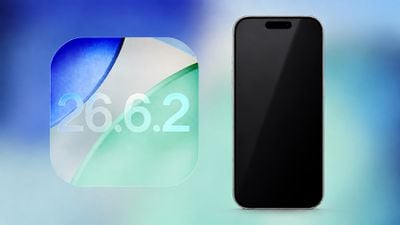
Apple today released iOS 26.6.2 with a fix for "an issue that prevents downloading a software update over a cellular connection."
The minor software update is rolling out now for the iPhone 11 series and newer. To update your iPhone, open the Settings app and tap on General → Software Update. It might take a few minutes for the update to be visible to everyone.
iOS 26.6.2 arrives approximately three weeks after iOS 26.6.1, which delivered security fixes.
Apple is expected to release iOS 27 later this month, with the company likely to announce a release date during its event this Wednesday.


 Apple will open pre-orders for at least the iPhone 18 Pro models on Saturday, September 12 at 12 a.m. Pacific Time, claims the X account "
 Apple planned to introduce high-end in-ear AirPods with built-in cameras for analyzing the surrounding environment at today's event, but the launch has been pushed to next year,
 Apple's foldable iPhone Duo will come with Apple Pencil support, reports
 The
The 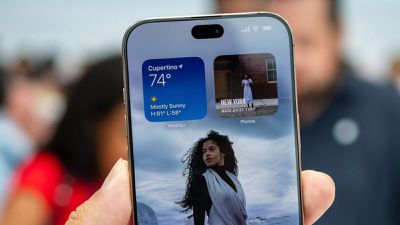

 Apple today released a firmware update (version 1.4.90) for its 140W USB-C Power Adapter.