To celebrate the launch of the iPhone Duo this Friday, Apple has set up oversized iPhone Duo promotional displays at Apple Fifth Avenue in New York City, Apple Covent Garden in London, Apple BKC in India, and Apple Jing'an in Shanghai.
The installations were already spotted under wraps, and Apple CEO John Ternus has since revealed what they look like in a photo of Apple Jing'an shared on his Weibo account today. The oversized iPhone Duo displays have mirrored finishes and glowing edges, and they show the device in various positions, or poses as Apple calls them.
Ternus is expected to be at Apple Fifth Avenue for iPhone Duo launch day. Apple said that its stores in the U.S. and select other countries will have "limited" availability of the iPhone Duo for walk-in customers tomorrow.
Apple has temporarily removed Keynote, Pages, and Numbers from the App Store, just after releasing an update that added iPhone Duo support and a new Intelligent Assistant.
It is not clear if the apps were removed intentionally, or if it is a bug. Apple has not said when the apps will be reinstated, but if it was in error, they should return soon.
Update: The Mac versions are back without the new update. The iOS versions don't seem to have returned to the App Store yet.
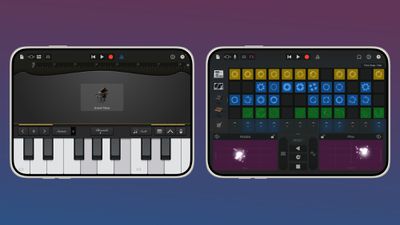
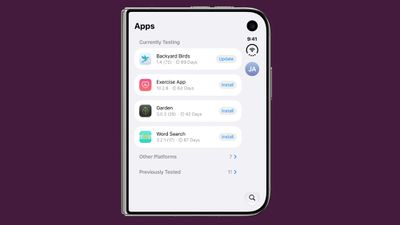
Apple today updated its TestFlight and GarageBand apps with support for the iPhone Duo's inner and outer displays.
Both apps have the vertical toolbar and will now display properly on the iPhone Duo in any orientation.
TestFlight functionality is largely the same with little benefit from the Duo display, but GarageBand gets a wide layout that takes full advantage of the inner screen. It offers up a bigger interface for music editing and using touch instruments like keyboards and guitars.
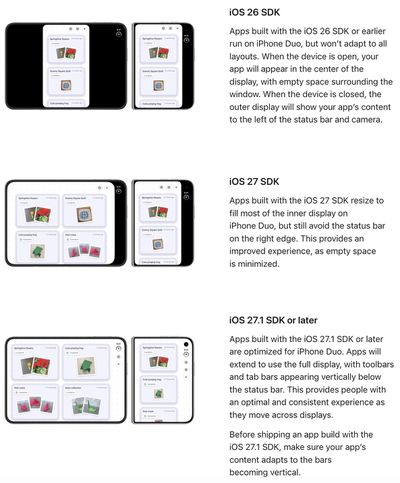
In order for an app to be optimized for the iPhone Duo, the developer needs to build it with the iOS 27.1 SDK or later. Apps optimized for the iPhone Duo fill the entire inner display, and the app's toolbar appears vertically below the status bar.
Apps built with the iOS 27 SDK fill most of the inner display on the iPhone Duo, but they still avoid the status bar on the right edge.
Apps built with the iOS 26 SDK or earlier run on the iPhone Duo, but the app will appear in the center of the inner display with lots of empty space on each side.
Many more apps are being optimized for the iPhone Duo each and every day, so keep a close eye on the App Store's updates menu.
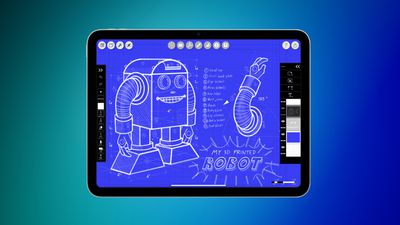
Amazon this week is taking $49 off Wi-Fi models of Apple's 11th generation iPad, with prices starting at $399.99 for the 128GB Wi-Fi iPad, down from $449.00. This is a match of the best price we've seen on the iPad since Apple's price hikes over the summer.
Note: MacRumors is an affiliate partner with Amazon. When you click a link and make a purchase, we may receive a small payment, which helps us keep the site running.
Additionally, Amazon has the 256GB Wi-Fi iPad for $499.99 ($49 off), and both have free delivery estimates around late October, but Prime members should be able to get same-day delivery in many locations. The 128GB model has all four colors on sale, while the 256GB model has three colors on sale.
If you're on the hunt for more discounts, be sure to visit our Apple Deals roundup where we recap the best Apple-related bargains of the past week.
Deals Newsletter
Interested in hearing more about the best deals you can find as we head into the holidays? You can sign up for our Deals Newsletter and we'll keep you updated so you don't miss the biggest deals of the season!
Apple today announced that F1 races on the Apple TV streaming service will now be broadcast with Dolby Atmos spatial sound, starting with the 2026 U.S. Grand Prix in Austin, Texas on October 23 to October 25. Apple's press release outlines everything F1 fans need to know about the U.S. Grand Prix and ways to follow along.
Apple TV has been the exclusive home of F1 in the U.S. since March, as part of a five-year partnership. All races are included with a subscription at no extra cost.
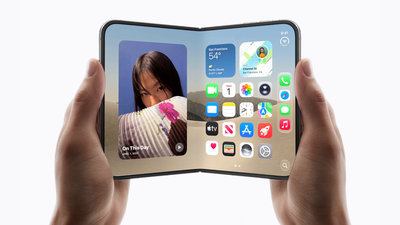
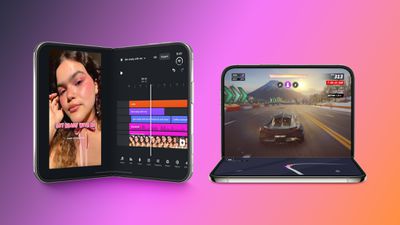
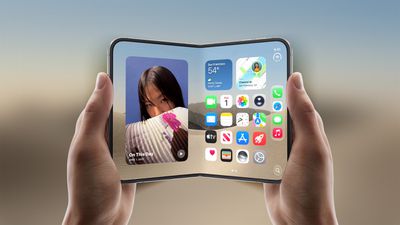
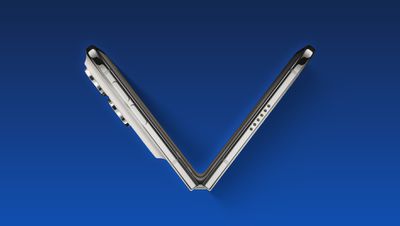
You can hold the iPhone Duo and set it down in a number of ways, such as partially folded like a book, placed down on a surface, or standing on its edges:
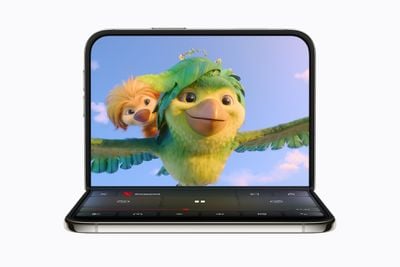
With the Netflix app, for example, Apple said iPhone Duo users can scroll through a feed of short, vertical movie and TV show clips on the outer display to discover something new to watch, and then open the device to keep watching on the inner display. Apple's screenshot shows the Netflix app on an iPhone Duo in a "seated" pose.
Apple also showed off Amazon's Prime Video app in a "seated" position.
Netflix
Prime Video
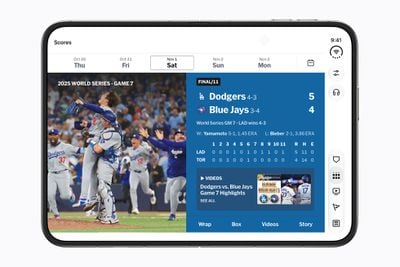
The official MLB app was updated with iPhone Duo support yesterday and now shows live games, scores, stats, and more across the full width of the inner display.
MLB
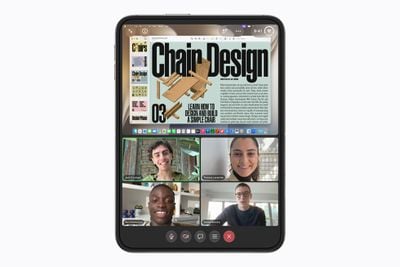
In the Zoom app, iPhone Duo users can see shared content and other participants all at once.
Zoom
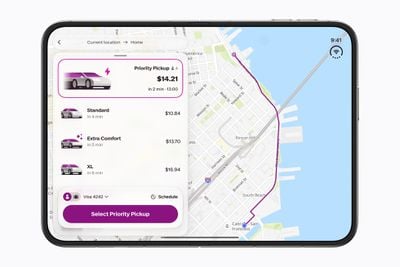
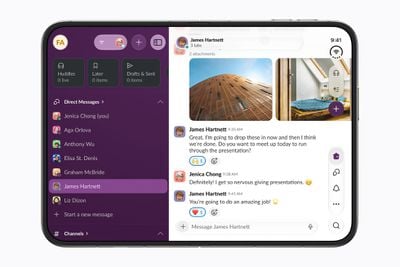
Slack and Lyft also take full advantage of the iPhone Duo's larger inner display.
Slack
Lyft
In the coming weeks, Apple said Microsoft's Word and Outlook apps will roll out a "desktop-class experience" that includes Word's formatting tools appearing alongside a document and Outlook's inbox visible next to a full message.
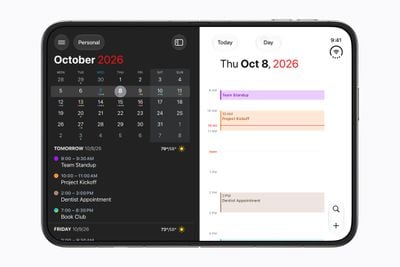
Other apps and games that are or will soon be optimized for the iPhone Duo include Flighty, Fantastical, Things, Bear, Notewise, SmartGym, Airmail, Paramount+, PGA Tour, Instagram, Edits, Sneaky Sasquatch, Retrocade, NYT Cooking, Lowe's, DoorDash, OpenTable, Yelp, American Airlines, United Airlines, Weibo, and more.
Apple has blocked compromised security certificates on its devices that could help attackers impersonate websites, BleepingComputer reports.
The certificates were issued by certificate authority eMudhra. According to Mozilla's investigation, their private keys were all numbers below 256, making them almost instantly recoverable. Attackers could use the affected website certificate keys to create fraudulent certificates that vulnerable software would trust.
Apple introduced the blocks on October 19, according to an advisory from Mozilla cryptography engineer Dennis Jackson. These protections stop software using Apple's system checks from trusting the compromised certificates.
Jackson says Safari and other major browsers had additional certificate checks that would have prevented attacks through this route. Whether attackers exploited other software remains unknown.
Apple has already distributed blocks for the compromised certificates. Mac users who use the affected command-line tools can find tests and mitigation instructions on Jackson's website.
Apple is preparing what appear to be giant iPhone Duo displays outside its Fifth Avenue store in New York ahead of the device's launch on Friday, October 23.
Photos from users on X show the structures on the plaza beside the glass cube. Their designs are hidden by wrapping and black covers, so it remains unclear exactly how Apple will present the device.
The outdoor installations accompany a substantial retail push inside the store. According to Bloomberg's Mark Gurman, Apple plans to allocate more than 150 iPhone Duo units to demonstrations and displays at Fifth Avenue. Typical non-flagship locations are expected to receive around 20 each.
Gurman also described new ways to demonstrate the foldable design, including a fixture that shows the device opening and closing. A separate MagSafe stand will hold an unfolded iPhone Duo beside two conventional iPhones for comparison.
Fifth Avenue's launch decorations have changed twice in just over a month. For September's iPhone 18 Pro release, Apple added color to the cube to reflect the new Burgundy and Glacier finishes.
The iPhone Duo goes on sale on Friday, October 23. Apple has confirmed limited walk-in availability in the United States and several other markets, warning that launch-day inventory is expected to sell out quickly. Stores in mainland China, France, Japan, and several other markets will require customers to reserve a pickup time through Apple's online store.
MacRumors will be on the ground for the launch event at Apple Fifth Avenue tomorrow.
Apple's second-generation iPhone Duo could gain Face ID, with prototypes already incorporating the technology beneath the outer display, according to Bloomberg's Mark Gurman.
In the latest episode of his "Power On" podcast, Gurman described Apple's work on adding facial authentication technology to its foldable iPhone. The company is said to be testing the hardware for a successor expected next fall, but has not finalized whether the feature will ship.
The current, first-generation iPhone Duo relies on a fingerprint sensor embedded in its side button, just like the iPad. Its thin design leaves limited space for the depth-sensing components needed for Face ID.
News of the prototype seems to represent a more concrete development of Gurman's earlier prediction about future iPhone Duo upgrades. In September, he suggested that smaller components and advances in artificial intelligence could help Apple add Face ID and a dedicated telephoto camera by the third generation.
Gurman also said that Apple is considering adding an Action button to a future iPhone Duo. The feature is noticeably lacking on the current model.
The first iPhone Duo launches tomorrow with a starting price of $1,999.
Tesla this week updated its app with native iPad and iPhone Duo support, adapting its vehicle and home energy controls for larger displays.
Previously, iPad users could install the iPhone app, but it lacked native support with a layout designed for the larger screen. The new interface essentially uses two columns, with navigation and controls on the left and a larger visualization of the vehicle or home on the right.
Tesla designer Alex Guichet announced the update on October 21, sharing screenshots and confirming support for Android tablets and foldable devices as well. The release arrives ahead of the iPhone Duo's launch on Friday, October 23.
The Tesla App is rolling out now for iPad, iPhone Duo, and Android Tablets and Foldables.
Finally on the big screens you bring around with you https://t.co/xfsqvMvTDa
— Alex Guichet (@AlexGuichet) October 21, 2026
The vehicle view provides access to features such as climate, charging, and security, alongside a large rendering of the car and shortcuts for vehicle controls. The home energy view displays power flowing between solar panels, a Powerwall, the home, and the grid.
Tesla's design team reworked multiple views to take advantage of the additional space, with further refinements planned for future releases.
The update follows Apple's opening of App Store submissions for iPhone Duo apps earlier this month. Existing iPhone apps can run on the device, but apps need to be built with the iOS 27.1 SDK or later to dynamically resize to fill its inner display. Unoptimized apps appear with black borders.
Version 4.62.0 of Tesla's app is now available on the App Store for the iPhone, iPad, and Apple Watch.
Strong pre-orders have reportedly prompted Apple to order millions more iPhone Duo units from suppliers, according to DigiTimes.
Supply chain sources said Foxconn and component manufacturers had received instructions reflecting a roughly 44% increase from 9.7 million to 14 million devices. The revised target reportedly follows strong pre-orders for Apple's first foldable iPhone and covers a full 12-month period, rather than the remainder of 2026.
Apple last week described demand as "nothing short of extraordinary." Within 30 minutes of pre-orders opening on October 16, U.S. shipping estimates had reached January 25 across all configurations.
Meeting the higher shipment target could still prove challenging. DigiTimes said output would depend on assembly progress, following earlier reports of manufacturing difficulties affecting assembly, displays, and hinges.
DigiTimes forecasts that global foldable smartphone shipments will grow 25.7% in 2026 and 59.1% in 2027, compared with 7.4% growth in 2025, with Apple's entry expected to contribute to the expansion.
The iPhone Duo launches on October 23, starting at $1,999 in the United States.
Fortnite will return to Australia's App Store today, Epic Games told Reuters, after a federal court ordered Apple to allow eligible Epic apps back onto the store.
Australia was the only country excluded when Fortnite returned to the App Store worldwide in May. Epic held off while seeking further court orders addressing Apple's payment terms. The requirement to process Epic's compliant submissions takes effect without waiting for the broader App Store changes due in March 2027.
Australia's Federal Court today ordered Apple to allow competing app stores, direct app downloads, and alternative payment services for Australian users from March 1, 2027.
The orders follow the court's August 2025 finding that Apple misused its market power by restricting app distribution and payment options. They cover users whose Apple Account region is Australia, with Apple Developer Program members worldwide able to participate.
Apple must let users find, download, install, and update apps through competing marketplaces and websites without charging for access or obstructing their use. Developers must receive the necessary tools on substantially the same terms as for App Store distribution, and Apple cannot penalize them for using competing stores or payment services.
Developers will also be able to offer alternative payments and link to other ways to pay, including within App Store apps. Apple cannot require them to offer its own purchasing system alongside alternatives, report those transactions, or allow Apple to audit them. Developers can offer lower prices through competing payment services without Apple preventing them.
The ruling also limits Apple's ability to collect fees on those purchases. It cannot charge for purchases through alternative payment services or websites in apps distributed outside the App Store. For App Store apps, fees are capped at the equivalent charge for payments for physical goods or services, plus any genuine, reasonable additional costs Apple incurs for digital purchases.
Apple also cannot make alternative distribution conditional on developers offering content purchased elsewhere through its own payment system.
Security checks will remain. Apps downloaded outside the App Store must undergo an automated security or privacy scan and be notarized by Apple or a qualified third party. However, Apple cannot impose disproportionate installation barriers or otherwise obstruct alternative distribution. Additional security requirements for competing payments must be necessary and proportionate, with developers given an explanation in advance.
Apple can remove or disable externally installed apps only in specified cases involving harmful content, genuine security risks, or legal requirements. It cannot ban third-party apps or alternative app stores from being preinstalled on iPhones, but does not have to distribute competing stores through the App Store.
Apple told Reuters that it plans to appeal the ruling and ask the court to pause its enforcement, citing its intellectual property rights and App Store security.
The changes take effect at noon Melbourne time on March 1, 2027. Apple can apply between February 1 and February 15, with supporting evidence, for a court-approved extension until May 3.
Note: This discussion thread is located in our Political News forum with special rules.
Apple's efforts to cut supply chain emissions face persistent challenges among printed circuit board manufacturers, where demand for more advanced components is increasing energy consumption, according to DigiTimes.
The report says requirements from Apple and Google are prompting suppliers to publish sustainability reports, buy more renewable electricity, and work with their own suppliers to cut emissions. Simultaneously, growing demand for more complex boards used in AI and high-performance computing is increasing the electricity and water needed for production.
The matter presents a challenge for Apple's requirement that its direct manufacturing suppliers use 100% renewable electricity for Apple production before 2030. Purchased electricity accounts for nearly 60% of the PCB industry's emissions, according to an analysis cited by DigiTimes.
Suppliers also face difficulties changing the materials they use. Lower-carbon alternatives do not yet meet all the performance requirements of advanced boards and require extensive testing before they can be widely adopted.
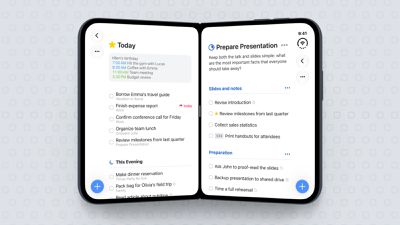
Cultured Code has updated its task management app Things with support for the iPhone Duo, introducing an adaptive layout, a sidebar, and multi-window support ahead of the device's launch on Friday.
The app's interface adjusts to the iPhone Duo's different configurations, including when it is closed, fully open, or partially folded like a book. The layout also supports both portrait and landscape orientations.
Opening the device reveals a sidebar for switching between lists, which is a first for Things on the iPhone. Users can also open two Things windows side by side and drag and drop items between them to organize their tasks.
Controls sit in a vertical bar within reach of the user's thumb. This includes Things' Magic Plus button, which can be dragged to a specific position in a list to insert a new to-do there.
Connecting a keyboard enables the full set of Things' keyboard features, including a persistent selection, keyboard shortcuts, and Type Travel for quickly navigating between lists.
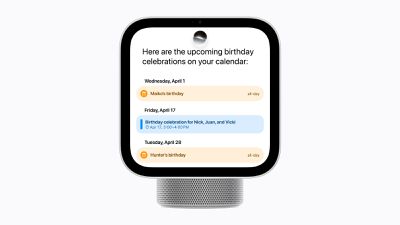
Apple designed Siri AI on the HomeView to complete household tasks with natural voice commands and minimal follow-up questions, executives told The Verge, emphasizing simplicity as a key feature of the new home hub.
In an new interview, Kaiann Drance, Apple's vice president of product marketing for home, linked the timing of HomeView's introduction to Siri AI's personal context capabilities and Apple's approach to privacy.
"With the magic of Siri AI, it comes together in a way that we haven't been able to deliver before," Drance said.
Lilian Rincon, Apple's vice president of product marketing for AI, described Siri AI as "much more capable," highlighting how conversational requests could make smart home accessories easier to control:
It's great because you can just ask it to change the temperature on your thermostat in a very natural way. As the Siri AI capabilities continue to evolve, the home experience is fitting to be able to interact with in this natural way.
Rincon said that allowing people to speak naturally broadens the audience for the technology:
Because now it can be my mother-in-law or the Gen Z who's in college, both of them can use this in the way that they naturally speak and get what they want.
Apple's approach apparently also places emphasis on limiting the exchanges needed to complete a task. Rincon said the assistant is designed to act on a request and let the user move on:
A lot of these assistants out there are always asking questions because they want more information. For us, it isn't about that. We're there to get it done, take an action for you, show you what you need to get done, and then really get out of the way.
HomeView can recognize up to six people and display information tailored to each user. Siri requests involving personal context require a paired device that supports Apple Intelligence. General knowledge questions, natural conversations, and improved music discovery are still available without an Apple Intelligence-compatible iPhone or iPad.
Apple announced the HomeView on October 13. The tabletop and wall-mounted models each cost $299 in the United States and launch on November 13.
Touch ID on the iPhone Duo might end up being frustrating for some users, based on media reviews that came out today. Multiple reviewers found Touch ID to be slow to unlock, which can be jarring coming from Face ID.
According to Marques Brownlee, Apple added an intentional delay to "every single" Touch ID unlock. After you touch a finger to the side button to unlock, it pauses on the Lock Screen. If you keep your finger there, it continues to the Home Screen.
It's technically smart. Like, it's giving people a chance to check to see their notifications real quick before it goes and unlocks it. And if they want to deliberately hold it longer, it'll unlock. But as someone who is used to the instant unlocks from Face ID, I was like, I need to find a way to turn this off. And I did not find that. Like it just makes the fingerprint reader feel slow when it's not slow [...]
I really think Face ID is going to be the number one thing people miss coming from other iPhones.
Brownlee says his workaround is to wake the iPhone Duo, swipe up, then touch the sensor for an instant unlock.
Engadget described Touch ID as taking "a bit longer to unlock than you might expect." Apple told the site that the Touch ID pause creates a more consistent experience when compared to other devices that use Touch ID, like Macs and iPads, and gives the phone time to wake up and display Lock Screen notifications.
In her review, Joanna Stern said she was fumbling unlocks even a week in, with five fingers registered. "Face ID, I cannot tell you how deeply I miss you," she said.
Mrwhosetheboss said the hold instead of the tap "feels like a tiny bit of extra friction 50 times a day." He found Touch ID could be problematic just after washing his hands or with slightly greasy fingers, plus he said it's really only comfortable to use in landscape orientation.
PetaPixel said Apple's choice to use Touch ID instead of Face ID "was a mistake," and found it to be slower than Face ID. Accidental presses when picking up or moving the iPhone also trigger a haptic error buzz. PetaPixel said it was buzzing constantly.
Apple allows the iPhone Duo to be unlocked with the Apple Watch as an alternative to Touch ID, and PetaPixel said this method of unlocking was faster than using Touch ID. Having a watch for unlocking "removed a lot of the friction" caused by Touch ID.
Brian Tong said Touch ID feels like a step back. "I'm going to tell you right now, you will want to wear an Apple Watch," he said.
Gizmodo's Raymond Wong said he missed Face ID every time he grabbed the iPhone Duo off a desk or out of a pocket and he remembered he had to put a registered finger on the button for unlocking. He said it was difficult to get used to not being able to look to authenticate a payment with Apple Pay. Wong also points out that as with old iPhones, winter gloves will need to come off for unlocking.
The Verge said "a week" was long enough to get used to Touch ID, and that it's "mostly painless once you remember you're supposed to be using it." 9to5Mac said the iPhone Duo's biggest tradeoff might be Touch ID, but also described it as working "quickly and reliably."
If you're getting an iPhone Duo, will you miss Face ID? Let us know in the comments below.



 Note: MacRumors is an affiliate partner with Amazon. When you click a link and make a purchase, we may receive a small payment, which helps us keep the site running.
 Apple today announced that F1 races on the Apple TV streaming service will now be broadcast with Dolby Atmos spatial sound, starting with the 2026 U.S. Grand Prix in Austin, Texas on October 23 to October 25. Apple's press release outlines

 Netflix
 Prime Video
 MLB
 Zoom
 Slack
 Fantastical


 Fortnite will return to Australia's