Apple's Exploration of Pressure Sensitive Touch Screens Continues - MacRumorsOpen MenuShow RoundupsShow Forums menuVisit ForumsOpen Sidebar
Skip to Content

Apple's Exploration of Pressure Sensitive Touch Screens Continues

Apple is exploring touch screen technology that determines pressure sensitivity using a combination of capacitive touch and infrared light sensing, according to a new patent application recently published by the United States Patent and Trademark Office (via AppleInsider).

The patent describes a method of determining the force of a user's touch on a capacitive screen using infrared transmit lines from transmitters and receivers positioned under the frame of the cover glass. Capacitive touch combined with light would determine both the position of the finger and distinguish a soft touch from a harder touch, allowing Apple to implement gestures that could vary with force.

Using infrared light to determine where a user touches a screen is a method known as Frustrated Total Internal Reflection, or FTIR. FTIR is essentially a light-based way to detect multitouch, bouncing infrared light off of the touch screen to detect interference from a finger. When combined with capacitive touch, the interference measurements can also deduce force.

FTIR has been used by Microsoft for its Perceptive Pixel products, as noted in Apple's patent application. Microsoft offers several large-screened multi-touch sensing devices that use FTIR and offers a technology called Microsoft PixelSense, which is used in the Samsung SUR40.


As implemented by Microsoft, the FTIR technology, which uses cameras to detect light refracted by pressure, allows multiple people to use the device at once and it also recognizes and distinguishes objects that are not fingers.

Though Apple has not yet built pressure sensitivity into the touch screens of its mobile devices, the company has been looking at various techniques for implementing pressure detection over the last several years. In addition to infrared light, Apple has explored force sensors, spring membranes, and pressure sensitive device casings.

Given Apple's continued interest in pressure sensitive touch screens and competing products that already include pressure sensitivity, such as Microsoft's Surface Pro line of tablets, the implementation of the technology in some form or another seems like a logical step for Apple's future mobile devices.
Popular Stories

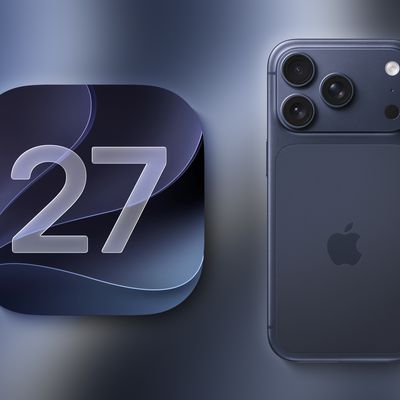
macOS 27 on MacBook Pro

Apple Says macOS 27 Won't Be Compatible With These Macs

Wednesday June 3, 2026 8:29 am PDT by
During WWDC 2025, Apple revealed that macOS 26 Tahoe would be the final major macOS version for Intel-based Macs. macOS 27 will be compatible with Apple silicon Macs only, meaning that you will need a Mac with an M-series chip or a MacBook Neo with an A18 Pro chip in order to install the software update. Apple will unveil macOS 27 during its WWDC 2026 keynote this Monday, June 8, and the...
MacBook Neo on Yellow Feature

MacBook Neo is So Popular That Apple Reportedly Doubled Production

Wednesday June 3, 2026 9:24 am PDT by
On an earnings call in late April, Apple's CEO Tim Cook said that customer response to the MacBook Neo was "off the charts," and the popularity of the laptop has reportedly led the company to significantly boost production. Apple supply chain analyst Ming-Chi Kuo this week said he believes that MacBook Neo shipments to Apple were doubled from an initial target of 5 million units to 10...
iphone 18 pro blue%402x

iPhone 18 Pro: Dark Cherry, Light Blue, and Dark Gray Chassis Leaked [Update]

Thursday June 4, 2026 5:18 am PDT by
Update: Since publication, new information has come to light suggesting the images have been AI-manipulated and are not in fact iPhone 18 Pro chassis parts. The original article follows. The color options Apple is reportedly planning for the upcoming iPhone 18 Pro and ‌iPhone 18 Pro‌ Max have appeared online today in the form of images of chassis parts of unknown authenticity....

Top Rated Comments

159 months ago
I can't be the only one who finds it at least a little bit comical/ironic how an interface with the name of Frustrated Total Internal Reflection, is being offered by Microsoft.. :-) That pretty well sums up my experience with their O/S's at least!
Score: 5 Votes (Like | Disagree)
doug in albq Avatar
159 months ago
I wonder if this technology could be used to detect finger placement before the finger touches the screen...for mouse-over-like effects on links, and whatnot?
Score: 4 Votes (Like | Disagree)
sualpine Avatar
159 months ago
I love how they need to research this when Wacom is already on multiple tablets for Android and Windows.

Is Apple too proud to license?
Score: 3 Votes (Like | Disagree)
philips Avatar
159 months ago
ZOMG. Apple hasn't invented it yet, but Samsung and Microsoft are already copying it!!!

P.S. The thing is, the pressure sensitive tech has one major problem on portable devices: they are, well, portable and often are held in the hand. Even if highly effective/precise method of measuring the pressure would emerge, it would still be a gimmick, because human hands are not as precise. Same applies to the Samsung's finger-hover-over-the-screen thingy.
Score: 3 Votes (Like | Disagree)
159 months ago
Even though Samsung has a product already with something similar but developed by Microsoft?

Shhhhh. Don't re-align that reality distortion field on him without warning...
Score: 3 Votes (Like | Disagree)
jclo Avatar
159 months ago
Didn't they implement some sort of pressure sensitivity in the Garage Band app for iPad? I thought there was something like the harder you hit a drum the loaded the sound would be. Or is that something completely different?

GarageBand uses the accelerometer to determine how hard the screen was tapped, but it's not super accurate.
Score: 3 Votes (Like | Disagree)