iOS 9 Adoption Jumps to 66 Percent After iOS 9.1 Emoji Update
Since launching in September alongside the iPhone 6s and 6s Plus, iOS 9 has seen its adoption rate grow to 66 percent of active iOS devices, according to numbers on the Apple Developer Support page. Two weeks ago, iOS 9 adoption sat at 61 percent.
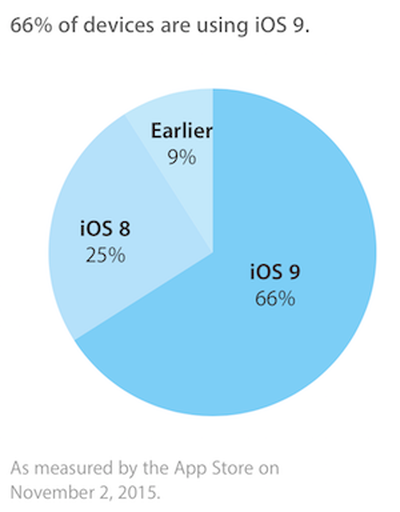 After 24 hours, iOS 9 adoption was in line with the adoption rate of iOS 8. However, in late September Apple announced that the newest version of iOS had the fastest adoption ever and was on pace to be downloaded by more users than any other version of the mobile operating system. iOS 8 only achieved a 64 percent adoption rate by December 23 and a 68 percent adoption rate by January 7, ending up with a high of 87 percent on the eve of iOS 9's launch.
Apple released the first major update to iOS 9 two weeks ago with iOS 9.1, which featured a slew of brand-new emojis. Since that update, iOS 9 adoption has grown by 5 percent. Earlier today Apple seeded the second beta for iOS 9.2, the second major update to its newest mobile operating system.
Popular Stories
When the iPhone Duo launched, we shared a list of some of the fun apps developers created for the new form factor. Two weeks out, developers are continuing to come up with fresh ideas, so we thought we'd share some of our favorites.
Games
Marbles Unhinged ($2.99) - Marbles Unhinged is a marble maze designed for the Duo. When you fold it, the floor turns into a ramp. If you stand the top...
Apple is launching five new products on Friday, November 6, following pre-orders that opened last week, including its first touchscreen MacBook Pro models.
The following new products will be available from today:
iPad mini with OLED display and A20 Pro chip
iMac with M6 chip
14-inch MacBook Pro with M6 chip
14-inch MacBook Pro with OLED touchscreen
16-inch MacBook Pro with OLED...
Apple has made a change to its development process for iOS 28, macOS 28, and corresponding software updates, according to Bloomberg's Mark Gurman.
In his Power On newsletter today, he said Apple separates development of each year's new operating systems into three major stages. Typically, he said each stage consists of four weeks of coding followed by a four-week "convergence" period where...