Source Code for Apple's Lisa Operating System to be Released for Free in 2018 - MacRumorsOpen MenuShow RoundupsShow Forums menuVisit ForumsOpen Sidebar
Skip to Content

Source Code for Apple's Lisa Operating System to be Released for Free in 2018

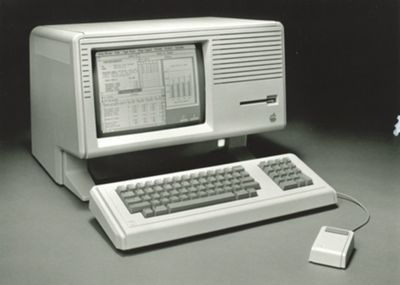
The Apple Lisa, released in 1983, was one of the first personal computers to come equipped with a graphical user interface, and soon the operating system that ran on the Lisa will available for free, courtesy of the Computer History Museum and Apple.
lisacomputer
As noted by Gizmodo, Al Kossow, a software curator at the Computer History Museum, recently announced that both the source code for the Lisa operating system and the Lisa apps have been recovered. Apple is reviewing the source code, and once that's done, the museum will be releasing the code publicly.

Just wanted to let everyone know the sources to the OS and applications were recovered, I converted them to Unix end of line conventions and spaces for Pascal tabs after recovering the files using Disk Image Chef, and they are with Apple for review. After that's done, CHM will do an @CHM blog post about the historical significance of the software and the code that is cleared for release by Apple will be made available in 2018.

The only thing I saw that probably won't be able to be released is the American Heritage dictionary for the spell checker in LisaWrite.

Back when the Lisa was first released, Apple charged $9,995, with the machine aimed at business users. It was equipped with a 5MHz Motorola 68000 CPU, 1MB of RAM, and a 5MB hard drive. Given its high price, Apple only managed to sell about 100,000 of the Lisa computers. Though Steve Jobs originally denied it, he later said the Lisa was named for his daughter, Lisa Brennan.

Apple's Lisa operating system featured the text-based Workshop for developing software and the Lisa Office System, which had seven apps that included LisaWrite, LisaCalc, LisaDraw, LisaGraph, LisaProject, LisaList, and LisaTerminal.

The Lisa computer was followed by the Macintosh in 1984, and the Macintosh was essentially a more affordable, improved version of the Lisa, which allowed it to outsell the Lisa. Though Apple did introduce additional versions of the Lisa computer at a lower price tag, it was ultimately discontinued only a few short years after its introduction.

Popular Stories

iCloud iPhone 17 Pro

iPhone Users Who Pay for iCloud Storage Get Two New Perks on iOS 27

Thursday July 2, 2026 6:10 am PDT by
If you pay for certain iCloud+ storage plans beyond the 5GB that Apple offers for free, you will receive two more perks on iOS 27 at no additional cost. A summary of the two new iCloud+ perks on iOS 27:Increased daily usage limits for some new Apple Intelligence features, including image generation in the revamped Image Playground app. HomeKit Secure Video cameras receive generated video...
Apple Event Logo

Apple Just Released a New Product

Thursday July 2, 2026 8:04 am PDT by
Apple's first product release of summer 2026 occurred this week, but do not get too excited, as it is merely the Beats Solo Buds in a new color. Beats Solo Buds are now offered in orange through Best Buy in the U.S., with availability set to expand to 7-Eleven stores in Japan on July 4. Apple already offered orange Solo Buds in India for free with the purchase of an iPhone 15 or iPhone 15 ...
iPhone 4 on Black Feature

Apple Facing One of Its Worst Leaks Since the iPhone 4

Thursday July 2, 2026 9:53 am PDT by
Apple supplier Tata Electronics recently suffered a cyberattack that resulted in thousands of confidential files being published on the dark web, and this reportedly included some photos and documents related to the upcoming iPhone 18 Pro. We have elected not to share any of the leaked photos in this story due to the illegal nature in which they were obtained, but they can easily be found...

Top Rated Comments

chucker23n1 Avatar
111 months ago
I wonder why ? what a are the benefits to this ?
“What have museums and History class ever done for us?”

That’s why. Learning from history, being inspired by greatness, extrapolating what’s next.
Score: 26 Votes (Like | Disagree)
skeuomorphism Avatar
111 months ago
Absolutely cool! Guessing it'll be C with some Assembly thrown in there for critical areas. But this will just be cool to look at for all the programmers out there.
Almost certainly no C. Apple used Pascal as its primary higher-level language back then. The source to QuickDraw and MacPaint were released in 2010. QuickDraw is entirely assembly, and MacPaint is a combination of Pascal and Assembly.
Score: 16 Votes (Like | Disagree)
111 months ago
$9995 in 1985 is equivalent to over $25k in 2017. So a top-of-the-line iMac Pro ($13k) is still about half of what the Lisa cost back then. For an exponentially more powerful computer. As a business machine, the price is fair.
Score: 14 Votes (Like | Disagree)
kdarling Avatar
111 months ago
Jobs was actually taken to PARC by Apple engineers who wanted to show him what the Macintosh could become so he (and Apple's Board) would not cancel the project ...
Close. His project at the time was the Lisa, not the later Mac.

the team had already developed a problematic GUI prior to the PARC visit
True. Apple's Lisa UI, before going to Xerox, was keyboard driven. Their switch to a GUI was hugely driven by what they saw at Xerox in late 1979.


Apple also invested (via $100,000 in stock) in Xerox / PARC after this second visit and agreed to purchase Xerox services.
No, that's really backwards :), as Apple invested nothing.

Apple was offering pre-IPO stock options to many investors, no strings attached. At the time, Apple needed angel investors, needed the money, and the best way to raise interest in a new stock is to offer pre-IPO options. Thus there was NO need for Xerox to offer anything in return for the investment Apple needed.

Xerox Development Corporation (XDC - an investment arm) took 1.6% of the pre-IP stock options (they didn't actually buy it for another year or so).

It was LATER ON AFTER this that Steve Jobs took advantage of contacts made via that PRE-EXISTING XDC investment connection, to wrangle (Xerox insiders say "bully") his way into a late 1979 visit to the totally different Xerox PARC section.

And while Mac OS did adopt some of the "big picture" elements of Alto / Star - including the use of a GUI and a mouse - the Mac implemented things in it's own unique way
True, except Lisa came before the Mac.

(which is why an infringement suit by Xerox against Apple in 1990 was subsequently thrown out).
Nope. Xerox waited too long to file a necessary legal document, so the case was decided on the slim evidence already given about copyrights.

You might be thinkng about the Apple-Microsoft suit going on at about the same period in time.

Note btw that Apple never claimed to have a GUI license from Xerox. That particular myth seems to have arisen later on.

Attachment Image
Score: 12 Votes (Like | Disagree)
111 months ago
Per Al Kossow, the Lisa operating system has some historical significance which will be detailed in an upcoming CHM blog post that will accompany the release of the operating system source code.

What we already know is that the Lisa operating system was one of the first graphical user interfaces to a commercial operating system, much of it cribbed by Apple from a quick visit to Xerox PARC. Microsoft Windows quickly followed the Lisa operating system and while Apple claimed that Microsoft had copied the Lisa operating system, in fact Microsoft had also seen the Xerox PARC work themselves.

The Lisa operating system was followed by the Macintosh and its game-changing operating system.
It was NOT cribbed, stolen, borrowed or anything other remotely suspect. It was paid for with a s-load of pre-IPO apple stock. Also when the Mac was first introduced the apps had to be written and compiled on the Lisa.
Score: 12 Votes (Like | Disagree)
Bart Kela Avatar
111 months ago
I wonder why ? what a are the benefits to this ?
Per Al Kossow, the Lisa operating system has some historical significance which will be detailed in an upcoming CHM blog post that will accompany the release of the operating system source code.

What we already know is that the Lisa operating system was one of the first graphical user interfaces to a commercial operating system, much of it cribbed by Apple from a quick visit to Xerox PARC. Microsoft Windows quickly followed the Lisa operating system and while Apple claimed that Microsoft had copied the Lisa operating system, in fact Microsoft had also seen the Xerox PARC work themselves.

The Lisa operating system was followed by the Macintosh and its game-changing operating system.
Score: 12 Votes (Like | Disagree)