'Creative Selection' Offers a Behind-the-Scenes Look Into Some Key Moments in Apple's Design History - MacRumorsOpen MenuShow RoundupsShow Forums menuVisit ForumsOpen Sidebar
Skip to Content

'Creative Selection' Offers a Behind-the-Scenes Look Into Some Key Moments in Apple's Design History

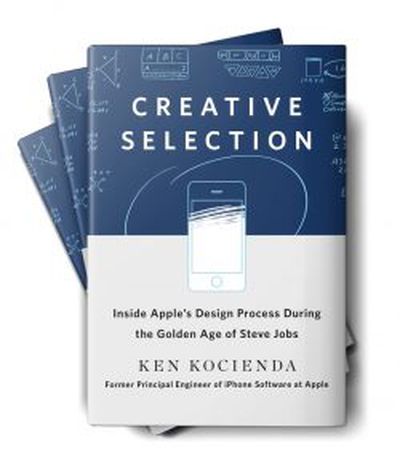
creative selectionFormer Apple software engineer Ken Kocienda is releasing a new book entitled Creative Selection today, presenting a look inside Apple's design process through his involvement with a few key features across a variety of platforms and devices. I've had an opportunity to read through the book ahead of its debut, and it offers an interesting perspective on how Apple develops and refines features through an iterative process Kocienda terms "creative selection."

Kocienda, who joined Apple in 2001 and spent 15 years with the company, identifies seven "elements" he deems essential to Apple's success in software development, including inspiration, collaboration, craft, diligence, decisiveness, taste, and empathy. He delves a bit into how each of these elements contributes toward Apple's relentless pursuit of innovative ideas and solutions that end up being intuitive and useful to Apple's customers.

The process of creative selection is the overarching strategy for Apple's engineers, with small teams highly focused on rapid-fire demos of their work that allow the engineers to quickly iterate on their ideas and designs, saving the best elements of each iteration to rapidly reach levels of refinement required for Apple's final product releases.

Back in 2001, Kocienda was part of a team from former Apple engineer Andy Hertzfeld's software company Eazel that went defunct. Following Eazel's shutdown, Kocienda and Don Melton were hired on at Apple to develop Safari for Mac, and a number of other Eazel engineers ultimately joined them on the project. But in the first days of Apple's web browser project, it was Kocienda and Melton who got the ball rolling by trying to figure out how to port Mozilla to Mac OS X.

In Creative Selection, Kocienda spends several chapters walking through those difficult first steps, the inspiration of Richard Williamson to build Safari based on the lean and nimble Konqueror browser rather than Mozilla, and the Safari team's relentless effort toward building out a working web browser with an obsessive focus on speed.

As we introduced new features like clicking the back button to return you to your previously viewed web page, we found we couldn't perform the bookkeeping to manage the previous page at quick readiness without impeding the load of all pages. The PLT [Page Load Test] showed the slowdown. When we deemed such features too important to skip but couldn't figure out how to add them without causing such slowdowns, we instituted a trading scheme, where we found speedups in unrelated parts of our existing source code to "pay for" the performance cost of the new features.

[...]

None of this optimization was easy, and it wasn't always fun, but Don [Melton] always held the line. And in the year following the Black Slab Encounter [the first time the browser was able to load a real "web page" from Yahoo.com], we succeeded in making our code faster and faster.

Once Safari launched, Kocienda shifted to a project to bring WebKit-based rich email editing to Apple's Mail app, and he details the lengths he went to in order to make insertion point cursor placement behave properly, a feature that's more complicated than one might think.

Following a brief stint as a manager of Apple's Sync Services team for cloud data synchronization in which he found the job wasn't for him, Kocienda in mid-2005 boldly threatened to quit and perhaps move to Google if he couldn't be switched to a new role on the "new super-secret project" that was rumored within the company. He soon found himself interviewing with Scott Forstall, who invited him to join Project Purple, the effort to build the iPhone.

Kocienda's key contribution to Project Purple was the development of the autocorrect keyboard, and he walks through Apple's early efforts to figure out how a keyboard could work on the small screen of the iPhone. As the keyboard quickly became a roadblock for the iPhone's software design, the entire fifteen-person team was tasked with developing concepts. In demos for Forstall, Kocienda's early idea of large keys preserving the QWERTY layout but with multiple letters per key and a dictionary used to predict which word the user was trying to type won out and he was placed in charge of keyboard development.

That was of course just the start of the keyboard project for Kocienda, and he walks through the evolution of the design, the trials and tribulations of building a comprehensive dictionary to drive the autocorrect functionality, and the decision to ultimately go back to single-letter keys with algorithms for key prediction and autocorrect.

Through all of this, Kocienda had never seen the design of the actual iPhone, as hardware design was completely separate from software and his team had been using "Wallaby" prototype devices tethered to Macs as their software development and testing platforms. It wasn't until late 2006 that Kocienda got his first look at the actual iPhone Steve Jobs would show off just a few weeks later at Macworld Expo.

When Kim [Vorrath] passed the prototype to me, she asked me to handle it gingerly. I took it from her. The glass display was striking—far brighter and sharper than the Wallaby screen we'd been staring at for more than a year. I turned the device over in my hand. It felt solid, like it was filled to the brim with the latest technology, and it was. In fact, at that moment, it was overflowing a bit.

I paced back and forth a few times to feel the freedom of movement that came with untethering from a Mac. The Wallaby experience had been about feeling tied down to a computer on a desk with cabling spidering out everywhere. Now, for the first time, as I put the phone in my pocket, I got an idea of what it would be like to use a Purple phone.

Naturally, I was most interested in the keyboard. I typed out a few words in the Notes app. The keyboard worked without a hitch. My autocorrection code stepped in to fix all the mistakes I made. I could have spent all day with the device, trying out everything I could think of, but other people were waiting for their turn. As I handed the device over, I had no question in mind.

I wanted one.

Kocienda never had the opportunity to demo any of his iPhone work directly to Steve Jobs, but he did get that chance several times during his subsequent work on the iPad's software keyboard. Kocienda shares the experience of that demo in the very first chapter of his book, describing how he was initially planning to offer users the ability to choose between a Mac-like keyboard layout with smaller keys and a scaled-up iPhone-like keyboard with larger keys more similar in size to physical keys.

He turned to look straight at me.

"We only need one of these, right?"

Not what I was expecting. I think I may have swallowed hard. Steve was still looking at me, and so, with a half shrug, I said, "Yeah . . . uh . . . I guess so."

Steve sized me up a little and then asked, "Which one do you think we should use?"

A simple question, clearly directed at me and only me. Steve didn't shift in his chair or motion toward anyone else in the room. It was my demo, and he wanted me to answer.

And then something happened. Standing there, with Steve Jobs staring at me, waiting for me to respond to his question, I realized that I knew what to say, that I had an opinion.

"Well, I've been using these demos for the past few days, and I've started to like the keyboard layout with the bigger keys. I think I could learn to touch type on it, and I think other people could too. Autocorrection has been a big help."

Steve continued looking at me as he thought about my answer. He never moved his eyes to anyone or anything else. He was completely present. There he was, seriously considering my idea about the next big Apple product. It was thrilling. He thought for a few seconds about what I had just said and what he had seen on the iPad. Then he announced the demo verdict.

"OK. We'll go with the bigger keys."

Overall, Creative Selection is a worthy read, focusing on a few detailed anecdotes that provide a terrific inside look at Apple's design process. Given Apple's size and the way the company compartmentalizes its projects, Kocienda doesn't necessarily have a high-level view of things, but he does a good job drawing on his experiences to discuss his individual philosophy and that of the teams he worked with, extrapolating that to the unspoken criteria used across the company to drive the creative selection process that has yielded the products and features we've all come to know.

Creative Selection is available now from Amazon, the iBooks Store, and other retailers.
Popular Stories

apple pro tell logo

Apple Launching Five New Products Today

Thursday November 5, 2026 12:59 am PST by
Apple is launching five new products on Friday, November 6, following pre-orders that opened last week, including its first touchscreen MacBook Pro models. The following new products will be available from today: iPad mini with OLED display and A20 Pro chip iMac with M6 chip 14-inch MacBook Pro with M6 chip 14-inch MacBook Pro with OLED touchscreen 16-inch MacBook Pro with OLED...


duo aquarium

More Fun iPhone Duo Apps: 30 New Picks to Try

Friday November 6, 2026 3:27 pm PST by
When the iPhone Duo launched, we shared a list of some of the fun apps developers created for the new form factor. Two weeks out, developers are continuing to come up with fresh ideas, so we thought we'd share some of our favorites. Games Marbles Unhinged ($2.99) - Marbles Unhinged is a marble maze designed for the Duo. When you fold it, the floor turns into a ramp. If you stand the top...
silver iphone 18 pro

Apple Rumored to Drop the iPhone's Action Button Next Year

Friday November 6, 2026 6:07 am PST by
Apple plans to merge the iPhone's Action button with the Camera Control starting next year, according to the leaker known as "Instant Digital." In a new post on Weibo, the leaker claimed that a single press of the combined button would open the camera, while a long press would trigger the function assigned to the Action button. They explicitly clarified that the dedicated Action button would ...

Top Rated Comments

Delgibbons Avatar
107 months ago
That was a year ago.
By now, the competition has taken over design & configurability.
Cook & the Cookettes have definitely and completely spoiled Apple’s cometitive advantage. Too sad nobody annihilated him in time. But let’s celebrate history - that’s what generates attention in the former Mac community.
Current design standards don't live up to the history of the company imho.....


Attachment Image
Score: 26 Votes (Like | Disagree)
107 months ago
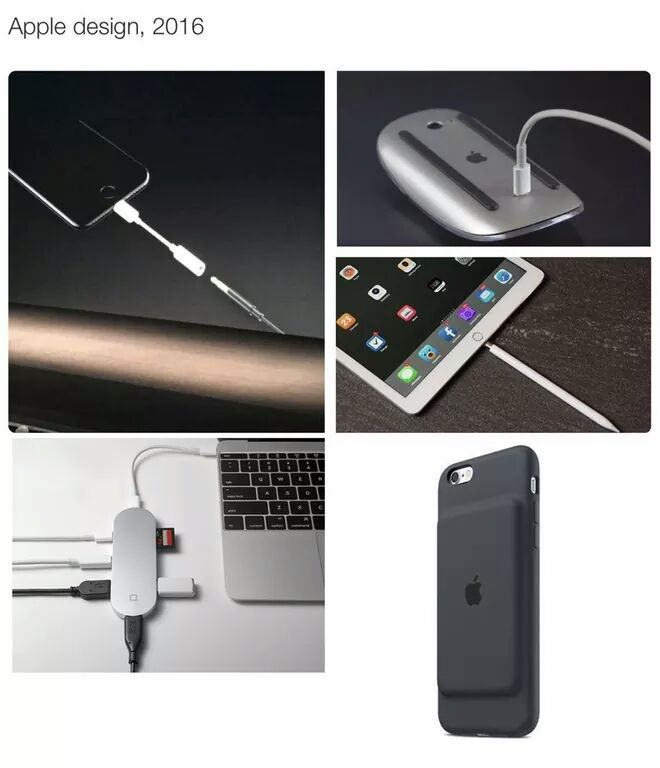
keep design same for 4 years (iPhone 6, 6s, 7, 8) :D
Because, all of the smart phone competitors were so much creative over the iPhone and drastic in their design changes Over the years? You can’t just pick on the iPhone without looking at the smart phone era as a whole.

But in retrospect, if you look at the actual iPhone X years ago to where it is today, it is astonishing to see all the changes to technology that is included in the iPhone there’s more powerful than a desktop computer that was 10 years ago.

Also, To be more specific, there were design elements and cues that were changed with the iPhone models 6/6/7/8 with the dual camera, introduction of the haptic home button, stereo Grill speaker implementation, elimination of the 3.5 Jack, ect.
Score: 7 Votes (Like | Disagree)
kdarling Avatar
107 months ago
Because you’re not supposed to be charging the mouse while using it.
You must not have a job with deadlines.
Score: 6 Votes (Like | Disagree)
Bacillus Avatar
107 months ago
Well this article was about design and Apple did make leaps and bounds but recently I feel they have stagnated. Yes, Apple does make a great looking laptop compared to most of the competition.
That was a year ago.
By now, the competition has taken over design & configurability.
Cook & the Cookettes have definitely and completely spoiled Apple’s competitive advantage. Too sad nobody annihilated him in time. But let’s celebrate history - that’s what generates attention in the former Mac community.
Score: 5 Votes (Like | Disagree)
Quu Avatar
107 months ago
It's amazing what they accomplished with the iPhone and iPad. I was an Apple user before the iPhone unveil and like many I had owned an iPod, the original fat one with the shiny mirror steel case.

I never thought Apple entering the phone sphere would be able to do anything different. I remember the rumours that they were working on a phone, I remember someone passionately asking Steve Jobs in a Q&A please make a phone! and he demurred all the while knowing they were in-fact working on the iPhone.

I remember the Motorola Rokr.. god awful that thing was. Seeing how far ahead the iPhone was software wise, it really was a generational leap and it's wonderful reading the stories from the engineers who worked on it.

It's amazing how much effort was put into making the keyboard usable. Something we all just take for granted but it's a fundamental piece of the phone that if they didn't get right could have caused the iPhone to flop and change the course of the smartphone entirely.
Score: 5 Votes (Like | Disagree)
107 months ago
Some key moments - thinner, thinner, take things out, thinner, take more things out and use copious amounts of glue, take more things out, thinner, keep design same for 4 years (iPhone 6, 6s, 7, 8) :D
Score: 5 Votes (Like | Disagree)
Latest Stories
Siri AI Rumored to Become 'More Like an Agent' as Early as Next Year
3 hours ago
Apple Taking New Approach to Developing iOS 28 and macOS 28
5 hours ago
Early Apple Black Friday Deals on Apple Watch, MacBook Air, and More
1 day ago
'Backglow' Lets You Customize New MacBook Pro's Glowing Apple Logo
1 day ago
Top Stories: Apple Product Launches, iOS 27.3 Beta, and More
1 day ago
More Fun iPhone Duo Apps: 30 New Picks to Try
2 days ago
Hands-On With Apple's New OLED Touchscreen MacBook Pro
2 days ago
Apple Store With All-New Design Opening Soon in Southern California
2 days ago
Control the Glowing Apple Logo on Your New MacBook Pro
2 days ago
Apple Shares New 'Apple Card: Apply and Use in Minutes' Ad
2 days ago
Apple Says More Than 100,000 Apps Optimized for iPhone Duo, Here's What's Still Missing
2 days ago
Early Black Friday Deals Kickoff With Steep Discounts on Apple Watch Ultras and More
2 days ago
The MacRumors Show: iOS 27.3 Looks Like a Huge Update
2 days ago
Best Buy's Black Friday Event Begins With Sitewide Savings on Apple, TVs, More
2 days ago
Apple Releasing Yet Another Two New Products Next Week
2 days ago
MacBook Air Drops to Lowest Price in Months With Amazon's $250 Discount
2 days ago
Apple Rumored to Drop the iPhone's Action Button Next Year
2 days ago
Apple's Extended Return Policy Now in Effect for 2026 Holiday Season
2 days ago
Apple Music Classical Updated With New Icon and Refreshed Design
2 days ago
OLED iPad Mini, M6 iMac, and New MacBook Pros Available From Today
2 days ago
Apple Surveys iPhone Duo Buyers About Crease and Camera
3 days ago
Apple's First Touchscreen Mac is Now Arriving to Customers
3 days ago
Claude Gets Personal Finance Feature With Bank Account Linking
3 days ago
Apple Arcade Adds Crossy Road Rush and NBA 2K27
3 days ago
Apple's New HomeView Smart Home Hub: Here's How Much RAM It Has
3 days ago
iPad Mini vs. iPad Air Buyer's Guide: Now Just $50 Apart
3 days ago
First iOS 27.3 and macOS Golden Gate 27.3 Public Betas Now Available
3 days ago
Apple Announces a New Mac Sales Record
3 days ago
Paid $200 for Logic Pro? Apple Says You Won't Get This New Feature
3 days ago
Instagram's Edits Video Editor is Now Available on Mac
3 days ago