iPhone 12 Models Might Support Reverse Charging of Future Apple Accessories According to FCC Filing
iPhone 12 models could have an inactive wireless charging feature for accessories, according to an FCC filing discovered by VentureBeat's Jeremy Horwitz.
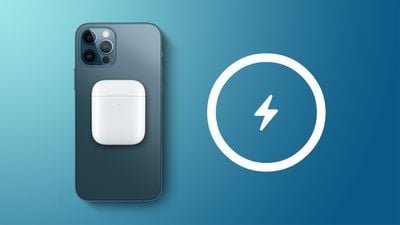
In the filing, Apple said that 2020 iPhones support a wireless charging function that will seemingly be enabled for at least one future Apple accessory:
In addition to being able to be charged by a desktop WPT charger (puck), 2020 iPhones also support WPT charging function at 360 kHz to charge accessories. Currently the only accessory that can be charged by iPhones is an external potential apple accessory in future.
Bloomberg's Mark Gurman speculated that one of these accessories could be new AirPods with MagSafe support, which could allow the AirPods case to magnetically attach and charge on the back of iPhone 12 models. It would also be reasonable if Apple's long-awaited AirTags item trackers were able to be charged on the back of an iPhone 12.
Two-way charging was a feature rumored for the iPhone 11 lineup in 2019, but Apple analyst Ming-Chi Kuo later said the feature was possibly abandoned because "the charging efficiency may not meet Apple's requirements."
Popular Stories
When the iPhone Duo launched, we shared a list of some of the fun apps developers created for the new form factor. Two weeks out, developers are continuing to come up with fresh ideas, so we thought we'd share some of our favorites.
Games
Marbles Unhinged ($2.99) - Marbles Unhinged is a marble maze designed for the Duo. When you fold it, the floor turns into a ramp. If you stand the top...
Apple is launching five new products on Friday, November 6, following pre-orders that opened last week, including its first touchscreen MacBook Pro models.
The following new products will be available from today:
iPad mini with OLED display and A20 Pro chip
iMac with M6 chip
14-inch MacBook Pro with M6 chip
14-inch MacBook Pro with OLED touchscreen
16-inch MacBook Pro with OLED...
Apple has made a change to its development process for iOS 28, macOS 28, and corresponding software updates, according to Bloomberg's Mark Gurman.
In his Power On newsletter today, he said Apple separates development of each year's new operating systems into three major stages. Typically, he said each stage consists of four weeks of coding followed by a four-week "convergence" period where...