First Malware Running Natively on M1 Chip Discovered - MacRumorsOpen MenuShow RoundupsShow Forums menuVisit ForumsOpen Sidebar
Skip to Content

First Malware Running Natively on M1 Chip Discovered

Malware specifically tailored to run on Apple's M1 chip has been discovered, indicating that malware authors have begun adapting malicious software for Apple's new generation of Macs with Apple silicon.
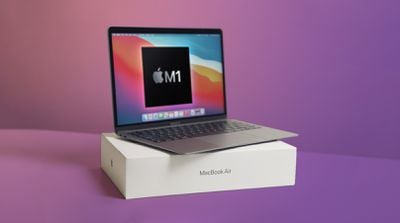
macbook air m1 unboxing feature
Mac security researcher Patrick Wardle has now published a report, cited by Wired, that explains in detail how malware has started to be adapted and recompiled to run natively on the ‌M1‌ chip.

Wardle discovered the first known native ‌M1‌ malware in the form of a Safari adware extension, originally written to run on Intel x86 chips. The malicious extension, called "GoSearch22," is a well-known member of the "Pirrit" Mac adware family and was first spotted at the end of December. Pirrit is one of the oldest and most active Mac adware families, and has been known to constantly change in an attempt to evade detection, so it is unsurprising that it has already begun adapting for the ‌M1‌.

The GoSearch22 adware presents itself as a legitimate Safari browser extension, but collects user data and serves a large number of ads such as banners and popups, including some that link to malicious websites to proliferate more malware. Wardle says the adware was signed with an Apple Developer ID in November to further conceal its malicious content, but it has since been revoked.

Wardle notes that since malware for the ‌M1‌ is still at an early stage, antivirus scanners are not detecting it as easily as x86 versions and defensive tools like antivirus engines are struggling to process the amended files. The signatures used to detect threats from malware on the ‌M1‌ chip have not yet been substantially observed, so the security tools to detect and deal with it are not yet available.

Researchers from security company Red Canary told Wired that other types of native ‌M1‌ malware, distinct from Wardle's findings, have also been found and are being investigated.

Only the MacBook Pro, MacBook Air, and Mac mini have Apple silicon chips at this time, but the technology is expected to expand across the Mac lineup over the next two years. Given that all new Mac computers are expected to feature Apple silicon chips like the ‌M1‌ in the near future, it was somewhat inevitable that malware developers would eventually start to target Apple's new machines.

While the M1-native malware that researchers have found does not seem to be unusual or particularly dangerous, the emergence of these new varieties acts as a warning that there is likely more to come.

See Wardle's full report for more information about the first M1-native malware.

Popular Stories

m6 a20 pro chips

iPhone 18 Pro: Everything M6 Tells Us About the A20 Chip

Saturday September 5, 2026 9:00 am PDT by
Apple announced the M6 chip last week, just ahead of its September iPhone event, providing the clearest indication yet of what the A20 will bring to the iPhone 18 lineup. Apple silicon generations share much of their architecture across the A-series and the M-series, so a new A-series chip normally functions as a partial preview of the M-series chip that follows it. This year the order...
a20 pro chip

Apple Unveils A20 Pro as First 2nm Smartphone Chip

Wednesday September 9, 2026 10:22 am PDT by
Apple today revealed the A20 Pro chip in the iPhone 18 Pro and iPhone 18 Pro Max, built on a brand new architecture using 2nm process technology. Apple described the A20 Pro as "an exceptional chip that sets a new bar for mobile computing." The chip has a 6-core CPU design with two new super cores that Apple says are up to 20% faster, calling them "desktop class" and "the fastest in any...
apple silicon gray

Leaked Images Give First Look at Apple's AI Servers

Wednesday August 26, 2026 9:34 am PDT by
Images claiming to show the inside of an Apple-made AI server, believed to power Private Cloud Compute, surfaced online this week, offering a first look at how the hardware is laid out. The images were shared earlier this week by the X user @hsuchingpo, an account with a track record of Apple hardware and prototype leaks. Captioned simply "Apple M5 Server," the leaker said the hardware is "mo...

Top Rated Comments

casperes1996 Avatar
73 months ago
Good to see more software natively supported
Score: 73 Votes (Like | Disagree)
ck2875 Avatar
73 months ago

malware authors have begun adapting malicious software for Apple's new generation of Macs with Apple silicon.
They probably needed to get their malware out the door so they could get the $500 voucher for returning the Dev. Kit. to Apple.
Score: 32 Votes (Like | Disagree)
73 months ago
Wouldn't just not adding rando browser extensions to Safari protect you from this?
Score: 25 Votes (Like | Disagree)
Dark_Omen Avatar
73 months ago
I wish I was a loser that had no life to the point where I create malware to infect other people's machines.

Oh wait, no I don't.
Score: 12 Votes (Like | Disagree)
baryon Avatar
73 months ago
But Safari extensions were long deprecated ever since Catalina, and now you can only install them from the App Store, for this very reason, to prevent malware. How is this even still possible?
Score: 11 Votes (Like | Disagree)
73 months ago
Dunno, I thought Chrome was the first malware for eating all the CPU cycles and memory.
Score: 7 Votes (Like | Disagree)