HomePod and HomePod mini to Gain Support For Apple Music Lossless Audio in Future Software Update - MacRumorsOpen MenuShow RoundupsShow Forums menuVisit ForumsOpen Sidebar
Skip to Content

HomePod and HomePod mini to Gain Support For Apple Music Lossless Audio in Future Software Update

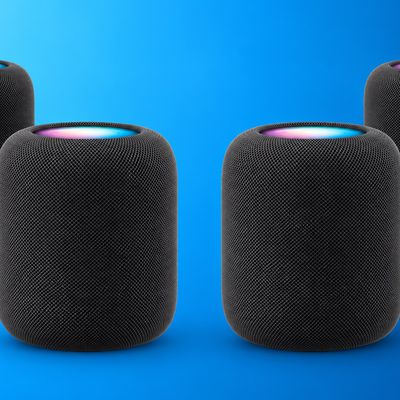
The HomePod and HomePod mini will gain support for playing back Apple Music Lossless audio in a future software update, according to a newly published Apple Support document.
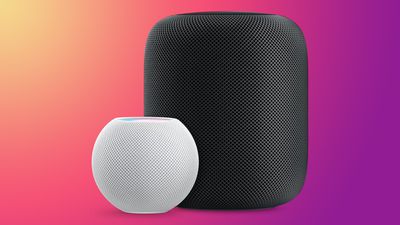
homepod mini homepod
At launch, the ‌HomePod‌ and ‌HomePod mini‌ will not support Apple Music Lossless but will instead feature support for Dolby Atmos for Apple Music. Dolby Atmos, otherwise known as Spatial Audio, creates an immersive three-dimensional experience that simulates music all around the listener. ‌Apple Music‌ Lossless provides listeners with higher quality audio.

In June, Apple will offer ‌Apple Music‌ subscribers a "Standard" ‌Apple Music‌ Lossless tier with audio up to 48kHz, and "Hi-Res Lossless" with audio between 48kHz and 192kHz. Hi-Res Lossless requires external equipment like a USB digital-to-analog converter.

Despite support for ‌Apple Music‌ Lossless in a future software update for ‌HomePod‌ and ‌HomePod mini‌, the AirPods and AirPods Pro will not be gaining support. In the support document, Apple explains that current Bluetooth doesn't support the higher quality format that ‌Apple Music‌ Lossless provides. AirPods Max will also not support Lossless wirelessly, but Apple says that when used with a cable, the $550 over-ear headphones will play back Lossless audio, although not completely:

The Lightning to 3.5 mm Audio Cable was designed to allow AirPods Max to connect to analog sources for listening to movies and music. AirPods Max can be connected to devices playing Lossless and Hi-Res Lossless recordings with exceptional audio quality. However, given the analog to digital conversion in the cable, the playback will not be completely lossless.

‌Apple Music‌ Lossless and Dolby Atmos will be available in June with more than 20 million tracks supporting Lossless audio and thousands of tracks supporting Dolby Atmos.
Related Roundups: HomePod, HomePod mini

Popular Stories

Apple iCloud Plus expansion hero

iCloud+ Now Includes Apple TV, Apple Arcade, and Curated Apple Music Stations in Over 100 Countries

Tuesday September 15, 2026 1:43 am PDT by
Apple today announced a new subscription initiative that turns paid iCloud+ subscriptions into a broader services bundle in more than 100 countries. In select countries, Apple says every paid iCloud+ plan, including the cheapest 50GB tier, now includes Apple TV and Apple Arcade "at no additional cost," while family sharing extends the storage, TV and Arcade access to up to five people....
HomePod mini and Apple TV Sage

New Apple TV, HomePod Mini, and More on Track to Launch This Year

Monday September 14, 2026 2:18 pm PDT by
The rumor that never ends: Bloomberg's Mark Gurman today reiterated that new Apple TV and HomePod mini models with Siri AI support remain on track to launch this year. Other new products he expects this year: an all-new Apple home hub, an updated entry-level 14-inch MacBook Pro with an M6 chip, an iMac with an M6 chip, and an iPad mini with an OLED display. Apple often announces new products...
homepods four

Apple Is Testing a Four-HomePod Surround System, Code Suggests

Friday September 4, 2026 2:29 am PDT by
Apple appears to be working on some major new HomePod home theater features, including a four-speaker surround sound system and a new "Party Mode," according to code found in audioOS 27 beta 8, and shared on the MacRumors forums by member pdfu. References in the software for the second-generation HomePod suggest the ability to tune for a setup with front-left, front-right, rear-left, and...

Top Rated Comments

Mr Lizard Avatar
70 months ago

Dolby Atmos, otherwise known as Spatial Audio
Repeat after me: Dolby Atmos is NOT the same as Spatial Audio!

Dolby Atmos is an audio format from Dolby that allows sound to be positioned around the listener. The producer needs only to define where in space a particular sound should be, and the listener’s compatible hardware works out how to recreate that intent either through multiple surround speakers, a sound bar, or earphones.

Spatial Audio is different: it uses sensors (gyroscope, accelerometer, and U1 chip) in the earphones to track the listener’s head movements. The position of the listener’s head when the audio starts to play is fixed as the ‘forward’ point. If the listener then turns their head to the right, the audio ‘pans’ to the left earphone to make it seem as though the sound is still coming from the same place.

A piece of audio can be both Dolby Atmos AND Spatial Audio. But Dolby Atmos is NOT Spatial Audio.
Score: 25 Votes (Like | Disagree)
70 months ago
This all makes sense but why-oh-why didn’t they announce this at the same time as the Apple Music announcement?
Score: 25 Votes (Like | Disagree)
Seoras Avatar
70 months ago
Ah now that makes more sense. Bluetooth just doesn't have the data bandwidth for uncompressed, raw, digitised music.
But for Apple to not support it on its on Music playing hardware, which it touted at launch a few years ago as being best in class, made no sense at all.
Score: 19 Votes (Like | Disagree)
Abazigal Avatar
70 months ago
Funny that a discontinued Apple product is getting support for a new feature, but I am not one to look a gift horse in the mouth.
Score: 15 Votes (Like | Disagree)
70 months ago
Glad I bought those two homepods. Just like 3D Touch, they failed on the marketing. The HomePod sucks when compared to Alexa and all that other stuff for smarts. But it does the basic stuff I need that google home did.

But, it’s a freakishly incredible sounding device and adding this functionality pushes ir closer to soundbar/home audio space.

there’s no way a HomePod successor isn’t inbound. While discontinued, new features are still inbound.
Score: 14 Votes (Like | Disagree)
dannyyankou Avatar
70 months ago
Alright now we’re talking. I was really surprised at first when they said it doesn’t support lossless, it’s definitely possible with the hardware
Score: 12 Votes (Like | Disagree)