Kuo: Apple's First MacBook With an OLED Display to Launch as Early as Next Year - MacRumorsOpen MenuShow RoundupsShow Forums menuVisit ForumsOpen Sidebar
Skip to Content

Kuo: Apple's First MacBook With an OLED Display to Launch as Early as Next Year

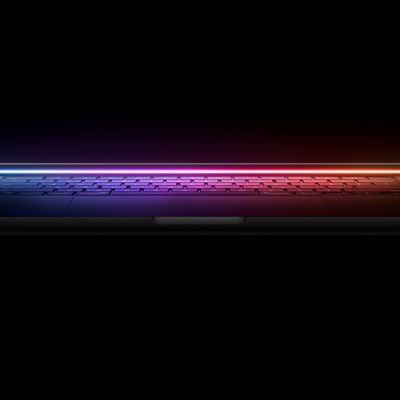
Apple plans to release the first MacBook with an OLED display by the end of 2024 at the earliest, according to supply chain analyst Ming-Chi Kuo. In a series of tweets today, Kuo said OLED technology would allow for thinner and lighter MacBook designs.
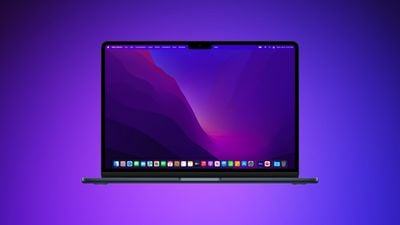
MacBook Air M2 Chip Purple Feature
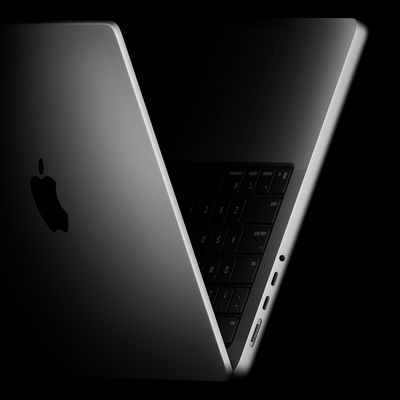
All existing MacBooks have LCD panels, with the latest 14-inch and 16-inch MacBook Pro featuring mini-LED backlighting and ProMotion. Unlike LCDs with mini-LEDs, OLED displays have self-emitting pixels and do not require backlighting, which would give MacBooks even better contrast ratio and allow for longer battery life.

Kuo did not specify whether the OLED MacBook would be a Pro or Air model. Last month, however, display industry analyst Ross Young said Apple planned to introduce a new 13-inch MacBook Air with an OLED display in 2024. He also expects Apple to release new 11.1-inch and 13-inch iPad Pro models with OLED displays next year.

While it appears that Macs and iPads will transition to OLED displays over the next few years, the Apple Watch might start moving away from the technology. Bloomberg's Mark Gurman today reported that a new Apple Watch Ultra with a microLED display could be released by the end of 2024. MicroLED technology would offer even higher brightness and improved contrast ratio compared to existing Apple Watch models with OLED displays.

Related Roundups: MacBook Pro, MacBook Air
Related Forums: MacBook Pro, MacBook Air

Popular Stories

macbook air blue

M6 MacBook Air: Release Date, Pricing, and What to Expect

Thursday June 18, 2026 8:11 am PDT by
Apple refreshed the MacBook Air with the M5 chip in March 2026, but attention is already turning to what comes next. While the next-generation model isn't expected to arrive until next year, early rumors suggest it could mark the beginning of a more ambitious phase in Apple's chip roadmap. From potential advances in processor technology to the prospect of higher prices, here's what the...
apple price hike

Apple Just Increased Prices on MacBooks, iPads, and More

Thursday June 25, 2026 5:44 am PDT by
Apple today dramatically increased device prices across multiple product lines. Subscribe to the MacRumors YouTube channel for more videos. After temporarily taking it down earlier today, Apple's online store is back up with a series of product price increases. The changes are as follows: HomePod mini: $129, up from $99 (+$30) HomePod: $349, up from $299 (+$50) Apple TV: $199, up from...
2026 Macs and Studio Display 2 Feature

Apple Adds More 2026 Macs and Studio Display 2 to Refurbished Store

Friday June 26, 2026 7:12 am PDT by
Earlier today, we reported that Apple added the MacBook Neo to the refurbished store on its website, and it turns out the new additions go beyond that. The other products added to Apple's refurbished store in the U.S. and Canada for the first time today include the MacBook Air with the M5 chip, MacBook Pro models with M5 Pro and M5 Max chips, and the second-generation Studio Display (2026)....

Top Rated Comments

45 months ago
OLED provides far better contrast than LCD—but unless Apple improves its OLED dimming technology, this will not be a beneficial change for those very sensitive to OLED flicker.

OLEDs can be dimmed with analog dimming (aka constant current reduction), in which the OLED's simply emit less light. But analog dimming's downsides include color shifts as the screen is dimmed, larger circuitry, and higher power consumption. Thus OLED screens are instead usually dimmed digitally by keeping the OLED's brightness constant (when they're on), and rapidly switching them on and off. This is called pulse width modulation (PWM). The idea is that if you want, say, 50% brightness, you rapidly switch the OLEDs on and off so that they illuminate the screen only 50% of the time.

The problem with PWM is that the frequency at which OLEDs can do this is not that high (often just a few hundred Hz, though it can go higher), and some can perceive this flickering and get headaches from it. The flicker becomes especially noticeable when the display is significantly dimmed. E.g., at 10% brightness, the display would have a duty cycle of 10% on and 90% off. That's why people using OLED devices at night are more likely to get eyestrain.

It would be nice if Apple gave consideration to this in making its MacBook Pro OLED screens, and either implemented an improved analog dimmer, or chose an OLED technology with an extremely high PWM frequency. For instance, according to https://www.notebookcheck.net/PWM-Ranking-Notebooks-Smartphones-and-Tablets-with-PWM.163979.0.html?&sort=b_350_944&max_results=50000&or=0&showBars=1&bench_350_944=1&model=1&screen_resolution=1&screen_panel_type=1 , OLED variants are available with PWM frequencies > 800 Hz (833 Hz for the AMOLED Lenovo Legion Phone Duel). According to https://www.xda-developers.com/apple-iphone-14-pro-max-display-review/ , Apple's implementation of PWM in Apple's iPhone 14 is complicated, with two different PWM frequencies (240 Hz and 480 Hz)*. [Unfortunately, the article doesn't fully explain how that works.] 480 Hz is towards the upper end of the range, but higher would be better.

The LED's used to backlight LCD screens also use PWM dimming. The difference is that their PWM frequency is much higher, which makes flicker far less noticeable (and typically imperceptible, even for sensitive viewers). For instance, according to the above link, the PWM frequency for the 14" & 16" M1 MacBook Pro LCD screens is 14,880 Hz.

See also:

https://www.dxomark.com/flicker-the-display-affliction/

https://osxdaily.com/2021/05/14/workaround-pwm-oled-iphone-ipad/

*Correction: I had previously quoted a 60 Hz PWM frequency for the iPhone 14 from the notebookcheck table but, based on the more detailed analysis from xda-developers, that appears to be incorrect.
Score: 24 Votes (Like | Disagree)
TheYayAreaLiving 🎗️ Avatar
45 months ago

Kuo seems to pop up in countless MacRumors stories. Yet, a Google search turns up very little substantial information about him. And, oddly, on his Twitter bio, he describes himself as a "social media influencer."

Has anyone done an analysis of the analyst's track record? Is he right about most of the things he predicts?

I'm genuinely curious.
Last year it was confirmed that Kuo’s Twitter account is legit. He is the real deal.

https://forums.macrumors.com/threads/kuo-only-iphone-14-pro-models-to-get-a16-chip-standard-models-to-retain-a15.2337802/post-30929547
Score: 16 Votes (Like | Disagree)
TheYayAreaLiving 🎗️ Avatar
45 months ago

Thanks for the replies. I didn't mean to suggest he wasn't legit. I'm mostly just curious how accurate he is with his predictions.
Seems accurate to me but his timings can be off. Tons of research about him out there. The article below gives you a good break down.

https://appletrack.com/ming-chi-kuo/

https://www.macrumors.com/guide/ming-chi-kuo/

https://appleinsider.com/inside/ming-chi-kuo
Score: 12 Votes (Like | Disagree)
Bustycat Avatar
45 months ago

Seems accurate to me but his timings can be off. Tons of research about him out there. The article below gives you a good break down.

https://appletrack.com/ming-chi-kuo/

https://www.macrumors.com/guide/ming-chi-kuo/

https://appleinsider.com/inside/ming-chi-kuo
Kuo is so popular that people become analysts of an analyst.
Score: 11 Votes (Like | Disagree)
45 months ago
Technically, the MacBook Pros with Touch Bars were the first Macs with OLED displays...
Score: 10 Votes (Like | Disagree)
james2538 Avatar
45 months ago
It would be weird to have OLED displays in the iPad Pro but not the MacBook Pro.

I'm also having trouble at this point keeping track of all these display predictions. Can we get a chart showing when the iMac, MacBook Air/Pro, iPad Air/Pro, and Watch are switching to microLED/OLED/ProMotion?
Score: 9 Votes (Like | Disagree)