Apple's In-House 5G Modem Work Faces Further Delays - MacRumorsOpen MenuShow RoundupsShow Forums menuVisit ForumsOpen Sidebar
Skip to Content

Apple's In-House 5G Modem Work Faces Further Delays

Apple is continuing to run into troubles in its attempt to develop a 5G modem to replace Qualcomm's 5G modems in the iPhone and other products, reports Bloomberg's Mark Gurman.
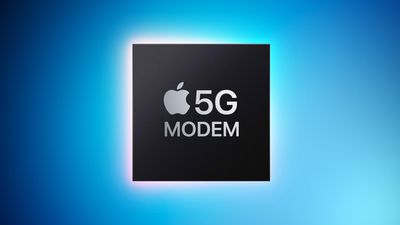
5G Modem Feature Blue
Apple in 2019 acquired the majority of Intel's smartphone business and started in on a serious effort to develop its own modem hardware, but the project has suffered multiple setbacks. Apple is still "years away" from creating a chip that is able to perform as well as or better than chips from rival Qualcomm.

The Cupertino company initially wanted to have an in-house modem chip ready to go by 2024, a goal that could not be met, and now Gurman says that Apple is also going to miss an extended spring 2025 launch timeline. As of now, the modem chip launch has been postponed until the end of 2025 or early 2026, and Apple is still planning to introduce the technology in a version of the low-cost iPhone SE.

Development on a modem chip is said to be in the early stages, and it "may lag behind the competition by years." One version in development does not support faster mmWave technology, and Apple has also run into issues with the Intel code that it has been working with. Rewrites have been required, and adding new features has been causing existing features to break, plus Apple has to be careful not to infringe on Qualcomm patents while developing the chip.

"Why we thought we could take a failed project from Intel and somehow succeed is a mystery," an Apple employee allegedly told Gurman. Apple's hardware technologies group is also said to be "stretched thin" across numerous projects, leading to difficulty resolving bugs.

Apple's dissatisfaction with Qualcomm surfaced in 2017, which is when Apple sued Qualcomm for unfairly collecting royalties for technologies it had nothing to do with. Apple was of the opinion that Qualcomm was charging too much for its modem chip technology.

With the iPhone 11 lineup, Apple was able to opt out of using Qualcomm chips, instead equipping iPhones with chips from Intel, but the relationship between Intel and Apple was short lived. After the launch of the iPhone 11, Apple wanted to continue to use Intel chips for its first 5G iPhones, the iPhone 12 models, but Intel could not manufacture 5G chips that were up to Apple's standards.

Apple was instead forced to settle its legal dispute with Qualcomm, and all litigation was dropped. The two companies signed a new contract, which was extended in September 2023. The latest deal with Qualcomm covers smartphone launches in 2024, 2025, and 2026, and will last through Apple's delayed modem chip development.

While Apple's in-house modem chip has been delayed, the company is continuing development because it is eager to end its expensive deal with Qualcomm. Apple's first modem chip will be a standalone chip, but the company hopes to eventually develop a system-on-a-chip that will also cut out suppliers like Broadcom and give it more control over component development.

Popular Stories

ios 26 iphone 16 pro lock screen notifications feature 1

iOS 27 Notifications Will Slide in From Left Side of Your iPhone's Screen

Friday June 5, 2026 7:24 am PDT by
Bloomberg's Mark Gurman today revealed another iOS 27 change: notifications will slide in from the left side of the screen instead of from the top. In addition, accessing Notification Center on iOS 27 will require swiping down on the top-left corner of the screen. If you swipe down on the Dynamic Island area, a new "Search or Ask" interface tied to the revamped Siri will appear, instead of...
ios 27 siri animation

Apple Could Build an OpenClaw Competitor Eventually

Monday June 15, 2026 3:47 am PDT by
Apple may eventually build a direct competitor to OpenClaw, an agentic AI system capable of autonomously operating software on behalf of the user, Bloomberg's Mark Gurman believes. Writing in his Power On newsletter, Gurman says he expects Apple to develop a system that could fully operate iPhone, iPad, and Mac software on the user's behalf. The prediction comes on the back of comments made...
iOS 27 Feature Dark

These Three Unannounced iOS 27 and watchOS 27 Features Are Still Coming

Monday June 15, 2026 4:26 am PDT by
Apple developed more for its next-generation software updates than it revealed at WWDC last week, with three features already present in internal builds being deliberately withheld from the public announcement, Bloomberg's Mark Gurman reports. Writing in the latest edition of his "Power On" newsletter, Gurman says all three missing features are active in internal versions of Apple's...

Top Rated Comments

zorinlynx Avatar
34 months ago

I don’t understand why building a modem is so challenging. I wonder if it is more of a patent legal obstacle course rather than a technical hurdle.
Cellular modems are incredibly complex devices that have to operate with many constraints. It's absolutely challenging, and a different world than building CPUs and GPUs.

Frankly I wish Apple would stay out of this, and keep using Qualcomm chipsets. The last time they tried to move away from Qualcomm (to Intel) performance suffered. I really don't trust anyone but Qualcomm for this sort of thing these days.
Score: 27 Votes (Like | Disagree)
LoveToMacRumors Avatar
34 months ago
can’t apple just buy Qualcomm?
Score: 25 Votes (Like | Disagree)
cateye Avatar
34 months ago

I don’t understand why building a modem is so challenging. I wonder if it is more of a patent legal obstacle course rather than a technical hurdle.
It's both, and then some. RF engineering is extremely complex under the best of circumstances, is governed by a patchwork of worldwide regulations and governing bodies that often work in opposition to one another, and is heavily patent encumbered.

People might say, "well, Apple wasn't in the business of manufacturing their own CPUs either and within years they were able to top Intel's best." Which is true, but Apple's success creating an ARM-based SoC says as much about Intel's troubles as Apple's successes (and also Apple's divergent priorities—there are still plenty of Intel and AMD CPUs that can handily trash anything Apple currently produces. Just not at the efficiency levels Apple has chosen to target). Qualcomm is no Intel and cellular interfaces is something they do extremely well. The barrier to entry to try and produce equivalent silicon is extremely high.

Engineering is not magic. It's hard work, and throwing money at the problem does not necessarily equal results.
Score: 24 Votes (Like | Disagree)
Arm64MyMac Avatar
34 months ago
I don’t understand why building a modem is so challenging. I wonder if it is more of a patent legal obstacle course rather than a technical hurdle.
Score: 19 Votes (Like | Disagree)
34 months ago

I don’t understand why building a modem is so challenging. I wonder if it is more of a patent legal obstacle course rather than a technical hurdle.
Qualcomm stated years ago that they didn’t see how Apple could make a modem that didn’t infringe on Qualcomm’s patents.
Likely the long delay by Apple is for this very reason: they keep hitting roadblocks trying to work around Qualcomm patents.

(My guess)
Score: 16 Votes (Like | Disagree)
CWallace Avatar
34 months ago

Frankly I wish Apple would stay out of this, and keep using Qualcomm chipsets.

Apple, please just give it up at this point.
I for one do not want Apple to give up because if they can do it, a modem specifically optimized for iPhones and iPads (and, please, Apple - Macs!) would likely offer benefits in features, performance and battery life over using even the best "off the shelf" Qualcomm model that is designed to be "good enough" for everyone.

Obviously, until (or if) Apple gets there, continue to source from Qualcomm.
Score: 16 Votes (Like | Disagree)