Apple Vision Pro's Virtual Display Feature Works With Intel Macs, But Limited to 3K Resolution - MacRumorsOpen MenuShow RoundupsShow Forums menuVisit ForumsOpen Sidebar
Skip to Content

Apple Vision Pro's Virtual Display Feature Works With Intel Macs, But Limited to 3K Resolution

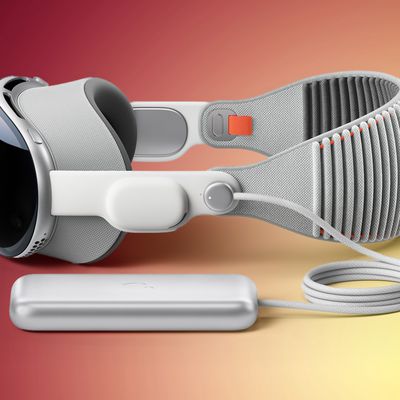
Apple's new Vision Pro headset can serve as an external display for a Mac, allowing you to view and control your computer in a visionOS window. The feature is even compatible with some older Intel-based Macs, with one limitation.
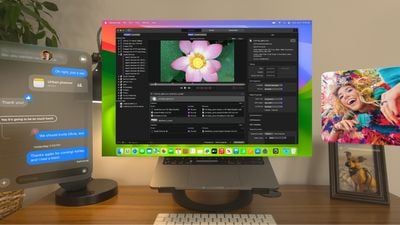
Apple Vision Pro Mac Virtual Display
In a new support document, Apple has confirmed that the Vision Pro's Mac Virtual Display feature is compatible with any Mac running macOS Sonoma. If the Mac has an Apple silicon chip, the headset can show its display at up to 4K resolution. If the Mac has an Intel processor, however, Apple says resolution is limited to up to 3K.

macOS Sonoma is compatible with the following Macs:

  • MacBook Pro: 2018 and later
  • MacBook Air: 2018 and later
  • Mac mini: 2018 and later
  • iMac: 2019 and later
  • iMac Pro: 2017
  • Mac Studio: 2022 and later
  • Mac Pro: 2019 and later

To use the feature, the Vision Pro and the Mac need to be signed in to the same Apple ID, and the account must have two-factor authentication turned on. In addition, Wi-Fi and Bluetooth must be enabled on both devices to establish a connection.

If you look at a MacBook while wearing the Vision Pro, a "Connect" button will appear above it. For desktop Macs, or if the button fails to appear, Mac Virtual Display can also be turned on in the Vision Pro's Control Center.

You can move your Mac's virtual display by pinching and dragging the window's bottom bar, and bring it closer or farther away. You can also resize the window by pinching and dragging the window bars that appear in the bottom corners.

If your Mac has multiple external displays connected to it, the Vision Pro only shows the one set as the main display in the Mac's System Settings app.

You can use your Mac's built-in keyboard and trackpad, or a paired Bluetooth keyboard and trackpad, to control both the Mac Virtual Display and other visionOS apps. However, the Vision Pro cannot be used with a Bluetooth mouse, according to Apple.

Apple's instructions for turning on Universal Control:

If you want to share the pointer between your macOS and visionOS apps, Handoff must be turned on on both devices. On Apple Vision Pro, go to Settings > General > Handoff. On your Mac, go to System Settings > General > AirDrop & Handoff.

On your Mac, you also need to turn on "Allow your pointer and keyboard to move between any nearby Mac or iPad." Go to System Settings > Displays, then click Advanced.

A few other details shared by Apple:

  • Mac Virtual Display does not work when your Vision Pro is in Guest Mode.
  • Mac Virtual Display does not support managed Apple IDs.
  • The devices must be no more than 10 meters (32 feet) apart to maintain a connection.

More details about Mac Virtual Display can be found in Apple's Vision Pro User Guide.

Related Roundup: Apple Vision Pro
Buyer's Guide: Vision Pro (Neutral)
Related Forum: Apple Vision Pro

Popular Stories

Apple Remnants Vision Pro

Apple Unveils Immersive Horror Film Coming Exclusively to Vision Pro

Tuesday October 13, 2026 5:26 am PDT by
Apple on Monday announced Remnants, an immersive horror film that will be released exclusively on the Vision Pro on Friday, October 16. The film will be in the Apple Immersive Video format, meaning it will be a 3D video recorded in 8K resolution with a 180-degree field of view and Spatial Audio. Apple shared a short video of people reacting to the film while wearing the Vision Pro....
apple vision pro orange

Apple Releases visionOS 27.2

Monday October 26, 2026 10:46 am PDT by
Apple today released visionOS 27.2, the first big update for the visionOS 27 operating system that runs on the Apple Vision Pro. visionOS 27.2 can be downloaded by opening the Settings app, selecting the General section, and choosing Software Update. Installing the update requires the headset to be removed, and a progress bar appears on the EyeSight display. The visionOS 27.2 update...
General visionOS watchOS and tvOS Betas Feature Redux

Apple Seeds watchOS 27.2, tvOS 27.2 and visionOS 27.2 Release Candidates

Monday October 19, 2026 10:25 am PDT by
Alongside new betas of iOS 27.2, iPadOS 27.2, and macOS Golden Gate 27.2, Apple has seeded the release candidate versions of watchOS 27.2, tvOS 27.2 and visionOS 27.2. The RCs come a week after Apple released the fourth betas. Registered developers can download the betas through the Settings app on each device. There's no word on what's being added in visionOS 27.2 and tvOS 27.2, but...

Top Rated Comments

HobeSoundDarryl Avatar
36 months ago

What is an Intel Mac? 😉
Depending on the model, an Intel Mac is one that had lots of competition for RAM & SSD. So instead of paying 3-5X retail pricing for Apple upgrades, one could buy the base Mac and then load it up at any time with much more internal RAM and storage for relatively dirt cheap. There was a time when Apple made this very easy. But as Apple evolved into AAPL, the pursuit of harvesting every possible nickel made some of this increasingly difficult to impossible with many Macs. The latest move forces all RAM & SSD to be purchased from only a single seller- no competition at all- resulting in 3-5X relative pricing for the same amount of RAM or SSD in PC-land.

Similarly, if RAM or Storage went bad in Intel Macs, some models could facilitate replacing the broken part and continuing to use your Mac. Now, when anything at all conks in a Silicon Mac, you throw the whole thing out and buy another.

Intel Macs could also run full Windows instead of emulated ARM Windows (which is not full Windows), making it the only computer type in the world that could natively run BOTH major platforms in one case (excluding hacks). This also meant that a single computer purchase could run just about ALL of the world's software instead of only a relatively tiny subset of it. This included easy access to AAA games and various gaming platforms on the Window-only side. Those consumers who need Windows but wanted Mac could buy a Mac and get BOTH. Now we're back to if you need Windows, you have to buy a PC unless maybe ARM Windows emulation is good enough.

It generally had a focus on Power vs PPW, so it could generally get computing tasks done faster by using more power... instead of slower while sipping power. The difference in net power usage was marginal as the former would average about a single incandescent light bulb or two's power usage each month, meaning nobody saw any huge difference in an electric bill by opting for PPW over Power. But "we" sure make it sound like it's an Apples to Oranges proposition.

Like Spotify before Apple Music or Google Maps before Apple Maps or the LG 5K monitor before ASD, when Apple was embracing Intel, fans loved Intel Macs. Then when Apple abandoned them, fans turned. Suddenly, there were all these flaws that were left unspoken while Macs depended on them but then were relentlessly spoken when Apple wanted people to buy Silicon. Suddenly laps were "suffering third degree burns", fans were "sounding like jet engines", etc.

Intel cost the so-called "Intel Premium" that Silicon would alleviate, except no pass through savings seemed to appear. Instead, Apple's corporate margin fattened, from the traditional 39%-40% to now around 46%-47%. How long until about HALF of every dollar we pay for Apple stuff is falling into the corporate vaults instead of going directly towards the thing we are buying? Hooray for shareholders! Can consumers get a bone or two?

Intel generally offered annual hardware upgrades and Silicon offered the potential of at least the same, but it didn't work out that way for the latter, while Intel has generally continued with the old, roughly annual pace. "We" blamed that on covid & supply chain, etc and maybe that was the cause... except Intel seemed to roughly stay on the traditional pace of new generations.

Intel Macs offered the ability to connect powerful graphics cards in external boxes while Silicon offers its own graphics and only its graphics... even in Mac Pro. Because of robust competitive forces, an Intel Mac Pro could have a ton of relatively cheap, massive RAM while a Silicon Mac Pro can only max out at a RAM amount of Apple's choosing... at thoroughly exploitive pricing vs. market... as is always the case when there is only a LONE seller of anything.

In short, while I can appreciate my own Silicon Mac and use it every day, we had many great benefits with the prior platform. Silicon offers several advantages but so does Intel. Chief amoung them is Power (and Graphics Card Power) vs. PPW and integrated Apple Graphics. In general, PC will use more power to get computing done FASTER while Silicon will use much less power to get things done slower. On the flip side, the latter can have longer battery life than the typical person can use in a day, while the former can burn through its battery in as little as a few hours if the task is demanding.

We Apple people shifted from a mainstream platform with massive competitive-driven support back to a PowerPC-like silo where all key roads must lead to/through Apple Inc. As objectively as I can assess it, I don't know if the pros fully outweigh the cons unless one chooses to make the pros bigger deals while marginalizing the cons. The vast majority of the world happily runs on PC platforms. Our little bubble now happily runs on Silicon... at a steep relative premium.
Score: 28 Votes (Like | Disagree)
36 months ago
Does it work with Macs that have no screen connected? Like a headless Mac mini or Studio?
Score: 14 Votes (Like | Disagree)
HobeSoundDarryl Avatar
36 months ago

There is no Intel *macbook* that is faster than than the Apple Silicon Macs. The increased power consumption for increased performance is true for Intel’s year over year upgrades, but none of the mobile Intel based Macs are faster than the Apple Silicon in them today.
There is no 2024 Intel MB. Comparing a 2024 chip to a 2020 or older chip is not exactly a fair measure. I'd actually be quite interested in seeing what a 2024 Intel-based MB could do vs. a 2024 Silicon-based MB where the goal was not to make either one the obvious superior choice. I bet Apple could roll out a dazzling 2024 Intel MB if they were motivated to also create one.


Your other points are all valid, but this one needed to be clarified. Those chips run so hot in the MacBooks they throttle very quickly, precisely because that era of Intel didn’t deliver (for almost a decade) the TDP envelope their roadmaps promised. They just upped the power consumption yoy.
Yes, no doubt we can be critical of the Intel platform. I can readily talk about heat and shorter battery life, etc. too. On the other hand, having both full Windows and Mac in one box was tremendous utility for a Working Mac professional who generally NEEDS Windows but wants Mac. Full Windows is full Windows. ARM Windows may or may not work depending on the app. The complete solution now is back to lugging either 2 laptops or buy a Windows laptop (the one typically needed) and use the Mac when you get back to home or office... UNLESS a client or company is Mac centric themselves.
Score: 13 Votes (Like | Disagree)
surfzen21 Avatar
36 months ago
Sad to see my 2010 MBP not on that list.

Typical Apple 🤣
Score: 11 Votes (Like | Disagree)
NT1440 Avatar
36 months ago

Depending on the model, an Intel Mac is one that had lots of competition for RAM & SSD. So instead of paying 3-5X retail pricing for Apple upgrades, one could buy the base Mac and then load it up at any time with much more internal RAM and storage for relatively dirt cheap. There was a time when Apple made this very easy. But as Apple evolved into AAPL, the pursuit of harvesting every possible nickel made some of this increasingly difficult to impossible with many Macs. The latest move forces all RAM & SSD to be purchased from only a single seller- no competition at all- resulting in 3-5X relatively pricing for the same amount of RAM or SSD in PC-land.

Similarly, if RAM or Storage went bad in Intel Macs, some models could facilitate replacing the broken part and continuing to use your Mac. Now, when anything at all conks in a Silicon Mac, you throw the whole thing out and buy another.

Intel Macs could also run full Windows instead of emulated ARM Windows (which is not full Windows), making it the only computer type in the world that could natively run BOTH major platforms in one case (excluding hacks). This also meant that a single computer purchase could run just about ALL of the world's software instead of only a relatively tiny subset of it. This included easy access to AAA games and various gaming platforms on the Window-only side.

It generally had a focus on Power vs PPW, so it could generally get computing tasks done faster by using more power... instead of slower while sipping power. The difference in net power usage was marginal as the former would average about a single incandescent light bulb or two's power usage each month, meaning nobody saw any huge difference in an electric bill by opting for PPW over Power. But "we" sure make it sound like it's an Apples to Oranges proposition.

Like Spotify before Apple Music or Google Maps before Apple Maps, when Apple was embracing Intel, fans loved Intel Macs. Then when Apple abandoned them, fans turned. Suddenly, there were all these flaws that were left unspoken while Macs depended on them but then were relentlessly spoken when Apple wanted people to buy Silicon. Suddenly laps were "suffering third degree burns", fans were "sounding like jet engines", etc.

Intel cost the so-called "Intel Premium" that Silicon would alleviate, except no pass through savings seemed to appear. Instead, Apple's corporate margin fattened, from the traditional 39%-40% to now around 46%-47%. How long until about HALF of every dollar we pay for Apple stuff is falling into the corporate vaults instead of going directly towards the thing we are buying? Hooray for shareholders! Can consumers get a bone or two?

Intel generally offered annual hardware upgrades and Silicon offered the potential of at least the same, but it didn't work out that way for the latter, while Intel has generally continued with the old, roughly annual pace. "We" blamed that on covid & supply chain, etc and maybe that was the cause... except Intel seemed to roughly stay on the traditional pace of new generations.


Intel Macs offered the ability to connect powerful graphics cards in external boxes while Silicon offers its own graphics and only its graphics... even in Mac Pro. Because of robust competitive forces, an Intel Mac Pro could have a ton of relative cheap, massive RAM while a Silicon Mac Pro can only max out at a RAM amount of Apple's choosing... at thoroughly exploitive pricing vs. market... as is always the case when there is only a LONE seller of anything.

In short, while I can appreciate my own Silicon Mac and use it every day, we had many great benefits with the prior platform. Silicon offers several advantages but so does Intel. Chief amoung them is Power (and Graphics Card Power) vs. PPW and integrated Apple Graphics. In general, PC will use more power to get computing done FASTER while Silicon will use much less power to get things done slower. On the flip side, the latter can have longer battery life than the typical person can use in a day, while the former can burn through its battery in as little as a few hours if the task is demanding.

We Apple people shifted from a mainstream platform with massive competitive-driven support back to a PowerPC-like silo where all key roads must lead to/through Apple Inc. As objectively as I can assess it, I don't know if the pros fully outweigh the cons unless one chooses to make the pros bigger deals while marginalizing the cons. The vast majority of the world happily runs on PC platforms. Our little bubble now happily runs on Silicon... at a steep relative premium.
There is no Intel *macbook* that is faster than than the Apple Silicon Macs. The increased power consumption for increased performance is true for Intel’s year over year upgrades, but none of the mobile Intel based Macs are faster than the Apple Silicon in them today.

Your other points are all valid, but this one needed to be clarified. Those chips run so hot in the MacBooks they throttle very quickly, precisely because that era of Intel didn’t deliver (for almost a decade) the TDP envelope their roadmaps promised. They just upped the power consumption yoy.
Score: 9 Votes (Like | Disagree)
MrENGLISH Avatar
36 months ago
At least it is supported...
Score: 9 Votes (Like | Disagree)
Latest Stories
Apple Store Subscription Sign-Up Controversy Exposed
1 hour ago
Siri AI Rumored to Become 'More Like an Agent' as Early as Next Year
11 hours ago
Apple Taking New Approach to Developing iOS 28 and macOS 28
13 hours ago
Early Apple Black Friday Deals on Apple Watch, MacBook Air, and More
1 day ago
'Backglow' Lets You Customize New MacBook Pro's Glowing Apple Logo
1 day ago
Top Stories: Apple Product Launches, iOS 27.3 Beta, and More
2 days ago
More Fun iPhone Duo Apps: 30 New Picks to Try
2 days ago
Hands-On With Apple's New OLED Touchscreen MacBook Pro
2 days ago
Apple Store With All-New Design Opening Soon in Southern California
2 days ago
Control the Glowing Apple Logo on Your New MacBook Pro
2 days ago
Apple Shares New 'Apple Card: Apply and Use in Minutes' Ad
2 days ago
Apple Says More Than 100,000 Apps Optimized for iPhone Duo, Here's What's Still Missing
3 days ago
Early Black Friday Deals Kickoff With Steep Discounts on Apple Watch Ultras and More
3 days ago
The MacRumors Show: iOS 27.3 Looks Like a Huge Update
3 days ago
Best Buy's Black Friday Event Begins With Sitewide Savings on Apple, TVs, More
3 days ago
Apple Releasing Yet Another Two New Products Next Week
3 days ago
MacBook Air Drops to Lowest Price in Months With Amazon's $250 Discount
3 days ago
Apple Rumored to Drop the iPhone's Action Button Next Year
3 days ago
Apple's Extended Return Policy Now in Effect for 2026 Holiday Season
3 days ago
Apple Music Classical Updated With New Icon and Refreshed Design
3 days ago
OLED iPad Mini, M6 iMac, and New MacBook Pros Available From Today
3 days ago
Apple Surveys iPhone Duo Buyers About Crease and Camera
3 days ago
Apple's First Touchscreen Mac is Now Arriving to Customers
3 days ago
Claude Gets Personal Finance Feature With Bank Account Linking
3 days ago
Apple Arcade Adds Crossy Road Rush and NBA 2K27
3 days ago
Apple's New HomeView Smart Home Hub: Here's How Much RAM It Has
3 days ago
iPad Mini vs. iPad Air Buyer's Guide: Now Just $50 Apart
3 days ago
First iOS 27.3 and macOS Golden Gate 27.3 Public Betas Now Available
3 days ago
Apple Announces a New Mac Sales Record
3 days ago
Paid $200 for Logic Pro? Apple Says You Won't Get This New Feature
3 days ago