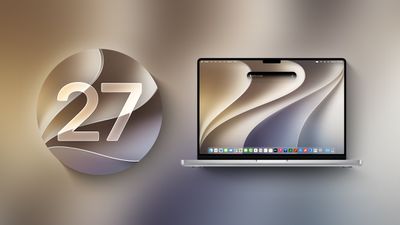
The macOS Golden Gate 27.2.1 update Apple released today addresses the eMudhra certificate vulnerability, and Apple recommends users update to the latest software.
For Macs that run macOS 26 or macOS 15, Apple has released macOS 26.7.3 and macOS 15.8.3.
Apple previously blocked the compromised certificates in Safari, Mail, and apps that use Apple frameworks in October to protect most users, but command-line tools like curl and git were still able to accept them. With macOS 27.2.1, command-line tools will no longer accept the certificates.
Prior to releasing the macOS 27.2.1 update, Apple offered instructions for those who wanted to protect themselves from the compromised eMudhra certificates when using command-line tools, directing users to manually remove the affected root certificates from their Mac's "/etc/ssl/cert.pem" file.
The compromised security certificates were issued by certificate authority eMudhra. An investigation launched by Mozilla found the certificates used private key values below 256, making them trivial to recover. Attackers could use the keys to create fraudulent certificates that appeared valid for any website.
Apple also fixed the issue in the macOS Golden Gate 27.3 beta, but with the fix also included in macOS 27.2.1, users won't need to wait until December for protection.
Anthropic today introduced its latest models, Claude Fable 5.2 and Claude Mythos 5.2, which have improvements in coding, reasoning, and vision.
Anthropic says Fable 5.2 and Mythos 5.2 communicate more clearly than the 5.1 versions, with outputs generated up to 30 percent faster. Fable 5.2 uses fewer tokens than Fable 5.1 on challenging tasks when set to medium effort.
The company suggests using Fable and Mythos for "the most ambitious, open-ended technical work." Anthropic recommends starting with Opus 5.5 for most coding and knowledge tasks, then switching to a model like Fable or Mythos that can handle more complex requests, or stepping down to a more affordable model like Sonnet or Haiku 5.5.
Benchmarks suggest Fable and Mythos 5.2 outperform Opus 5.5 for computer use, knowledge work, cybersecurity, agentic scientific research, agentic coding, multidisciplinary reasoning, and more.
Both use the same underlying model, but the public-facing Fable 5.2 model has cybersecurity and biology safeguards to prevent misuse. Compared to Fable 5.1, Fable 5.2 has approximately 55 percent fewer blocks. Mythos does not have the same limitations as Fable, and it is available through Anthropic's Life Sciences and Cyber Verification Programs as well as through Claude Security on Enterprise plans.
Fable 5.2 is available today on all platforms. Subscribers on eligible paid plans have extra Fable usage this week, with one to three Fable resets based on subscription length. Fable is included for up to 50 percent of weekly usage limits for Pro plans and standard seats on the Team plan. A fast mode that speeds up token generation by up to 2.5 times is available on Claude Code, the Claude Platform, Claude Models on Google Cloud, and Microsoft Foundry.
Apple today released macOS Golden Gate 27.2.1, a minor update for the macOS Golden Gate operating system.
macOS Golden Gate includes bug fixes and security updates, according to Apple's release notes. The update likely includes a fix to prevent command-line tools from accepting eMudhra's compromised web certificates.
Apple already blocked the compromised certificates on October 19, so most users are already protected.
You can download macOS Golden Gate 27.2.1 over the air through the Software Update section of the System Settings app.
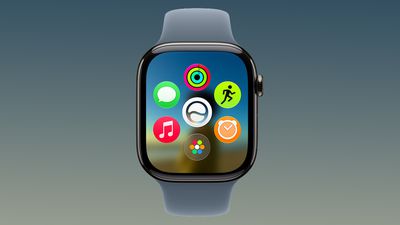
Apple today released new watchOS 27.2.1 and visionOS 27.2.1 updates, with the software coming two weeks after the launch of watchOS 27.2 and visionOS 27.2.
According to Apple's release notes, the watchOS update includes security fixes, while the visionOS 27.2.1 update includes security updates and bug fixes.
The new software can be installed using the Settings app on each device.
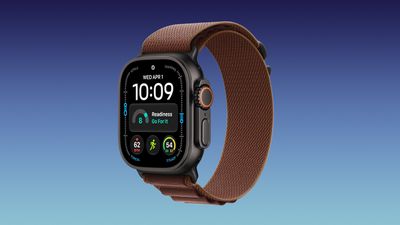
The Apple Watch Ultra 4 has dropped to $699.99 on Amazon, down from $799.00. This is a match of the all-time low price on the new Ultra 4, which launched in September.
Note: MacRumors is an affiliate partner with some of these vendors. When you click a link and make a purchase, we may receive a small payment, which helps us keep the site running.
If you're shopping for a Milanese Loop model, Amazon also has a $99 discount on a few of these devices. You can get the Black Apple Watch Ultra 4 with Black Milanese Loop (Large) for $799.99, down from $899.00. Most of these watches have an estimated delivery date of mid November, and some are offering same-day shipping for Prime members as well.
If you're on the hunt for more discounts, be sure to visit our Apple Deals roundup where we recap the best Apple-related bargains of the past week.
Deals Newsletter
Interested in hearing more about the best deals you can find during the holidays? You can sign up for our Deals Newsletter and we'll keep you updated so you don't miss the biggest deals of the season!
The spot features a martial-arts-style food fight where a man runs into a convenience store to grab a weapon. He's followed by the other combatants, and everyone involved grabs a different food or beverage to fight with.
The cashier makes everyone stop to pay, and the protagonist is able to make his purchases quickly with Apple Pay on his iPhone while the fighters he's facing off against struggle with their wallets. In the course of the fight, one of the fighters grabs the protagonist's iPhone and tries to make a purchase, but can't because Face ID verification is required. The protagonist wins when he purchases a swordfish, causing his opponents to flee.
Apple Pay is a fast, easy, and secure way to pay with iPhone. No digging for cards. Just double-click the side button, glance at your iPhone to authenticate with Face ID, then hold it near the reader. A ding confirms your payment. The built-in security of iPhone makes paying with Apple Pay more secure than using a physical credit or debit card. Use it anywhere you see a contactless payment symbol — from big box retailers to your local corner market.
Apple Pay is a popular contactless payment option available in many countries around the world. It works in retail shops on iPhone and Apple Watch. Apple Pay also works in apps and on the web, and on iPad and Mac for online purchases.
Apple continues to advise customers that certain Apple Intelligence features that rely on its server-side Private Cloud Compute system have daily usage limits, with expanded access to such features to be "available for a fee in the future."
Apple has repeatedly mentioned these upcoming fees in press releases over the past several months, but it has yet to provide any specific details about timing or pricing. The company did confirm that expanded access to the features will eventually be included with select iCloud+ plans, rather than something available for a standalone fee.
Extra server-side usage for a fee will be available for Siri AI, Image Playground, the Extend and Reframe options in the Photos app, shortcuts created with natural language in the Shortcuts app, and more. Apple says daily limits may vary by feature, request complexity, system demand, system policies, and other unspecified factors.
Here are the current iCloud+ plans and prices in the U.S.:
50GB: $0.99/month
200GB: $2.99/month
2TB: $9.99/month
6TB: $29.99/month
12TB: $59.99/month
It is unclear if these prices will increase once the expanded AI access is included.
Apple having said that extra usage will be included with "most" iCloud+ plans seemingly rules out the 50GB plan for $0.99 per month receiving this benefit at a minimum.
Logic Pro
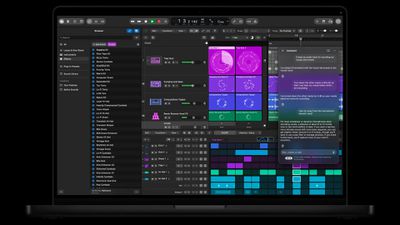
Apple last week updated Logic Pro for Mac with a new intelligent assistant feature that can help creators "navigate production workflows, start a new song, set up a vocal track from a single prompt, or refine an active project."
The intelligent assistant has a monthly usage limit, with expanded usage packs available to users with an active Apple Creator Studio subscription in the United States, Canada, Brazil, France, Germany, India, Mexico, and the United Kingdom. In the U.S., the usage pack is currently priced at $49.99 and valid for one year.
To purchase additional usage, choose Logic Pro from the macOS menu bar, choose Intelligence Features, choose Show Usage, then choose Buy More Usage.
In a support document, Apple says some intelligence features in Apple Creator Studio apps are powered by "third-party providers." For the Logic Pro assistant, it says the feature is "powered by Google Gemini," so it appears it is not considered to be part of Apple Intelligence and thereby extra usage will not be included in iCloud+ plans.
Apple today announced that it will open five new Apple Developer Academies, one Apple Developer Center, and one Apple Manufacturing Academy in Türkiye. Apple's executive chairman Tim Cook is currently touring Türkiye, meeting with the company's retail employees, app developers, content creators, an athlete, and others.
Apple paid more income tax in Ireland than in Singapore in fiscal 2026, but it saved more in Singapore.
Apple's annual report shows that the company paid $4.96 billion in cash income taxes in Ireland and $3.25 billion in Singapore. Against the 21% U.S. federal corporate tax rate, Singapore lowered Apple's tax expense by $2.67 billion, about $100 million more than Ireland did.
Singapore's lower tax rate and incentives would have saved Apple $5.49 billion before other taxes and adjustments. A $2.51 billion top-up tax erased nearly half of that initial saving. Singapore introduced the tax to bring the effective tax rate for qualifying large multinationals up to 15%.
Fiscal 2026 was the first year Apple disclosed these figures by country in its annual report under new U.S. accounting rules. Apple reported a combined figure for its foreign subsidiaries in fiscal 2025 and 2024, so those years offer no direct comparison between Singapore and Ireland.
The Financial Timesestimated that Apple booked up to $50 billion in pretax profit in Singapore in 2026. Apple's Singapore subsidiaries reported nearly $40 billion a year earlier.
Apple can earn a profit in one country even when the customer is in another. Its Singapore business sells products and services to other Apple companies overseas, so it can earn part of the profit before a product reaches the customer. In Ireland, an Apple subsidiary handles sales in several markets. Profits those businesses earn can qualify for lower taxes under local rules.
Note: This discussion thread is located in our Political News forum with special rules.
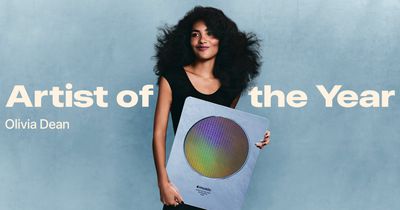
Apple today announced that Olivia Dean is Apple Music's Artist of the Year in recognition of "her undeniable leap to stardom in what's been the defining feel-good music story of 2026." Dean is the first music artist from the UK to receive this honor, and she will receive a physical Apple Music Award featuring a custom silicon wafer.
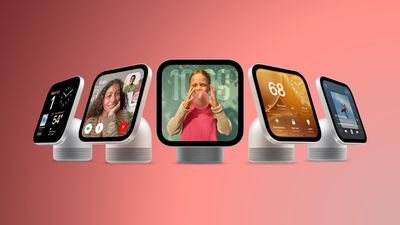
Apple's newest product, the HomeView, will launch this Friday, November 13. Because we're in the final stretch of days for pre-ordering the device, we wanted to give a heads up that Amazon's pre-order discount is still live and could disappear at any time ahead of launch day.
Note: MacRumors is an affiliate partner with some of these vendors. When you click a link and make a purchase, we may receive a small payment, which helps us keep the site running.
You can pre-order the Space Gray HomeView for $289.99, down from $299.00. Although only a $9 discount, this is still biggest deal we've seen on the HomeView, and as of writing only Amazon is offering any sort of discount on the device.
If you're on the hunt for more discounts, be sure to visit our Apple Deals roundup where we recap the best Apple-related bargains of the past week.
Deals Newsletter
Interested in hearing more about the best deals you can find during the holidays? You can sign up for our Deals Newsletter and we'll keep you updated so you don't miss the biggest deals of the season!
One of the features of Apple's new HomePod mini 2 speakers is being able to use them as your Mac's default speakers, but it seems to be failing to work as advertised for a number of users, with some owners already returning them, based on the latest MacRumors forum reports.
OG HomePod minis in a stereo pair on a Mac (don't try this at home)
The new HomePod mini 2 can be used as a default speaker on all Mac models with Wi-Fi 6E or later, according to Apple. A single HomePod can be used alone, or a pair can be twinned for stereo sound. The same setup never reliably worked with the first-generation HomePod mini, with latency and dropout issues common.
Apple introduced the stated new feature with HomePod Software 27.2, and it's meant to work over "a responsive and persistent AirPlay connection," or a wireless point-to-point link that's designed to survive restarts and sleep. (That's different to ordinary AirPlay, which the previous-generation HomePod uses.) For the HomePod mini 2, the feature requires macOS 27.2. It's also supposed to work with the second-generation HomePod using the same software and the aforementioned Wi-Fi 6E requirement.
So far, new HomePod mini 2 owners are reporting two separate problems. For some, the option to enable the persistent connection never appears at all – even on hardware that meets Apple's stated requirements. For others, the connection works at first, but the Mac then falls back to its built-in or monitor speakers after sleep, a restart, or sometimes even after a single notification sound.
Jennifer Pattison Tuohy ran into the first problem in her review for The Verge. On a Mac mini M4 – meeting Apple's Wi-Fi 6E requirement – the persistent-output option never showed up, and the speakers behaved like ordinary AirPlay devices, along with audio artifacts, dropouts, and output switching after a restart or whenever Siri was activated on a HomePod. Tuohy said that the feature "feels unfinished," and Apple had not responded to her request for comment at the time of writing.
The second problem, though, seems more prevalent, based on MacRumors forum reports. DanJoeWhitaker said they bought a stereo pair solely to use as Mac speakers, but found that the "Play sound effects through" option reverted to their Studio Display speakers within a minute, and that a single notification sound could make their Mac "forget" the HomePods entirely.
Another forum member, Nismo73, tested a pair on a Mac Studio and was greeted by an error message and sound through the machine's internal speaker after the first wake from sleep. Five owners on the forums describe similar failures, and at least two forum members say they're returning the speakers. DanJoeWhitaker said they were told at an Apple Store that they weren't the first to have the problem – Apple Support's senior team reportedly offered no fix, suggesting the issue was "maybe just an early teething bug."
As for the cause, that's still an open question. The most detailed account we've found so far was from a Redditor with an M3 Max MacBook Pro on a UniFi network. Their Mac's logs showed the point-to-point connection failing while the HomePods were on a 6GHz network, with audio falling back to standard AirPlay at around half a second of latency. Moving the speakers to a 5GHz-only network apparently restored the low-latency persistent mode in that setup. But whether the other failures correlate with 6GHz networks or specific router configurations remains unclear.
Let us know in the comments below if you've had a similar experience with your HomePod mini 2.
The new MacBook Pro models with PROLED XDR displays began arriving to customers on Friday, and various details about the laptops continue to surface.
Given these models are available with the same M5 Pro and M5 Max chips that power the models with mini-LED displays, performance was expected to be virtually identical across the board, and benchmark results confirm that is the case.
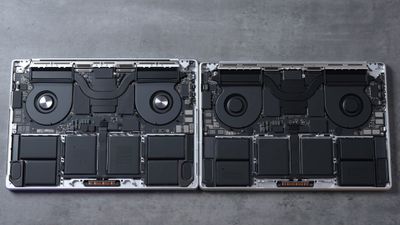
YouTube channel Max Tech noted that the bottom cover on the new MacBook Pro models has slightly recessed feet, and there are now only four pentalobe screws holding it in place, compared to eight on previous models.
Under the bottom cover sit larger speakers, which provide 50% deeper bass according to Apple.
In case you missed it, the bottom corners of the display are now rounded on the new models, whereas only the top corners are rounded on the mini-LED displays. This small change results in a much more uniform design.
As we noted over the weekend, Daring Fireball's John Gruber confirmed that the illuminated Apple logo on the new MacBook Pro lids uses a custom light source — seemingly a white LED. On older MacBooks released in 2015 and earlier, the Apple logo was illuminated by the LCD's backlight, but OLED displays do not have a backlight.
Why did Apple bring back the illuminated logo? Gruber shared Apple's answer. "Because it's awesome," he heard an Apple representative say.
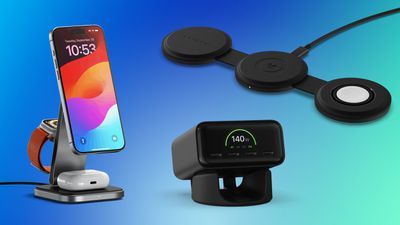
Satechi and MacRumors have partnered up to offer our readers 30 percent off a collection of Satechi's best charging and travel accessories. This sale will run through this Sunday, November 15, so you have the rest of this week to shop all of the discounts.
Note: MacRumors is an affiliate partner with Satechi. When you click a link and make a purchase, we may receive a small payment, which helps us keep the site running.
Our exclusive sale covers six of Satechi's accessories, including five charging accessories, plus a MagSafe-compatible iPhone wallet. In order to see the sale prices, add one of the devices to your cart on Satechi's website, then enter the code 30MR2026 at checkout to get 30 percent off.
Our code only works on the accessories listed below, and you can buy multiple at once if you're interested in more than one of the deals. Remember to make your purchases before November 15, when the sale will end.
We're recapping all of the best early Black Friday accessories in our main post, including great discounts on TVs, smart home products, and much more. If you're on the hunt for more discounts, be sure to visit our Apple Deals roundup where we recap the best Apple-related bargains of the past week.
Deals Newsletter
Interested in hearing more about the best deals you can find during the holidays? You can sign up for our Deals Newsletter and we'll keep you updated so you don't miss the biggest deals of the season!
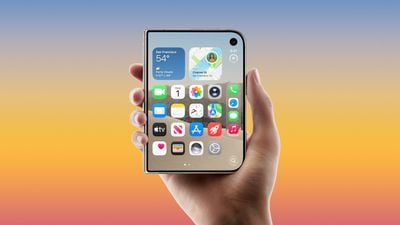
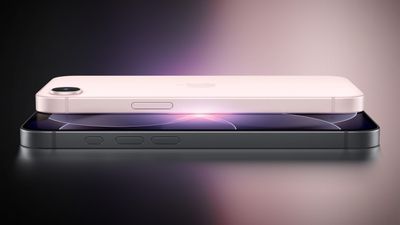
A future iPhone could keep its current width while becoming shorter, with iOS preserving room for content by moving some controls into the status bar, in a theory shared by the Weibo leaker known as "Instant Digital."
Instant Digital imagines Apple shortening a non-folding iPhone once its display has only a single camera cutout or the front-facing camera moves entirely beneath the screen. Taking roughly a status bar's worth of height off the display would bring its aspect ratio from around 19.5:9 to closer to 18:9, apparently making the phone easier to hold and use with one hand.
Controls that currently sit below the status bar could share a row with the time and system indicators. Instant Digital's idea is that combining the two rows would let the shorter display show the same amount of information. The leaker described the layout and proportions as personal speculation.
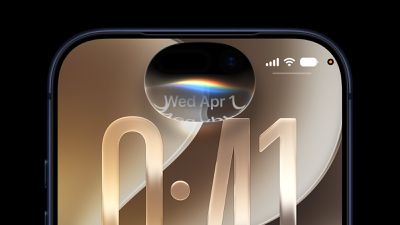
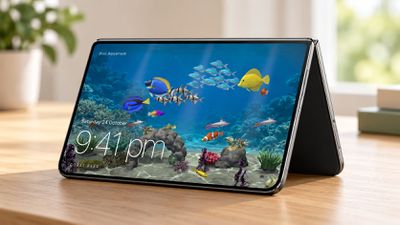
Apple has already changed how iOS uses the space at the top of the screen with the iPhone 18 Pro and iPhone Duo. The iPhone 18 Pro's smaller Dynamic Island supports up to three simultaneous Live Activities, up from two on earlier models. On the iPhone Duo, iOS fits a compact status bar into the corner and positions the Dynamic Island vertically along the side of the outer display.
The timing of a cutout-free display on the iPhone remains uncertain. The leaker "Digital Chat Station" has said Apple is testing under-display camera technology and has described an intermediate design with a visible hole for the front-facing camera, similar to the iPhone Duo.
In a follow-up post on Weibo, another user said they expect iPhones to retain a camera cutout and a 19.5:9 aspect ratio in both 2027 and 2028. Instant Digital replied that some sources say the cutout could disappear in 2028. Display analyst Ross Young has separately said he expects the 2028 iPhone Pro models to retain a centered camera cutout.
In a separate post, Instant Digital said they had a growing hunch that iOS would change substantially after the 20th-anniversary iPhone launches in 2027. They expect changes to how users interact with the software as well as how it looks.
Bloomberg's Mark Gurman reported that the anniversary iPhone will have curved glass and thinner bezels in the biggest overhaul to the Pro line since the iPhone X. Digital Chat Station has also said Apple was testing a roughly 7-inch display for the largest anniversary model with the same aspect ratio as the iPhone 17 Pro Max.
The iPhone X offers a precedent for a hardware redesign changing how people use iOS. When Apple removed the Home button in 2017, iOS 11 introduced swipe-up navigation on the iPhone X.
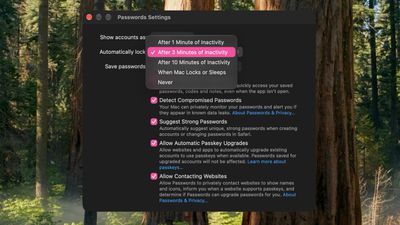
Apple's Passwords app on Mac will soon let you choose when it automatically locks. Spotted by code explorer pdfu, a new menu in macOS 27.3 beta offers one, three, or 10 minutes of inactivity, alongside options to lock when the Mac itself locks or sleeps, or for it to never automatically lock.
In the current macOS 27.2 general release and in earlier versions of Apple's Mac operating system, the Passwords app uses a fixed three-minute inactivity timeout. So when the update arrives in December, you'll have more control over how long the app stays unlocked, rather than have to rely on the default timeout.
Apple added a dedicated Passwords app for managing your iCloud passwords and logins with the release of macOS Sequoia in September 2024.
In Apple's iOS 27.3 beta release, the system includes a "memory graph" that's designed to organize information about relationships, places, routines, health, workouts, and what motivates users or holds them back, according to the findings. It also identifies "memory atoms" for facts, opinions, intentions, and events, including details about the people, places, times, and topics involved.
According to pdfu, the graph uses two kinds of processes to gather info. One turns structured data into insights – like reading the name fields in a user's own contact card. The other uses an on-device AI model or Private Cloud Compute to extract insights by querying sources including Siri conversations, messages, photos, and health data.
Apparently, only one of these AI-driven processes is present so far: pdfu believes it's designed to identify motivations, barriers, and resources using a set of 60 built-in questions, including questions about routines that might interfere with adequate sleep.
From what's been uncovered so far, it's still an unfinished system – pdfu says there's no process that creates memory atoms yet, for example. In a follow-up explanation, the code sleuth also distinguished the graph from a separate store for explicit memories. The latter store has space for records in Apple's search system, but nothing writes the records yet.
Both systems reportedly use Apple's version of the Kuzu graph database. Apple acquired Kuzu in 2025, but its plans for the technology were unclear when the acquisition emerged earlier this year.
Siri already offers personal context understanding, allowing the assistant to find information about the user's life in apps like Mail, Messages, and Photos. Nothing that's been uncovered so far tells us when the unfinished memory system will become available or how users will have control over their data.














 Note: MacRumors is an affiliate partner with some of these vendors. When you click a link and make a purchase, we may receive a small payment, which helps us keep the site running.


 Apple today

 Apple today

 16-inch/Mini-LED on left, 16-inch/PROLED on right