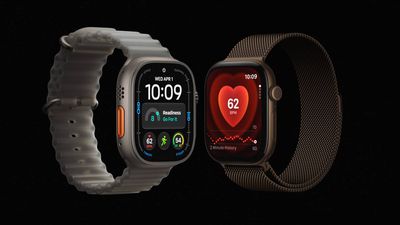
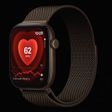
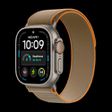
Apple reintroduced a ceramic case for the Apple Watch Series 12, but if you don't have AppleCare+, repairs are unusually expensive.
It costs $599 to fix "other damage," which covers any repair besides a battery replacement. Battery service is priced at $99.
Repairing a ceramic Series 12 is more expensive than getting an Apple Watch Ultra 4 repaired. That repair costs $549 without AppleCare+ (up $50 from the prior model). A repair for a cellular aluminum Series 12 of the same size is $349.
Apple Watch Series 12 models in the Pearl White or Night Blue ceramic options are priced starting at $899, while the Apple Watch Ultra 4 is priced starting at $799.
With AppleCare+, Apple Watch users will only need to pay a $69 service fee for damage to the ceramic Apple Watch Series 12 or $79 for the Apple Watch Ultra 4. Battery service is free if a watch's battery capacity drops below 80 percent, and theft or loss has a $119 deductible.
AppleCare+ with Theft and Loss for the Apple Watch Series 12 is $4.99 per month, and it's $5.99 per month for the Ultra 4. Customers can also opt for AppleCare One, Apple's $19.99 per month option that covers up to three devices. Starting on September 14, Apple is also offering AppleCare One Family, which is $49.99 per month for up to six family members.
macOS 26.2 added an Edge Light feature to Macs with the M1 chip or newer, and it has now been rumored that this feature will expand to the iPhone.
According to pdfu, who has been digging through code in Apple's software updates in recent weeks, the iOS 27 Release Candidate contains evidence of the Edge Light feature coming to the iPhone Duo at a minimum. However, it appears that the feature is still in development, as they said the color temperature setting is not fully implemented.
On the Mac, Edge Light illuminates the borders of the screen to evenly illuminate your face in low-light conditions. The feature is essentially a virtual ring light, and there are settings to adjust the width of the white line around the screen and a color temperature slider to make the light it produces appear more or less warm.
Edge Light is coming to iPhone.
iOS 27 RC gates the feature behind a device subtype that points to iPhone Duo. The color temperature setting isn't fully implemented. pic.twitter.com/dc4pQmikJc
— pdfu (@itspdfu) September 10, 2026
Based on a video of the feature in action on a simulated iPhone, it appears that the feature will work in a similar manner and have the same brightness and color temperature settings on the iPhone. It is unclear if Edge Light will be available on the iPhone Duo when the device launches on October 23, or if it will expand to other iPhone models.
Some of pdfu's other Apple-related code findings have already proven to be right, so the user has an accurate track record so far.
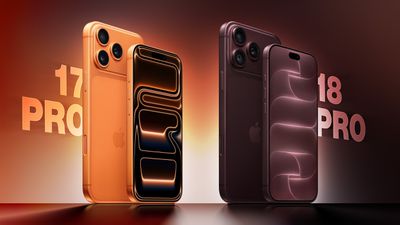
Apple's repairability scores suggest the iPhone 18 Pro and iPhone 18 Pro Max are slightly easier to repair than the iPhone 17 Pro and iPhone 17 Pro Max. Apple released the repairability data in a product information sheet required by EU energy labeling regulations [PDF].
The EU requires smartphone makers to self-rate repairability across categories like disassembly depth, fasteners, tools, spare parts, software update duration, and repair information. Each category gets a 0–5 score, which is combined into the overall index number. Here are the iPhone 18 Pro and Pro Max scores compared to the iPhone 17 Pro and Pro Max scores.
Overall index - 3.14, up 0.10 from 3.04
Disassembly depth - 2.75, up 0.10 from 2.65
Fasteners - 3.80, no change
Tools - 2.55, up 0.50 from 2.05
Spare parts - 4.00, no change
Software updates - 1.00, no change (EU only awards a higher software core when manufacturers agree to support devices beyond the five-year minimum)
Repair info - 5.00, no change
It looks like the iPhone 17 Pro models and the iPhone 18 Pro models have similar builds and are repaired in largely the same way, but there are small gains in tools and disassembly depth. Apple may have new tools for accessing some components, but the regulatory filings don't go into specifics. Both devices are class C on the A-E scale that appears on the iPhone's label.
We won't have to wait long to see what's changed inside the new iPhone models, because repair site iFixit is likely planning a teardown of one of the new iPhones on or shortly after the September 18 launch date.
Since the iPhone Duo isn't available for pre-order yet, Apple hasn't published similar repair data for the device.
For many months, tech blogs like ours used the name iPhone Ultra to refer to Apple's rumored foldable iPhone, but the device ended up being named iPhone Duo.
The name iPhone Duo was not a complete surprise. Daring Fireball's John Gruber accurately guessed that the device would be named iPhone Duo all the way back in April, and the name made the rounds again on social media last week.
To his credit, Gurman ended up confirming the iPhone Duo name in a last-minute report published shortly before Apple announced the device.
Apple avoiding the name iPhone Ultra makes sense, as the device now known as the iPhone Duo is not the most "ultra" version of the iPhone available. Yes, the iPhone Duo has a large 7.6-inch inner display when opened, but on the other hand the device lacks features such as a dedicated Telephoto camera, Face ID, and an Action button.
Apple has used Duo branding in the past for its PowerBook Duo line of laptops in the 1990s and the MagSafe Duo Charger in the early 2020s. In the case of the iPhone Duo, the word Duo obviously refers to the device's dual screens.
Apple does have some products and services with Ultra branding, including the Apple Watch Ultra, CarPlay Ultra, and the M1 Ultra through M5 Ultra line of chips. And with Apple rumored to be a planning a special 20th-anniversary iPhone, perhaps there will still be an opportunity for the company to use the name iPhone Ultra in the future.
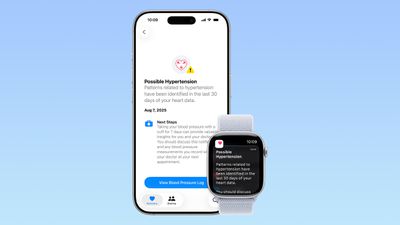
Some Apple Watch users who upgrade to the Series 12 or the Ultra 4 might temporarily lose access to hypertension notifications.
On the watchOS feature availability page, Apple says notifications might not be available on the Series 12 or Ultra 4 at launch because regulatory clearances are in process.
Hypertension Notifications may not be available on Apple Watch Series 12 or Ultra 4 in your region, as additional regulatory clearances for these devices are in process.
The warning applies to 33 countries and regions, including Canada, Australia, India, Brazil, Singapore, Japan, Taiwan, South Africa, South Korea, and the UAE, with a full list on Apple's website.
The Apple Watch Series 12 and Apple Watch Ultra 4 have revamped sensors and a new Health Sensing System. Apple added new optical and electrical heart sensors for more frequent and accurate tracking, and the change appears to require new regulatory approval in some locations.
What's new:
ECG - The electrodes in the watch cover more surface area for improved skin contact during ECG readings.
Optical sensing - Redesigned photodiodes are organized in a ring to capture light more efficiently.
Heart rate measurement - Larger, power-efficient green LEDs in the optical heart rate sensor allow the new watches to measure heart rate every five seconds all day, offering more data on a user's fitness and physiological state. Real-time heart rate is available in the updated Heart Rate app, and Exercise and Move Activity rings are more accurate. HRV is also measured as often as every five minutes.
Apple Watch users who get these notifications today may lose the option when upgrading to the Series 12 or Ultra 4 until regulatory clearance is granted.
Countries not on Apple's list with a footnote will continue to get notifications as usual. This includes the United States, UK, and all EU countries.
Apple is planning a major redesign of the Health app on iPhone and iPad, with a long list of new features set to be added. Apple announced the Health app changes at yesterday's iPhone event.
The Health app is getting an update because Apple overhauled the sensors in the Apple Watch Series 12 and Apple Watch Ultra 4. There's a Health Sensing System with three main improvements: increased electrode surface area for better skin contact during ECG readings, redesigned photodiodes arranged in a ring to capture light more efficiently for optical sensing, and power-efficient green LEDs for capturing continuous heart rate data.
The new watches take heart rate readings every five seconds throughout the day, and more frequently measure heart rate variability (HRV). All of the data collected is sent to the Health app on iPhone. Apple says in a head-to-head study against other wearables using an ECG chest strap as reference, the new Apple Watch had the most accurate heart rate sensing.
Apple Intelligence Guidance
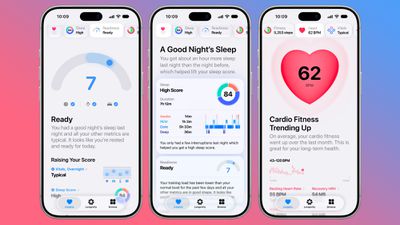
The Health app will turn the data and metrics that it collects into personalized guidance thanks to Apple Intelligence integration. There are several new sections coming to the Health app.
Insights - The Insights tab offers an Apple Intelligence-generated summary of timely information like your latest sleep metrics or a new peak in VO2 max. There are options to get custom advice on readiness, fitness, heart health, and more in the For You section.
Personal Guidance - Personal guidance is part of the Insights tab. It knows what's important to you, and will make relevant suggestions. Apple says if you're working on your cardio, you might see a suggestion to incorporate intervals into your morning run. Recommendations adapt to each user and their data.
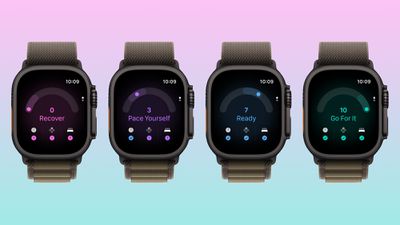
Readiness - The new Apple Watch models calculate a readiness score that takes into account recent activity, vitals, and sleep score. It gives a 0–10 score with recommendations on activity level. Readouts include Recover, Pace Yourself, Ready, or Go For It. Info is shown on the watch, in the Fitness app, and in the Health app's Insights tab.
Fitness - Insights incorporates your daily activity and it updates throughout the day.
Vitals - The Vitals option in the Health app has new overnight views and daytime views. HRV is incorporated as a metric, offering a better look at your ability to recover from stress. It measures overall HRV and recovery HRV.
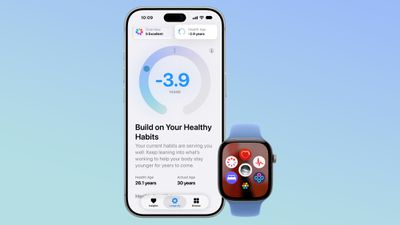
Longevity - There is a new Longevity tab in the Health app. It uses metrics from your iPhone and Apple Watch to assess overall health across heart health, sleep, mental wellbeing, movement health, metabolic health, hearing, and nutrition. The section shows you how well you're doing in each category, and how each metric is classified against the latest clinical guidance.
Health Age - Health Age is part of the Longevity tab. It uses metrics like VO2 max, resting heart rate, HRV, sleep, and biomarkers from blood work to determine how your health metrics compare to your actual age. It will help you figure out what habits make the biggest impact on your health, and how you can improve.
Lab Results
Health Age and Longevity can be more useful with lab results. Users can upload lab results manually or sync medical records.
Apple has also partnered with Quest to offer U.S. users an option to buy a full bloodwork panel that covers more than 50 biomarkers. The test is priced at $119, and users will be able to buy it right in the Health app. It'll require a visit to a Quest lab location, and results are combined with data from the Apple Watch and analyzed on iPhone. Apple says users will get videos from clinical experts related to their results.
According to Quest, the panel delivers preventive health insights and includes biomarkers for assessing cardiometabolic health and organ function. It also includes biometric readings that measure blood pressure, height, weight, and waist and hip circumferences. Since the test isn't available in the Health app yet, a full list of what's included isn't known.
Apple competitor Oura offers a similar testing option through Quest. The $99 test checks more than 50 biomarkers, and Oura runs discounts.
Quest has approximately 2,000 locations across the U.S. Results appear in the Health app shortly after testing.
Movement Evaluations
Apple is adding new at-home health assessments you can complete, such as a VO2 max test. The test uses the iPhone camera to track your movements as you follow moves and instructions from a trainer. The tests offer real-time audio and visual feedback.
There are in-depth physical assessments for measuring flexibility, strength, balance, and movement mechanics in addition to VO2 max.
Apple says the tests are useful to see how well your body is moving or to track your progress recovering from an injury. Tests run on device with no video recorded or stored, and users get an exercise plan after completing a test.
Cycle Tracking
Apple is adding perimenopause and menopause support to Cycle Tracking in the Health app.
Device Requirements
Apple Watch users with an Apple Intelligence-capable iPhone will get the updated Health app when it launches, but readiness, more frequent heart rate readings, and more frequent HRV readings require a Series 12 or Ultra 4.
Launch Date
Apple says the new Health app is coming in late 2026, but the company did not give a specific launch date. It will be available in U.S. English at launch, with more languages to follow.
Ever since the Apple Watch Series 4 in 2018, the larger-sized aluminum Apple Watch has started at $429 in the U.S., but that has changed with the Apple Watch Series 12.
While the Apple Watch Series 12 with a 42mm case maintains a starting price of $399, the 46mm model has received a $20 price increase and now starts at $449.
In other words, stepping up to a 46mm case now costs an extra $50 instead of $30.
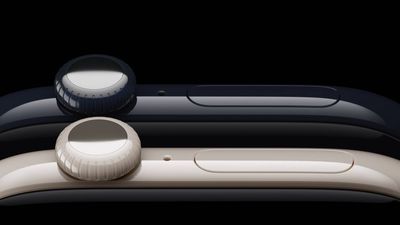
Apple Watch Series 12 models with a ceramic case are physically larger than the same model in aluminum or titanium, according to Apple's own tech specs.
At 46mm, Apple's tech specs page lists the aluminum and titanium case at 46mm by 40mm by 9.7mm, while the ceramic case sold under the same 46mm name measures 47mm by 41mm by 9.85mm, a millimeter taller, a millimeter wider, and 0.15mm thicker. The 42mm size follows the same pattern: 42mm by 37mm by 9.7mm for aluminum and titanium, versus 43mm by 37mm by 9.85mm for ceramic, a millimeter taller and 0.15mm thicker, with the width unchanged.
The display is unaffected. Apple lists the same 1,196 sq mm display area at 46mm and 970 sq mm at 42mm across all three materials, meaning the extra size is entirely case, not screen.
The ceramic models are also heavier. At 46mm, the Pearl White ceramic case weighs 51.3 grams and Night Blue weighs 52.9 grams, against 39.5 grams for the equivalent aluminum model and 44.9 grams for titanium, up to 34% heavier than aluminum and 18% heavier than titanium. The 42mm ceramic models weigh 41.7 grams in Pearl White and 42.8 grams in Night Blue, against 32.2 grams for aluminum and 36.5 grams for titanium, up to 33% heavier than aluminum and 17% heavier than titanium.
This appears to be the first time Apple has sold different physical case dimensions under the same nominal watch size. The increased size is presumably a design compromise owing to the entirely different material, although the earlier ceramic Apple Watch Edition models used identical case dimensions across materials at a given size, with only the weight changing between them.
Ceramic returns to the Apple Watch lineup with the Series 12 after a six-year absence, having last been offered on Series 5 in 2019 before Apple dropped it for Series 6 in 2020.
Apple Watch Series 12 in ceramic starts at $899, compared with $399 for aluminum and $699 for titanium, in Pearl White or Night Blue finishes. It launches on September 18.
Apple unveiled the iPhone 18 Pro models just one day ago, but there are already rumors about a redesigned "iPhone 20" launching next September.
Bloomberg's Mark Gurman recently reported that Apple plans to release a special 20th-anniversary iPhone next year with the biggest design changes since the iPhone X. Of course, there is always a new iPhone around the corner, but it sounds like the so-called "iPhone 20" will have significant changes that some customers may wish to wait for.
Unveiled by Steve Jobs in 2007, the iPhone turns 20 next year. To mark the occasion, the report said Apple plans to release a 20th-anniversary iPhone with "curved glass around all corners and edges" and thinner bezels around the screen.
"It will be the biggest overhaul to what is now the iPhone Pro line since the iPhone X," the report said, but no further details were provided.
Released in 2017, the iPhone X was the first iPhone with Face ID. The removal of the Touch ID button allowed for the iPhone X's screen to extend more towards the edges of the device compared to previous models. It seems like the 20th-anniversary iPhone would go a step further than this by truly having the screen wrap around the corners and edges of the device, for a seemingly all-glass appearance.
Rumors about the 20th-anniversary iPhone have gone back and forth, but based on Gurman's latest reporting, the device seems to be in the works still. However, it remains to be seen if Apple can fully achieve the ambitious design changes that are apparently in development, or if plans for the device will ultimately be scaled back.
As for the iPhone 18 Pro, key new features include an A20 Pro chip with up to a 20% faster CPU and up to a 40% faster GPU compared to the A19 Pro chip, a smaller Dynamic Island, variable aperture for the main 48-megapixel Fusion camera, longer battery life, and a larger vapor chamber cooling system for improved heat dissipation.
If those upgrades do not sound interesting to you, waiting for the redesigned "iPhone 20" might prove to be worthwhile, but only if rumors come to fruition.
The Apple Watch Series 12 pairs a smaller display with a wider case than Series 10 and Series 11, even though the pixel resolution hasn't changed, according to Apple's own tech specs.
For the 46mm Series 12, Apple's tech specs page lists the display area at 1,196 sq mm, down 2% from 1,220 sq mm on Series 10 and Series 11. The 42mm size shows a similar 1.9% drop, from 989 sq mm to 970 sq mm. Pixel counts are identical across all three generations: 416 by 496 at 46mm, and 374 by 446 at 42mm.
The case grows as the screen shrinks. Apple's Series 12 tech specs list the 46mm case at 46mm by 40mm by 9.7mm, a millimeter wider than the 46mm by 39mm by 9.7mm case on Series 10 and Series 11, a roughly 2.6% increase in case footprint. The 42mm case grew from 42mm by 36mm to 42mm by 37mm over the same span, about 2.8%, with depth unchanged at 9.7mm for both sizes.
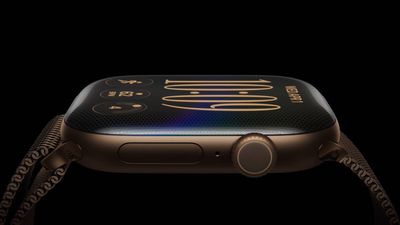
A smaller display combined with a bigger casing means bigger borders around the display, and it looks like Apple has also tweaked the design of the Series 12 to recede the casing and expand the front glass, which makes the borders look even larger.
There's recent precedent for a change like this translating into a visibly thicker bezel. Series 10 went through a similar shift when it replaced Series 9 in 2024, growing the case around the display. The Series 10's visible aluminum edge had actually shrunk by around 33% versus Series 9, while the total bezel, including the black glass border, had grown by about 17%, even though the case and display figures looked like an improvement on paper.
It looks like the Series 12 repeats that pattern, although to a less extreme extent. Unlike the Series 9 to Series 10 change, which was a full case redesign, Series 10, Series 11, and Series 12 all share the same approximate case design. The Apple Watch Series 12 starts at $399 and launches on September 18.
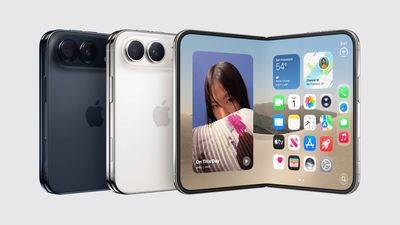
If you're wondering why the under-screen camera on the iPhone Duo's inner display isn't placed in the top-right corner, Chinese leaker Instant Digital has provided an explanation.
"The iPhone Duo's under-display camera wasn't placed in the top-right corner of the inner screen because of engineering difficulties," said the leaker in a Weibo post this morning. "The next generation will likely move it there, aligning it perfectly with the outer screen's camera." That sounds like a real engineering challenge, since the opposing rear cameras are the thickest things in the whole phone, but let's wait and see.
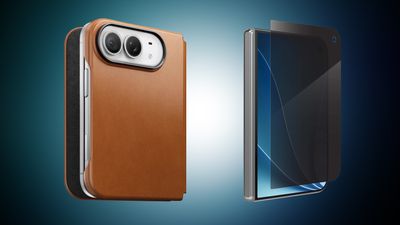
It's iPhone pre-order week, which means anyone looking to get the new iPhone 18 Pro or iPhone 18 Pro Max will likely be looking for new cases and protection for the smartphones. Below we're tracking all of the best case and screen protector options from the most popular accessory brands, including ZAGG, Nomad, and more.
Note: MacRumors is an affiliate partner with some of these vendors. When you click a link and make a purchase, we may receive a small payment, which helps us keep the site running.
Most of these retailers aren't offering discounts on these new case accessories, but at ZAGG you can get 20 percent off your order when you purchase any two accessories. This is a perfect opportunity to save some money with a new case and screen protector for your new iPhone.
ZAGG - iPhone 18 Pro and iPhone Duo cases and screen protectors (20% off two items)
There are some iPhone Duo case and screen protector options available from these retailers as well, but shoppers should remember the Duo itself won't launch until later in October. If you're on the hunt for more discounts, be sure to visit our Apple Deals roundup where we recap the best Apple-related bargains of the past week.
Deals Newsletter
Interested in hearing more about the best deals you can find in 2026? Sign up for our Deals Newsletter and we'll keep you updated so you don't miss the biggest deals of the season!
Hidden beneath the 7.6-inch inner screen of the foldable iPhone Duo is an under-display FaceTime camera. The long-rumored feature is a first for Apple, yet the company hasn't provided as much detail about it as the device's other cameras.
For example, unlike the 12-megapixel sensor on the outer front display and the two 48-megapixel lenses on the back, Apple has not revealed the megapixel count of the under-screen camera. Apple's tech specs page for the iPhone Duo offers the following details about its capabilities:
Under-display FaceTime camera
Center Stage for video calls
ƒ/1.8 aperture
Tap to zoom and rotate
Ultra‑stabilized video
1080p video recording at 30 or 60 fps
Animoji and Memoji in FaceTime
Wide color capture for photos and Live Photos
Lens correction
Auto image stabilization
QuickTake video at 1080p at 30 fps and 60 fps
Spatial Audio and stereo recording
Wind noise reduction
Audio Mix
Apple says the under-display camera records video at up to 1080p at 60 frames per second, compared to 4K at up to 60 fps for the outer front camera and 4K at up to 120 fps for the Main rear camera. This means the sensor is at least 2 megapixels – the minimum necessary to shoot 1080p video. However, its apparent inability to shoot 4K video may suggest it is less than 8 megapixels. Given that Apple has kept quiet, perhaps it's closer to 2 megapixels.
The under-screen camera's f/1.8 aperture is faster than the outer camera's f/2.2 aperture, which makes sense since it is probably helping to compensate for light lost through the display. Of course, Apple has not detailed the resulting trade-offs in image quality. How it affects photos and video is only likely to become clear once we get more time with the device.
According to a December 2023 report, LG Innotek was developing an under-display camera for Apple using a "freeform optic" lens array designed to reduce distortion and compensate for brightness loss. Again though, we don't know if this is the camera that made it into the iPhone Duo.
Another thing to note is that the display layer over the camera appears to lack the anti-reflective nano-texture coating found on the rest of the screen, resulting in a glossy dot. The screen also likely covers the lens with a lower density patch of pixels.
Regardless, the difference means the camera's location is less discreet than one might expect depending on the angle of ambient light. Apple even subtly acknowledges this in its marketing materials with a circular shadow on the screen, but going on the video below and the variable reflectivity, the effect can be more pronounced than the company is letting on.
Samsung has grappled with the same issue. The Korean company previously used under-display cameras in models including the Galaxy Z Fold6, before switching to a conventional 10-megapixel punch-hole camera with the Galaxy Z Fold7. This is Apple's first attempt at under-screen camera technology, so future iterations of the Duo may be better at hiding what can appear like a small smudge or blemish in the display – depending how you look at it.
Apple says preorders for the iPhone Duo will go live at 5:00 a.m. Pacific Time on Friday, October 16, with availability beginning Friday, October 23.
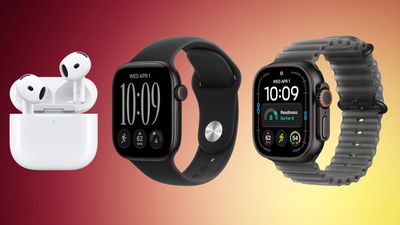
Apple yesterday announced the Apple Watch Series 12, Apple Watch Ultra 4, and AirPods 5 at its "Surprise and Shine" event, and today all of these devices are up for pre-order on Amazon. This also includes the first cash discount on the Apple Watch Series 12.
Note: MacRumors is an affiliate partner with Amazon. When you click a link and make a purchase, we may receive a small payment, which helps us keep the site running.
AirPods 5
You can pre-order the AirPods 5 and AirPods 5 with Wireless Charging Case right now on Amazon, available for $129.00 and $149.00, respectively. There are no pre-order deals yet on these devices, and they will officially launch on September 18.
If you're looking to save some money, and don't need Active Noise Cancellation, Amazon currently has the previous generation AirPods 4 for $99.00, down from $129.00. There's also a solid deal on the AirPods Max 2 for $449.00, down from $549.00.
Apple Watch Series 12
Apple Watch Series 12 models are also up for pre-order on Amazon today, starting at $399.00 for 42mm GPS devices and $449.00 for 46mm GPS devices. These will also launch on September 18 alongside the new AirPods 5.
If you're interested in the cellular models of the Apple Watch Series 12, you have a chance to get the first savings on these devices via Amazon. The 42mm Cellular Series 12 is available for pre-order at $489.99, down from $499.00, which isn't a large markdown but it is the only deal you'll find on these brand-new watches online right now.
You can also pre-order the new Titanium Apple Watch Series 12 models starting at $699.00, and the Ceramic model is available for $949.00.
Apple Watch Ultra 4
The Apple Watch Ultra 4 is available for pre-order on Amazon for $799.00 in Black and Natural Titanium color options. This device will launch on September 18, alongside the Series 12 and AirPods 5.
For a full breakdown of everything Apple announced this week, be sure to visit our dedicated post with all of the biggest pieces of news from the event.
If you're on the hunt for more discounts, be sure to visit our Apple Deals roundup where we recap the best Apple-related bargains of the past week.
Deals Newsletter
Interested in hearing more about the best deals you can find in 2026? Sign up for our Deals Newsletter and we'll keep you updated so you don't miss the biggest deals of the season!
Apple's tech specs suggest the iPhone Duo's Main camera sensor is seemingly a match for the iPhone 17e's, not the standard iPhone 17's.
According to Apple's tech specs page for the iPhone Duo, the Main camera is a 26mm, ƒ/1.6 sensor with sensor-shift optical image stabilization and Hybrid Focus Pixels, also enabling a 12MP 2x Telephoto crop from the same sensor. The iPhone 17e's tech specs page lists an identical 26mm, ƒ/1.6 Main camera with Hybrid Focus Pixels, the same autofocus terminology Apple uses for the iPhone Duo.
The match is not total, though. The iPhone 17e's tech specs describes plain "optical image stabilization" with no "sensor-shift" qualifier, while the iPhone Duo's does include it. That detail instead lines up with the standard iPhone 17's tech specs page, which pairs sensor-shift OIS with a different autofocus term, "100% Focus Pixels," the wording iPhone 18 Pro's tech specs page also uses but Duo and 17e do not.
This suggests that the Main camera of the iPhone Duo realistically falls somewhere between the iPhone 17e and iPhone 17, possessing the sensor-shift optical image stabilization of the iPhone 17, but with an iPhone 17e-style sensor that uses Hybrid Focus Pixels.
The overlapping Focus Pixels wording with the 17e is fueling speculation online that the two devices share a sensor. Apple has not published a sensor size or pixel pitch for the iPhone Duo's Main camera, leaving the matching Focus Pixels wording as the only official link to the 17e for now.
The iPhone Duo starts at $1,999, with pre-orders opening October 16 ahead of an October 23 release.
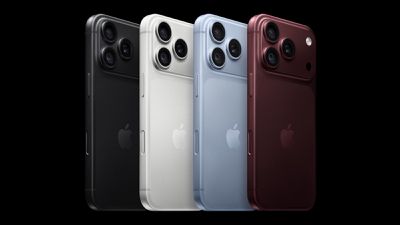
Apple yesterday announced the iPhone 18 Pro and iPhone 18 Pro Max, succeeding the iPhone 17 Pro that launched last September. The new models are built around the A20 Pro chip, a 48-megapixel Fusion Main camera with variable aperture, a redesigned vapor chamber, and a smaller Dynamic Island.
Last year's iPhone 17 Pro brought one of the biggest design changes to the lineup in years, switching from a titanium frame and glass back to an aluminum unibody with Ceramic Shield 2. With that overhaul out of the way, this year's update is more about what's inside the phone than a new look, focused on the chip, camera, and battery rather than another redesign. The iPhone 18 Pro Max, which shares nearly all of these changes, also gets a battery capacity increase of its own, delivering the largest jump in battery life in the iPhone's history.
The iPhone 18 Pro starts at $1,199 for 256GB, up from the iPhone 17 Pro's $1,099 starting price. Our guide breaks down every difference between the two generations to help you decide whether the upgrade is worth it. Here's everything that differs between the iPhone 17 Pro and iPhone 18 Pro:
Built with TSMC's N2 process (2nm), Apple's first 2nm smartphone chip
6-core CPU with 2 performance cores and 4 efficiency cores
6-core CPU with 2 super cores and 4 efficiency cores
50% more memory bandwidth than A19 Pro
6-core GPU with Neural Accelerators
7-core GPU with Neural Accelerators, up to 40% faster than A19 Pro
16-core Neural Engine
Dual 16-core Neural Engine (32 total cores)
Vapor chamber cooling
Next-generation vapor chamber with 3x more surface area than iPhone 17 Pro's, up to 40% higher sustained performance
New chip packaging that places silicon die beside memory, allowing it to attach directly to the vapor chamber
Qualcomm X80 modem
Apple C2 modem
Rear Camera
iPhone 17 Pro (2025)
iPhone 18 Pro (2026)
Fixed ƒ/1.78 aperture on the 48-megapixel Fusion Main camera
Variable-aperture 48-megapixel Fusion Main camera with four stops: ƒ/1.48, ƒ/1.8, ƒ/2.8, and ƒ/4.0, using six laser-cut blades
API available for developers to control the aperture range within their own apps
Faster Night mode, tied to the new variable-aperture lens
Pro controls in the Camera app: manual lens aperture, shutter speed, white balance, and histogram
New sensor and computational imaging pipeline on the Fusion Main camera, delivering around 50% better low-light performance and more detail in the back of group photos
Photographic Styles 2, adjusting tone and color
Photographic Styles 3, adding texture and grain controls alongside tone and color
Smart focus tracking
Cinematic mode recording up to 4K Dolby Vision at 30 fps
Cinematic mode recording up to 4K Dolby Vision at 60 fps
Cinematic mode effects can be applied after capture, on video shot at up to 60 fps
Improved low-light video
Time-lapse video recording with stabilization, up to 4K Dolby Vision
Apple Reference Image (Fusion Main only), an opt-in feature that signs sensor data so a photo's authenticity can later be verified
Audio Mix
Audio Mix with new algorithms for higher-quality voices, and the ability to isolate music
Front Camera
iPhone 17 Pro (2025)
iPhone 18 Pro (2026)
Photographic Styles 2, adjusting tone and color
Photographic Styles 3, adding texture and grain controls alongside tone and color
Smart focus tracking
Cinematic mode effects can be applied after capture
Improved low-light video
Time-lapse video recording with stabilization, up to 4K Dolby Vision
Discontinued and no longer sold directly by Apple, now only available via third-parties
iPhone 18 Pro: Sold directly by Apple, from $49.95 a month for 24 months via Apple Upgrade iPhone 18 Pro Max: Sold directly by Apple, from $54.12 a month for 24 months via Apple Upgrade
Apple's redesigned vapor chamber and the A20 Pro's move to TSMC's 2nm process are among the most important updates under the hood this year, and together they raise sustained performance and unlock longer battery life. Battery life rises from 33 hours on the iPhone 17 Pro to 36 hours, and from 39 to 45 hours on the Pro Max, which is the largest battery gain Apple has delivered on an iPhone. Charging is faster too, reaching 50% in around 15 minutes with a 60W-capable adapter, down from 20 minutes last year.
The Dynamic Island sees the most visible external change, shrinking in size while expanding from two simultaneous Live Activities to three, letting users track a flight, a Maps route, and a timer at once without switching apps.
The most significant leap is the Main camera. It trades its fixed ƒ/1.78 aperture on the iPhone 17 Pro for a four-stop variable aperture ranging from ƒ/1.48 to ƒ/4.0, delivering around 50% better low-light performance and giving photographers optical control over depth of field that the iPhone has never offered before. Paired with new Pro controls for manual aperture, shutter speed, and white balance, Photographic Styles 3's added texture and grain sliders, and Apple Reference Image for verifying a photo's authenticity, the camera system does more to justify the Pro name than anything else in this update.
The iPhone 18 Pro is clearly aimed at photographers and creators, but the longer battery life, faster charging, and more capable Dynamic Island give casual users real reasons to notice the difference too. Compared with last year's aluminum unibody overhaul, this is a more targeted upgrade rather than a wholesale reinvention, but between the chip, the camera, and the battery gains.
For existing iPhone 17 Pro or iPhone 17 Pro Max owners, there is no general-purpose reason to upgrade to either new model. The core design, display sizes, and everyday camera experience carry over largely unchanged, and both new models cost $100 more than their iPhone 17 Pro equivalent. The upgrade is worth it if you specifically want variable aperture and manual Pro controls for photography, or if you rely on sustained performance for gaming or on-device AI tasks where the A20 Pro's cooling and Neural Engine gains will be most noticeable, but realistically this will only encompass a minority of users.
For new buyers coming from an iPhone 16 Pro or older, the iPhone 18 Pro is the better long-term purchase given the newer chip and camera system. That being said, if you can get an iPhone 17 Pro at a substantially lower price, it is probably worth buying last year's model instead.
Pre-orders for the iPhone 18 Pro and iPhone 18 Pro Max open Saturday, September 12, with availability beginning Friday, September 18.
MacRumors has confirmed that the Apple Watch Series 12 and Apple Watch Ultra 4 have increased RAM compared to the previous-generation models.
Both new models are equipped with 4GB of RAM, according to Apple's developer tool Xcode 27.
Apple Watch Series 11 and Apple Watch Ultra 3 models are equipped with 2GB of RAM, so the Series 12 and Ultra 4 have twice as much memory.
Apple Watch Series 12 and Apple Watch Ultra 4 models are equipped with a new S11 chip that powers new Apple Intelligence features when the watches are paired to an iPhone 15 Pro or newer. The increased RAM will help to enable these new functions, such as Live Rewind text snippets and Siri Recap summaries, and give a boost to Siri AI.
Despite a severe memory chip shortage that has driven up the price of RAM and resulted in Apple raising prices on iPhones, iPads, Macs, and more in recent months, the Series 12 and Ultra 4 start at $399 and $799 respectively in the U.S., meaning the devices have the same starting prices as the Series 11 and Ultra 3 even with more RAM.
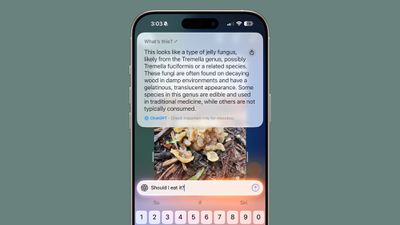
Apple may be exploring a way to let search providers show sponsored results inside Visual Intelligence, according to code uncovered in iOS 27.
The find comes from MacRumors' Aaron Perris, who said in a post on X that the code points to Apple allowing search providers to insert their own sponsored results into Visual Intelligence, rather than Apple selling the ad space itself. He compared it to the sponsored product listings already seen on Amazon and Google. It is not clear whether Apple would take a cut of ad revenue.
The feature would let third party search providers, such as Google, insert items such as sponsored product images alongside the organic results Visual Intelligence already returns when a user points their camera at an item to shop for it. That would set it apart from the advertising pushes Apple has driven directly in its own apps over the past year.
Apple has been steadily expanding its advertising business across the App Store and Maps. The company began showing additional sponsored slots in App Store search results in March, and ads went live in Apple Maps in the United States and Canada last month.
Visual Intelligence already routes shopping queries to services like Google Image Search and retailers such as Etsy, Amazon, and Anthropologie, so ad supported results from those partners would build on functionality that already exists in iOS 27.



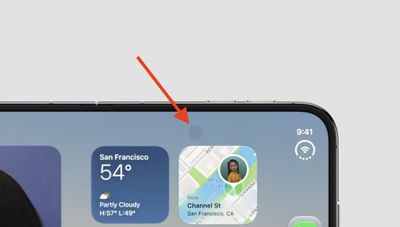 If you're wondering why the under-screen camera on the iPhone Duo's inner display isn't placed in the top-right corner, Chinese leaker Instant Digital has provided an explanation.
 Note: MacRumors is an affiliate partner with some of these vendors. When you click a link and make a purchase, we may receive a small payment, which helps us keep the site running.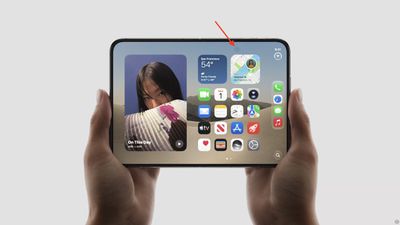
 Note: MacRumors is an affiliate partner with Amazon. When you click a link and make a purchase, we may receive a small payment, which helps us keep the site running.