Apple's new iPad Pro comes almost 18 months after the previous version with the M4 chip, so how different is the new model and should you consider upgrading?
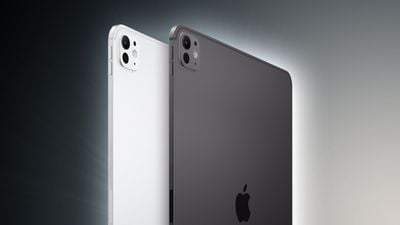
The iPad Pro introduced last year was a major update, debuting the M4 chip, a significantly thinner design, a nano-texture option, OLED displays, a landscape front-facing camera, and more, as well as a new Magic Keyboard with an aluminum top case, function keys, and a trackpad with haptic feedback. With such a big update last year, the new iPad Pro Apple just launched with the M5 chip is much more iterative, focusing largely on chips and connectivity. Beyond their chips, the key differences are as follows:
| M4 iPad Pro (2024) | M5 iPad Pro (2025) |
|---|---|
| Broadcom Wi-Fi and Bluetooth chip | N1 chip |
| Bluetooth 5.3 | Bluetooth 6 |
| Wi-Fi 6E connectivity | Wi-Fi 7 connectivity |
| Qualcomm Snapdragon 5G modem (cellular models only) | C1X chip (cellular models only) |
| Up to 2× faster SSD read and write speeds | |
| 256GB and 512GB models: 8GB memory 1TB and 2TB models: 16GB memory |
256GB and 512GB models: 12GB memory 1TB and 2TB models: 16GB memory |
| ~2–4 nits minimum brightness | 1 nit minimum brightness |
| Drive external displays at 60Hz | Drive external displays at up to 120Hz |
| Adaptive Sync support | |
| Fast-charge capable (Up to 50% charge using a 60W adapter or higher in 30 minutes with the 11-inch model or 35 minutes with the 13-inch model) |
With the latest version of the iPad Pro, Apple is mainly touting the power of the M5 chip. Compared to the M4, it says the M5 is:
- Up to 15% faster multithreaded CPU performance
- Up to 30% faster overall graphics performance
- Up to 45% faster ray tracing performance
- 27.5% higher unified memory bandwidth
In addition to general performance claims, Apple published a set of specific real-world workload results showing measurable gains in AI-driven applications with the M5 chip:
- 4×+ peak GPU compute performance for AI
- 3.6× faster time to first token (LLM)
- 1.8× faster Topaz Video Enhance AI processing
- 1.7× faster Blender ray-traced rendering
- 2.9× faster AI speech enhancement in Premiere Pro
Other notable changes compared to the M4 chip in the iPad Pro include:
| M4 Chip | M5 Chip |
|---|---|
| Made with TSMC's second-generation 3nm process (N3E) | Made TSMC's third-generation 3nm process (N3P) |
| Based on A18 Pro chip from iPhone 16 Pro | Based on A19 Pro chip from iPhone 17 Pro |
| No integrated Neural Accelerators | Integrated Neural Accelerator in every GPU core |
| Metal 3 developer APIs | Metal 4 developer APIs with Tensor APIs to program GPU Neural Accelerators |
| Second-generation ray tracing engine | Third-generation ray tracing engine |
| First-generation dynamic caching | Second-generation dynamic caching |
| Shader cores | Enhanced shader cores |
| 120 GB/s unified memory bandwidth | 153 GB/s unified memory bandwidth |
The M5 iPad Pro does have some notable upgrades: baseline memory has increased, SSD speed has doubled, the external display controller now supports 120Hz and Adaptive Sync, the GPU now integrates neural accelerators per core with new Tensor APIs, cellular connectivity is faster, and it now supports both Wi-Fi 7 and Bluetooth 6.
However, the practical effect of these changes is very narrow. Almost every common iPad Pro workflow is already well within the capability envelope of the M4 model. As a result, the M5's gains will only reveal themselves in edge-case behaviors: very large AI-driven workloads, long exports on external drives, workloads that page into memory, or professional use with a 120Hz external display. Even for power-users of the M4 model, these situations are very rare.
This means the M5 is primarily a replacement-cycle product for owners of older iPads or laptops, rather than an upgrade-cycle product for recent buyers. If you currently own an M4 iPad Pro, there is no general-purpose reason to upgrade. Even for creative professionals, unless your pipeline explicitly leverages GPU-accelerated AI tools or 120Hz external displays, the upgrade will not translate into much time saved or dramatic capability gained.
By contrast, if you are upgrading from an older iPad Pro or intend to rely on the device for sustained AI or pro-grade external-monitor work for the next five years, the M5 does offer greater future headroom and reduced likelihood of hitting ceilings. The new model will likely last longer, being capable through more years of successive software updates and evolving requirements.