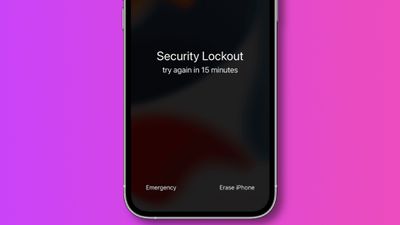
iOS 15.2, released this week, introduces the ability for customers to reset and erase their locked iPhone or iPad without needing to connect to a Mac or Windows PC.
As outlined in a support document (via 9to5Mac), iOS and iPadOS 15.2 add a new "Erase Device" option for when a device is locked out as a result of multiple failed attempts to enter the device's password. By pressing "Erase Device," users are prompted to confirm their identity with their Apple ID password, which results in the device being entirely erased and reset.
The new option is a welcome addition and a departure from the previous method, which required customers to put their iPhone or iPad into DFU mode and restore via Finder on the Mac or iTunes on Windows.
One caveat is that under the new method in iOS 15.2, the device must already have an active Wi-Fi or cellular connection before it is locked out. If not, users cannot connect to a network and will be forced to revert to the prior technique.
iOS 15.2 and iPadOS 15.2 include a host of new features, including a new App Privacy Report, the Apple Music Voice Plan, Legacy Contacts, and more. Catch up on all the latest features and additions with our round-up.
Sunday September 13, 2026 3:00 am PDT by Eric Slivka
Update 10:04 a.m.: iOS 27 is rolling out now, though it may take a bit for all users to see it, so keep checking!
Apple is about to release iOS 27, which will finally deliver more advanced Siri AI capabilities as well as a variety of other refinements, improvements, and new features to iPhones. It's Apple's biggest software update of the year, and Apple announced at Wednesday's iPhone event...
Monday September 14, 2026 9:00 am PDT by Joe Rossignol
Update — 10 a.m. Pacific Time: Apple has released iOS 27.
During its iPhone 18 Pro and iPhone Duo event last week, Apple announced that iOS 27 will be released widely on Monday, September 14.
iOS 27 should be available around 10 a.m. Pacific Time / 1 p.m. Eastern Time today via the Settings app, under General → Software Update.
Below, we have highlighted eight new features and...
Tuesday September 15, 2026 1:43 am PDT by Tim Hardwick
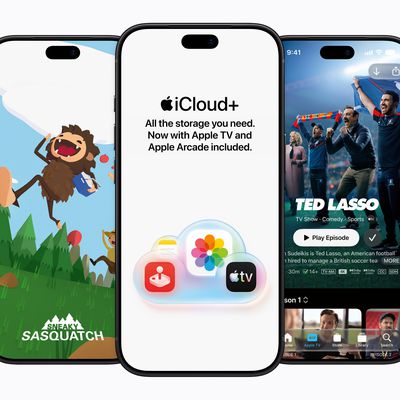
Apple today announced a new subscription initiative that turns paid iCloud+ subscriptions into a broader services bundle in more than 100 countries.
In select countries, Apple says every paid iCloud+ plan, including the cheapest 50GB tier, now includes Apple TV and Apple Arcade "at no additional cost," while family sharing extends the storage, TV and Arcade access to up to five people....
So, anyone can reset my iPhone without my consent?
That's been possible for years. Since I've been an iPhone user since 2017.
All one needs to do, put it in DFU mode and connect to a computer with iTunes.
Do a reset & restore iPhone.
It won't remove your activation lock or FindMy on your phone. but your data and Information will be completely erased from the phone (other than activation lock and FindMy)
Very welcome addition, working as tech support I know this new feature helps a lot normal users.
@HQuest Nope, after a force reset with recovery or DFU, iOS ask you your AppleID, but the APpleID is not completely visible. This is just another simple way to reset, but I'm quite sure the AppleID will not displayed entirely. Anyway your ID is protected by password and 2FA btw.
Nice! Now not only stolen devices can be taken for parts, thieves would know some of its previous owner information.
Hope I am not the only one to see a problem in this.
Incorrect.
Let’s just say I’m a technician who deals with customer’s forgotten passcodes on iPhones on a regular basis.
There is literally no difference between this new update and the procedure prior. This just takes out the middle man. (The computer)
Previously, if the iPhone was stolen, it could already be (DFU) resorted and taken apart.
Find My also stays on, so device activation is locked to owner’s Apple ID still.
Does this turn the "Find My iPhone" setting off or is this only to be used for a reset of the current owner (not getting rid of the phone).
Find My is still enabled after (if it was already on). Device will still be locked to Apple ID/owner.
So, anyone can reset my iPhone without my consent?
People already could by putting your iPhone into DFU mode with the computer and restoring it.
I thought iPhones required a password to be reset.
No password required.
This is an extreme big welcome addition to iOS. To be honest, should’ve been here years ago.
Being a tech who deals with this on a constant basis, this is an amazing time saver for people who tend to forget passwords and have to hunt down a computer for the passcode removal.
I’ve even met tons of people in different households who purposely don’t even own a computer.