Apple Watch Ultra 4 Drops GLONASS Support
Apple removed GLONASS support from the Apple Watch Ultra 4, according to technical specifications listed for the device. The Ultra 4 supports GPS, Galileo, QZSS, and BeiDou, while the prior-generation Ultra 3 supported GPS, GLONASS, Galileo, QZSS, and BeiDou.
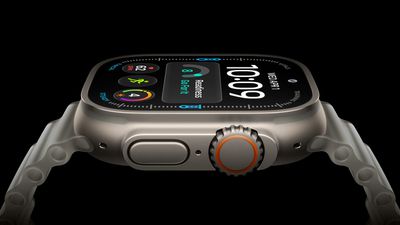
GPS, Galileo, BeiDou, and QZSS use CDMA-based signaling and support multiple frequencies for more accurate positioning. Consumer devices typically only receive an L1 signal from GLONASS, so it is less useful on devices with dual-frequency support. GLONASS also uses a different signal architecture, and receivers have to correct for hardware timing delays on a per-satellite basis, which can lead to positioning errors.
Apple did not say why GLONASS support was removed, but dropping it could improve accuracy, reduce processing, and possibly improve battery life.
The Apple Watch Series 12 continues to support GLONASS, likely because the L1-only limitation is less relevant on a single-frequency device.
Popular Stories
Apple has published a support document describing what to do if your Apple Watch continues to show time that's off by one hour after daylight savings time changes. "This incorrect time appears only on the Always On display when your wrist is down," says Apple. "When you activate the display by tapping it or raising your wrist, the time changes to the correct hour."
To fix the issue, Apple says ...
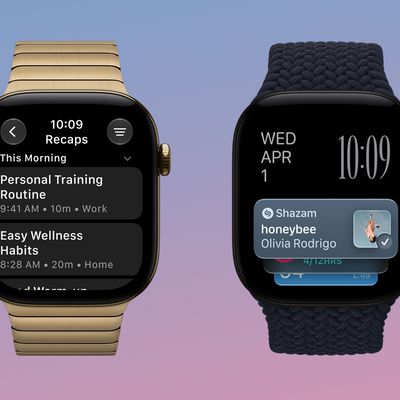
With the first beta of watchOS 27.3, Apple is introducing new Audio Intelligence features it previewed for the Apple Watch Series 12 and Ultra 4 earlier this year. Powered by the S11 chip, Audio Intelligence includes Live Rewind, Siri Recap, Sound Recognition, and Shazam Music Recognition.
Sound Recognition and Shazam are already on the watch, but Live Rewind and Siri Recap are now available ...
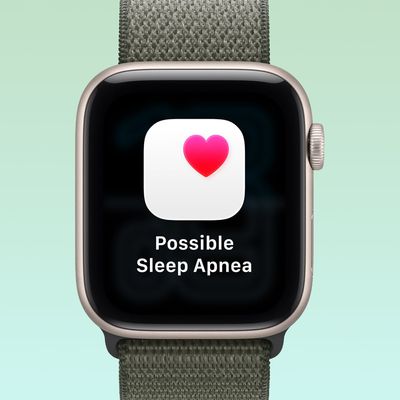
Apple today launched sleep apnea notifications in mainland China, following approval from the country's National Medical Products Administration. The feature is supported on the Apple Watch Series 9, Ultra 2, SE 3, and newer.
The Apple Watch uses its accelerometer to monitor breathing disturbances during sleep, analyzing the data every 30 days for signs of moderate to severe sleep apnea. Users ...