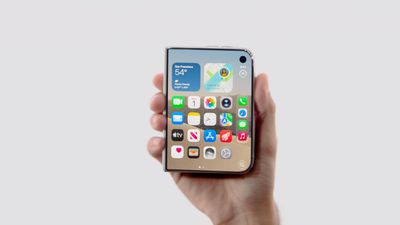
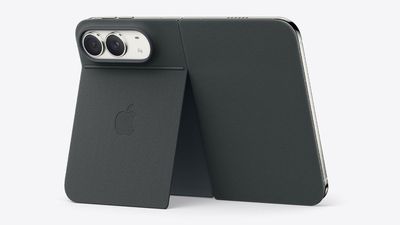
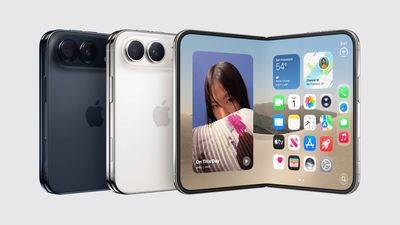
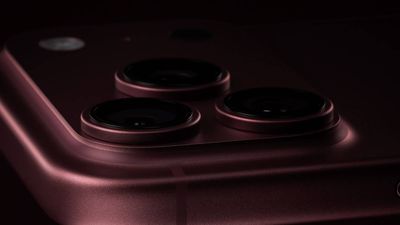
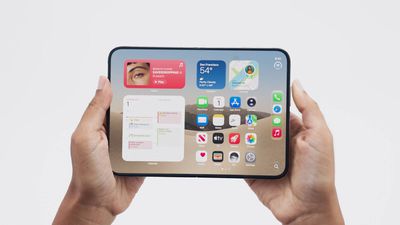
Apple says the iPhone Duo will ship with iOS 27.1 when it launches this October, which gives us a hint at when the first major iOS 27 update will come out.
The iPhone Duo will be available on October 23, so iOS 27.1 should be released shortly before that date. Last year, iOS 26.1 didn't come out until November 3, but we're expecting iOS 27.1 about two weeks earlier.
iOS 27.1 will include updated app layouts built for the iPhone Duo's dual displays and its new vertical dock.
The iPhone 18 Pro models will ship with iOS 27 and are set to launch on September 18, so the iPhone Duo is coming just over a month later. iOS 27 will launch on September 14.
Apple will accept pre-orders for the iPhone Duo on October 16, a week ahead of the October 23 launch.
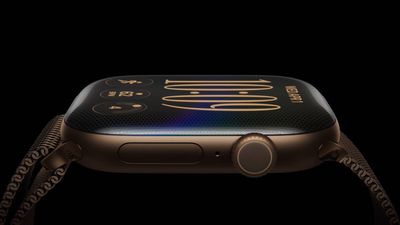
Apple today announced "Audio Intelligence," a new suite of Apple Intelligence-powered features for the Apple Watch Series 12 and Apple Watch Ultra 4 that use the built-in microphone to help users catch missed moments in conversation and stay aware of important sounds.
The Apple Watch's Audio Intelligence comprises four features:
Siri Recap: Uses ambient listening to generate high-level notes from conversations, such as takeaways from a team meeting or a parent-teacher conference, producing an Apple Intelligence-generated title, summary, and key points reviewable in the Siri app.
Live Rewind: Lets users "go back in time for 15 seconds," transcribing and displaying what was just said in a conversation with a double press of the Digital Crown.
Shazam: Automatically identifies music playing nearby and surfaces the song title and artist on the Music Recognition widget in the Smart Stack.
Sound Recognition: Brings sound alerts to Apple Watch for users who are deaf or hard of hearing, listening for sirens, alarms, doorbells, a baby crying, and more, even when their iPhone isn't nearby.
Apple emphasized that Siri Recap is opt-in and configurable, telling users they "control if and when Siri Recap takes notes." Users can set it to always listen or schedule it for specific contexts, such as only at work or never at night, and can toggle it on or off at any time from Control Center. Apple reiterated that none of the Audio Intelligence features create or store audio recordings, with raw audio processed in an isolated Secure Exclave on the S11 chip and deleted immediately after use.
Audio Intelligence and Siri AI both require an Apple Intelligence-enabled iPhone, with Live Rewind and Siri Recap limited to the iPhone 16 or later (excluding the iPhone 16e).
The features arrive in beta later this year, starting in English, with additional languages to follow, and will not initially be available in the EU.
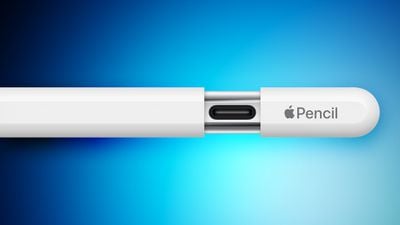
The iPhone Duo will work with the Apple Pencil, but support is limited. Apple says that you need the Apple Pencil with USB-C for the iPhone Duo, so if you have the Apple Pencil Pro, you may be out of luck.
It's likely the iPhone Duo doesn't support the Apple Pencil Pro because there's no magnetic surface for charging the pencil. The Apple Pencil Pro charges magnetically when connected to a compatible iPad, while the Apple Pencil with USB-C charges with a USB-C port hidden behind a sliding cap.
The Apple Pencil with USB-C does not support pressure sensitivity, double-tap, barrel roll, haptic feedback, squeeze, or Find My, but it does have tilt sensitivity. Apple charges $79 for the Apple Pencil with USB-C and $129 for the Apple Pencil Pro.
Apple says that an Apple Pencil will work with both the inner and outer iPhone Duo displays. It's the first iPhone that works with Apple Pencil.
Apple Pencil support won't be available right when the iPhone Duo launches, and Apple says it's coming later this year.
The iPhone Duo will launch on October 23, with pre-orders beginning on October 16.
The Apple Watch Series 12 and Ultra 4 offer a range of new health and fitness features. Here's everything that's new.
Apple today revealed the following features for the two new devices:
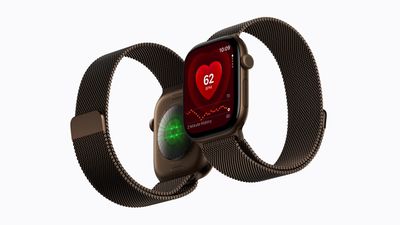
New "Health Sensing System": A redesigned sensor architecture with three main improvements, including increased electrode surface area for better ECG skin contact, photodiodes arranged in a ring for more efficient light capture, and larger, more power-efficient green LEDs for accurate heart rate readings during motion.
Continuous heart rate sensing: Heart rate is now measured every five seconds throughout the day, 60 times more frequently than before, viewable via a new watch face complication.
Higher-frequency HRV: Heart rate variability is sampled up to 24 times more often, with separate recovery and overall HRV values shown in a new section of the Heart Rate app.
Daytime vitals view: A new toggle lets users switch between overnight and daytime vitals, potentially catching shifts in metrics before they show up in overnight readings.
VO2 Max test: A new test has users set up their iPhone to watch them perform a series of exercises, delivering results immediately alongside data from their Apple Watch.
Most accurate step tracking: A redesigned pedometer model with new machine learning algorithms improves distance accuracy for indoor workouts and all-day step counts.
Steps complication: A brand-new watch face complication, enabled by the S11 chip, lets users track their step count in real time.
Longer workout battery life: Up to 10 hours during an outdoor workout, 25% more than the previous model, with 15 minutes of charging now delivering up to 12 hours of extra battery. The Apple Watch Ultra 4 goes further, with up to 50 hours of everyday battery life, 84 hours in Low Power Mode, and a new Max Extended Workout mode rated for up to 45 hours of outdoor tracking; 15 minutes of charging adds up to 18 hours of battery.
The Apple Watch Series 12 starts at $399 and the Apple Watch Ultra 4 starts at $799, with pre-orders for both open today and availability beginning Friday, September 18.
The iPhone Duo does not include an Action Button, according to the device's technical specifications page. The page's diagram highlights volume up/down buttons at the top, Camera Control and side buttons on the right side, a USB-C port at the bottom, and microphones and speakers at the top and bottom.
On the iPhone 18 Pro models and earlier, the Action Button is located on the left side of the iPhone right above the volume up/down buttons.
The Action Button is a customizable button that can be assigned one of several actions. It can do things like activate Silent mode (the default), set a Focus, turn on the Flashlight, record a Voice Memo, activate Visual Intelligence, or run a Shortcut.
Apple introduced the Action Button with the iPhone 15 Pro, and all iPhones released since then have included the feature. The iPhone Duo is the first iPhone that has no option for a physical mute toggle. Silent mode will need to be turned on via Control Center.
The side button on the iPhone Duo includes Touch ID for unlocking the device, because it does not support Face ID. There's also a separate Camera Control button for launching the camera and capturing photos.
Apple is required to publish energy labels on its iPhone product pages in the EU, and they reveal the official mAh battery capacities for the devices.
Here are the battery capacities for the iPhone 18 Pro and iPhone 18 Pro Max models that still have a SIM card tray, according to Apple:
iPhone 18 Pro: 4,056 mAh (+1.7% vs. iPhone 17 Pro's 3,988 mAh)
iPhone 18 Pro Max: 5,391 mAh (+11.7% vs. iPhone 17 Pro Max's 4,823 mAh)
Notably, the iPhone 18 Pro Max has received a much larger battery life increase than the iPhone 18 Pro did compared to the previous generation.
eSIM-only models of the iPhone 18 Pro and iPhone 18 Pro Max will be available in Bahrain, Canada, Guam, Japan, Kuwait, Mexico, Oman, Qatar, Saudi Arabia, the United Arab Emirates, the U.S., and the U.S. Virgin Islands. The devices have a SIM card tray in all other countries around the world, including in the U.K. and the rest of Europe.
eSIM-only iPhone models are equipped with a slightly larger battery that fills the space occupied by the physical SIM card tray.
eSIM-only battery capacities for the iPhone 18 Pro models have yet to be confirmed.
Despite rumors of an increase in thickness, the iPhone 18 Pro Max has the same physical dimensions as the iPhone 17 Pro Max. It is 163.4mm x 78mm x 8.75mm, but it did get 16 grams heavier.
Apple says the iPhone 18 Pro Max weighs 249 grams, while the iPhone 17 Pro Max weighed 233 grams, making it the heaviest non-folding iPhone to date. It is heavier than the iPhone 14 Pro Max, which was previously Apple's weightiest iPhone at 240 grams.
The iPhone 18 Pro weighs 211 grams, up from 206 grams in the prior-generation model. Apple may have increased battery size even though dimensions didn't change, or the new vapor chamber cooling system may be heavier.
There's a bigger vapor chamber in the iPhone 18 Pro models that takes up three times more surface area to dissipate more heat. The A20 Pro is able to deliver up to 40 percent better sustained performance than the A19 Pro thanks to the next-generation vapor chamber and "more thermally conductive materials."
The 18 Pro Max battery offers up to six hours more video playback than the battery in the iPhone 17 Pro Max.
Even though it's 249 grams, the iPhone 18 Pro Max is still a little bit lighter than the iPhone Duo, which weighs 254 grams. The iPhone Duo is Apple's heaviest iPhone to date.
Cases for the iPhone 17 Pro models should fit the iPhone 18 Pro models given that the dimensions are the same.
Apple no longer charges extra for Active Noise Cancellation on AirPods, folding it into the $129 AirPods 5 instead of reserving it for the higher-end model.
Apple today announced the AirPods 5. ANC now comes standard on the base model rather than being exclusive to its pricier variant, as it was with the outgoing AirPods 4, which cost $129 without ANC and $179 with it.
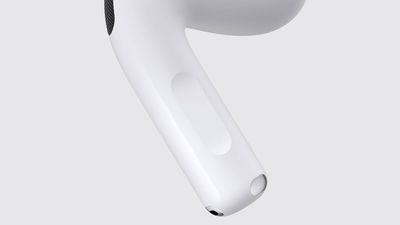
There is still a pricier version of the AirPods 5, called "AirPods 5 with Wireless Charging Case." This model starts at $149 and includes a force sensor with swiping volume controls, an hour of additional battery life with ANC enabled, and wireless charging. The AirPods 4 with ANC were priced at $179.
AirPods 5 are available for pre-order starting today, with both the $129 and $149 models arriving in stores on Friday, September 18.
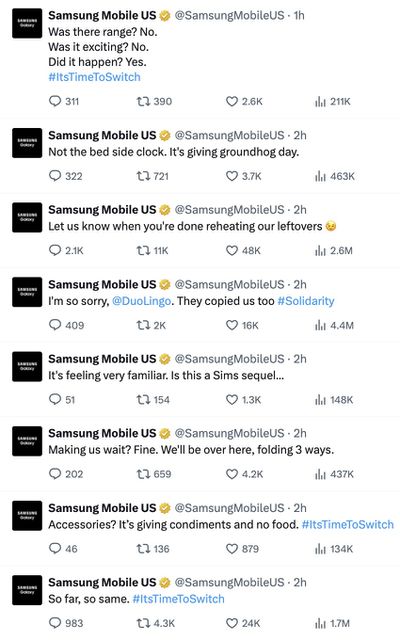
In a series of sarcastic posts that did not explicitly mention Apple or the iPhone Duo, Samsung made comments like "Let us know when you're done reheating our leftovers" and "Was it exciting? No. Did it happen? Yes."
Samsung used an #ItsTimeToSwitch hashtag in some of its posts.
Launching on Friday, October 23, the iPhone Duo will compete with Samsung's Galaxy Z Fold8 and other foldable devices already on the market. Apple will begin accepting pre-orders for the iPhone Duo on Friday, October 16, with U.S. pricing starting at $1,999 for a model with 256GB of storage, compared to $1,899 for the Galaxy Z Fold8.
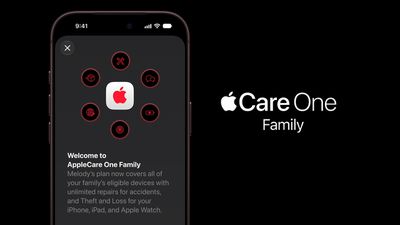
Apple today announced AppleCare One Family, a new option for U.S. customers that extends AppleCare coverage to every eligible device across an Apple Family Sharing group of up to six people for one fixed monthly price.
AppleCare One Family costs $49.99 per month and includes all of the same benefits as AppleCare+, such as coverage for accidental damage like drops and spills, battery replacement service, and priority support from Apple Experts. It also includes theft and loss protection for eligible iPhone, iPad, and Apple Watch models, and allows six total claims per year across the group.
Once a subscriber signs up, they can add devices from their iPhone, iPad, or Mac, including "most devices less than four years old and in good working condition." Newly purchased devices are added automatically at no extra cost, and the price stays the same regardless of how many eligible products end up being covered.
To use the new plan, customers must set up Family Sharing in the Settings app on their iPhone, iPad, or Mac and invite up to five other people to join. Any eligible devices those family members already own can then be covered under the same subscription, eliminating the need to buy and manage a separate AppleCare plan for each person.
AppleCare One Family builds on AppleCare One, the multi-device subscription Apple introduced in the U.S. in July 2025 at $19.99 per month for up to three products. That plan has since expanded to Australia, France, Germany, and the UK, and today's announcement gives U.S. customers with larger households a way to consolidate coverage under a single subscription rather than juggling individual plans.
AppleCare One Family will be available in the United States starting September 14. More details are available on Apple's AppleCare webpage.
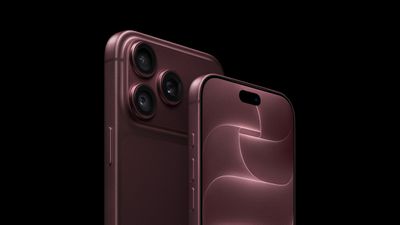
Apple raised the base price of the iPhone 18 Pro and iPhone 18 Pro Max by $100 compared to the iPhone 17 Pro models, but if you want more storage, those price increases are even higher.
The iPhone 18 Pro starts at $1,199 for 256GB of storage, while the iPhone 17 Pro started at $1,099. There's a $100 year-over-year increase if you go up to 512GB ($1,399), but if you want 1TB of storage, you're going to be paying $300 more.
A 1TB iPhone 18 Pro is priced at $1,799, but a 1TB iPhone 17 Pro was $1,499. There's a new 2TB option for the Pro this year, and it's priced at $2,399.
A 1TB iPhone 17 Pro Max was $1,599, but this year, it'll cost you $1,899 to get a 1TB iPhone 18 Pro Max. The 2TB iPhone 18 Pro Max option is even more expensive at $2,499, a $500 increase over the 2TB iPhone 17 Pro Max price.
Storage and memory costs have been soaring because of ongoing supply shortages, so it's not too surprising to see a notable surcharge on the 1TB storage option.
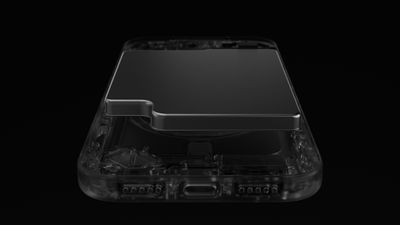
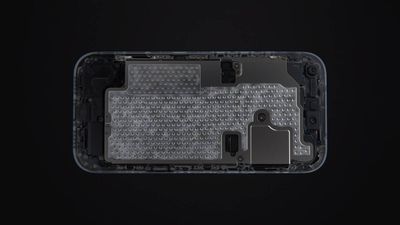
Apple today announced a redesigned thermal system for iPhone 18 Pro and iPhone 18 Pro Max, built around a next-generation vapor chamber with three times the surface area of the one in iPhone 17 Pro.
The new vapor chamber constantly cycles deionized water throughout the system for significantly improved cooling performance, allowing the A20 Pro chip to sustain higher performance for longer under heavy workloads.
Apple redesigned the silicon packaging with "custom packaging inspired by our M-series chips," placing the silicon die and memory side by side rather than stacked, which removes the memory from the chip's thermal path and lets the A20 Pro connect directly to the vapor chamber.
According to Apple, the combination of the new packaging, new thermal materials, and the larger vapor chamber delivers up to a 40% gain in sustained performance over the previous generation, which the company calls the highest sustained performance yet in an iPhone.
It looks like the iPhone 18 Pro and iPhone 18 Pro Max may have different modems inside. On Apple's technical specifications page for the new devices, the iPhone 18 Pro lists Apple's C2 modem, but the iPhone 18 Pro Max lists no modem at all in the U.S.
The same information is also listed on Apple's announcement for the iPhone 18 Pro models.
Both models feature N1, an Apple-designed wireless networking chip that enables Wi-Fi 7, Bluetooth 6, and Thread. iPhone 18 Pro introduces C2, Apple's next-generation cellular modem system, which brings AI-powered improvements to cellular quality and reliability.
The lack of a C2 mention for the Pro Max might seem like a mistake at first glance, but the separate Pro and Pro Max model numbers actually list different LTE bands. On the U.S. Pro specification list, there's a Band 106, but there's no Band 106 on the Pro Max list.
It is not known why Apple would use different modems for the iPhone 18 Pro and iPhone 18 Pro Max, but there were rumors before launch that some devices would continue to use Qualcomm modems.
Apple is also using the C2 modem for the iPhone Duo, so it's possible there were supply issues. It appears both the new iPhone 18 Pro and iPhone 18 Pro Max may use the C2 modem outside of the U.S., so the split could be U.S. only.
The C2 modem supports both sub-6GHz and mmWave 5G, and Apple says it includes AI improvements to cellular quality and reliability. It is faster and more energy efficient than the C1X modem, but it's not yet clear how it compares to the Qualcomm modem in the 18 Pro Max.
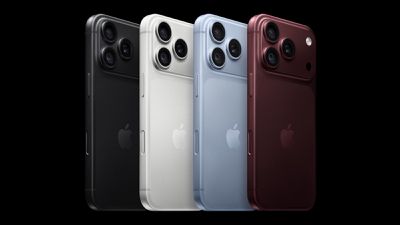
Apple's new iPhone 18 Pro models will go on sale on September 18, with preorders to take place on September 12. Pricing on the iPhone 18 Pro starts at $1,199, while pricing on the 18 Pro Max starts at $1,299.
Apple does not advertise the amount of RAM included in the iPhone 18 Pro models, but MacRumors has confirmed this info in the latest version of Xcode 27.
Here is how much RAM is in each new iPhone model:
iPhone 18 Pro: 12GB
iPhone 18 Pro Max: 12GB
Xcode does not yet support the iPhone Duo, but that device has the same A20 Pro chip as the iPhone 18 Pro models, so it should have 12GB of RAM too.
iPhone 17 Pro models also have 12GB of RAM, so there is no increase vs. the previous generation:
iPhone 17: 8GB
iPhone Air: 12GB
iPhone 17 Pro: 12GB
iPhone 17 Pro Max: 12GB
Apple is still being impacted by an industrywide RAM chip shortage, which has led the company to raise prices on many products in recent months. In the U.S., the iPhone 18 Pro and iPhone 18 Pro Max start at $1,199 and $1,299, respectively, which is a $100 increase to the starting price compared to the iPhone 17 Pro and iPhone 17 Pro Max.
Apple said the iPhone 18 Pro and iPhone 18 Pro Max will be available to pre-order starting Saturday, September 12 at 5 a.m. Pacific Time in the U.S. and many other countries. The devices are set to launch the following week, on Friday, September 18.
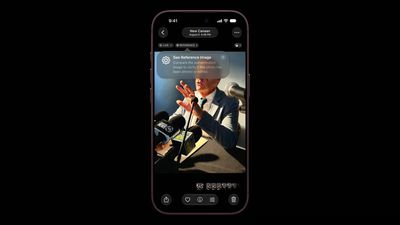
Apple today announced Apple Reference Image, a new opt-in feature for the iPhone 18 Pro and iPhone 18 Pro Max that helps users to prove a photo hasn't been altered since it was taken.
Apple Reference Image is powered by a new sensor in the Main camera that signs sensor data at the pixel level at the moment of capture. When a photo is taken in the new Reference mode, that signed data is sent to Private Cloud Compute, which develops it into what Apple calls an unalterable reference image, "like having a digital negative."
Reference images appear in the Photos app alongside the corresponding photo, letting users visually compare the two to check whether any edits were made. Apple is also opening APIs in iOS, iPadOS, and macOS 27 so third-party apps can display these reference images.
Apple positioned the feature as one part of a broader push on image authenticity, alongside existing image metadata and upcoming support for the SynthID standard, which will help identify images that were generated or edited with AI. Apple said SynthID support will arrive in a software update later this year and will be included with most edited images, depending on which edits were applied.
Apple Reference Image will not be available at launch in China due to regulatory requirements. In the EU, Apple Reference Image capture also won't be available at launch on the iPhone 18 Pro models, but users running iOS 27, iPadOS 27, and macOS 27 will still be able to develop and view reference images.
Apple today confirmed that there will be a daily usage limit for Siri AI, with expanded access available for a fee in the future.
Starting with the 2027 software releases, users can experience the next generation of Apple Intelligence, with enhanced access to features that rely on server-side models. These features include but aren't limited to:
- Siri AI - Intelligent Photo Editing Tools including Clean Up, Extend, and Spatial Reframing - Image Playground - AFM 3 Cloud and AFM 3 Cloud Pro Models in Shortcuts - Developer apps using Apple Foundation Models in Private Cloud Compute
In the future, Apple will implement usage limits on these and other Apple Intelligence and Siri AI features to ensure a high-quality, reliable experience for everyone. If you reach a limit in a particular feature, that feature will become available again after a time out period. Limits may vary by feature, request complexity, system demand, system policies, and other factors. Increased access to such features will be available for a fee.
Limits will vary by factors that include feature, request complexity, and system demand.
Apple did not offer details on what the fee will be or how it will be charged, but at WWDC, Apple said that higher iCloud+ tiers will include expanded access to the limited Apple Intelligence features.
iOS 27 with Siri AI and the new capabilities will launch on September 14. The new Apple Watch and iPhone models will come out on September 18.
Apple today announced new texture and grain controls for Photographic Styles with the iPhone 18 Pro and iPhone 18 Pro Max.
Photographic Styles are tone presets that adjust the color and warmth of a photo as it is captured, rather than as a filter applied afterward, while preserving skin tones.
The iPhone 18 Pro and iPhone 18 Pro Max gain a redesigned computational imaging pipeline for the 48-megapixel Fusion Main camera that Apple says produces sharper, more detailed shots. The new texture and grain controls build on that pipeline, allowing users to further dial in their desired appearance for more creative control over their photos.
It is not clear if older iPhone models such as the iPhone 17 Pro, which otherwise support the latest version of Photographic Styles, will receive the feature via a software update.
The iPhone Duo has what Apple is calling an "iPhone-first dual battery system" with one battery on each side of the device. Apple optimized physical space for battery capacity to make sure that the battery lasts as long as possible.
When using the larger 7.6-inch inner display (unfolded), the battery lasts for up to 31 hours of video playback.
If you're using just the 5.4-inch outer display, the battery lasts for up to 44 hours when watching video.
With Apple's typical use metric, which includes equal use of both screens, the battery lasts for up to 24 hours. Typical use includes a mix of messaging, photo capture, listening to music, social app use, streaming video, playing games, web browsing, and navigation. Apple says it is based on median usage across iPhone users.
The typical use metric for the iPhone Duo matches the iPhone 18 Pro's. The larger 7.6-inch display draws more power and eats more battery than the 18 Pro when watching video, while the smaller display gets better battery life. The iPhone 18 Pro Max has the longest battery life of the three iPhones at up to 45 hours.
The iPhone Duo is able to charge to 50 percent in around 20 minutes with a 60W or higher USB-C power adapter. It includes support for MagSafe and can wirelessly charge at up to 25W using MagSafe or Qi2.
The two batteries in the iPhone Duo are managed as a single battery by iOS. Apple says battery life was maximized through the two-battery design, eSIM-only design, C2 modem efficiency, and the new A20 Pro chip.
Preorders for the iPhone Duo will start on October 16, with a launch to follow on October 23.